How To Setup WhatsApp Business API and Link To Software.
Learn step by step process with screenshot on how to setup WhatsApp business API and link to whatsapp marketing software.
 By Aditi Kamini
Published: October 11, 2023
Updated: June 5, 2026
22 min read
By Aditi Kamini
Published: October 11, 2023
Updated: June 5, 2026
22 min read
Learn step by step process with screenshot on how to setup WhatsApp business API and link to whatsapp marketing software.
Setting up WhatsApp Business API in 2026 is easier than before, but it is also more important to understand the right setup path before you begin. Businesses can now connect WhatsApp API through manual developer setup, Meta Embedded Signup, Business Solution Provider onboarding, or supported coexistence flows where the WhatsApp Business App and Cloud API can work together in selected cases.
This guide explains how to set up WhatsApp Business API, verify your Meta Business Manager, connect your phone number, understand 2026 WhatsApp API pricing, avoid common approval issues, and link your API-enabled number with Sendwo for campaigns, automation, chatbot flows, live chat, and customer communication.
The original manual setup process is still useful for users who want to create a Meta developer app, generate access tokens, copy WABA ID, and configure webhooks manually. But in 2026, many businesses prefer a faster onboarding flow through Embedded Signup, where Meta collects business information and generates the required WhatsApp assets during the signup flow.
If you want help with setup, migration, WhatsApp API pricing, templates, embedded signup, coexistence, or connecting your WhatsApp API number to Sendwo, you can start free with Sendwo or book a setup call.
Table of Contents
- What Changed in WhatsApp Business API Setup in 2026?
- WhatsApp Business API Pricing in 2026
- Prerequisites for Using WhatsApp Business API
- Which WhatsApp API Setup Method Should You Choose?
- How to Set Up WhatsApp Business API Manually
- Embedded Signup Flow
- WhatsApp Coexistence
- Common WhatsApp API Approval Issues
- Completing Business Verification
- Set Up WhatsApp API Inside Sendwo
- What to Do After Connecting WhatsApp API to Sendwo
- Final Thought
- FAQs
What Changed in WhatsApp Business API Setup in 2026?
Earlier, many businesses had to manually create a Meta developer app, add the WhatsApp product, generate permanent access tokens, copy the WhatsApp Business Account ID, configure webhooks, and then connect the account with a WhatsApp API platform.
That manual route is still useful for developers and advanced users. But in 2026, most businesses should understand four important changes before starting the setup process.
- Pricing is now per-message based. Meta charges when a WhatsApp Business Platform message is delivered. Pricing depends on the user’s country and message category.
- Embedded Signup makes onboarding faster. Meta’s Embedded Signup flow collects business information and helps generate the WhatsApp assets required for platform setup.
- Coexistence may be available in selected cases. Eligible businesses may be able to use the WhatsApp Business App and Cloud API together through supported onboarding flows.
- Approval quality matters more. Your display name, website, documents, policies, phone number ownership, templates, and business category must be correct to avoid rejection.
So, instead of thinking only about “how to get WhatsApp API,” businesses should now think about the complete onboarding path: business readiness, Meta verification, phone number setup, pricing, templates, webhooks, inbox setup, automation, and campaign execution.
WhatsApp Business API Pricing in 2026: What You Must Know
Before setting up WhatsApp Business API, understand how pricing works. The WhatsApp Business Platform is not something you should evaluate only by the software subscription fee. Your final cost depends on two layers.
1. Meta WhatsApp API Message Charges
Meta charges businesses on a per-message basis when a message is delivered to the user. Pricing depends on the recipient’s market and the message category.
| Message Category | What It Means | Common Examples |
|---|---|---|
| Marketing | Promotional or growth-focused messages sent to opted-in users | Offers, product launches, abandoned cart reminders, discount campaigns, reactivation campaigns |
| Utility | Transactional messages usually triggered by a user action | Order confirmation, delivery update, payment update, appointment update, ticket update |
| Authentication | One-time password and identity verification messages | Login OTP, transaction OTP, account verification code |
| Service | Responses inside the customer service window after a user messages the business | Support replies, product questions, service help, live chat replies |
Meta charges when a message is delivered, not merely sent. It also says service messages are not charged, utility messages sent in response to users are not charged, and a 72-hour free messaging window can open when a user messages from a click-to-WhatsApp ad or Facebook Page call-to-action button.
2. WhatsApp API Platform or Software Fee
This is the amount you pay to a WhatsApp API platform such as Sendwo for the dashboard, broadcasts, templates, chatbot builder, live chat, automation, AI replies, ecommerce workflows, analytics, team inbox, and support.
Sendwo keeps this pricing simple by offering a free forever plan and 0% Sendwo markup on official Meta WhatsApp API pricing. This means your software plan and Meta message charges are easier to separate, track, and optimize.
You can compare plans on the Sendwo pricing page or estimate usage with the WhatsApp API cost calculator.
Prerequisites for Using WhatsApp Business API
You need a few things before you start your WhatsApp API setup. Preparing these early will reduce rejection, delay, and verification issues.
1. You Must Have a Registered Business
Only a registered business entity is eligible for using WhatsApp Business API at scale. During Meta Business verification, you may need to submit official documents that prove your business name, address, legal existence, and sometimes phone number.
Common acceptable documents can include business registration certificates, incorporation documents, government-issued tax documents, business bank statements, or utility bills. The exact document requirement may vary by country and review context.
2. You Must Have a Business Website
Meta may review your business website during verification and approval. Your website should clearly show your brand name, business details, contact information, privacy policy, terms and conditions, and any relevant refund, shipping, or service policy pages.
Your website should also match the business name, brand name, and business category you submit. If your website looks incomplete, unrelated, misleading, or non-compliant with WhatsApp policies, your verification or display name approval can be delayed or rejected.
3. You Must Have a Business Phone Number
You need a phone number that can be verified through OTP by SMS or voice call. The number should not be blocked from receiving international SMS or calls.
If the phone number is already being used on WhatsApp, WhatsApp Business App, or another WhatsApp API provider, you may need to check whether you should use migration, deregistration, or coexistence instead of adding the number as a new API number.
4. You Should Have Meta Business Manager Access
You should have admin access to the Meta Business portfolio where your WhatsApp Business Account will be created or connected. If you are working with an agency, make sure ownership and access are clear before starting setup.
5. You Should Prepare a Payment Method
You may need to add a payment method in Meta billing before running real WhatsApp campaigns. This is important because WhatsApp API message charges are billed separately from the software platform fee.
Which WhatsApp API Setup Method Should You Choose?
There are now multiple ways to set up WhatsApp Business API. The best option depends on whether you are a business user, developer, agency, ecommerce brand, or existing WhatsApp Business App user.
| Setup Method | Best For | What Happens | When to Choose It |
|---|---|---|---|
| Embedded Signup | Most SMBs, agencies, ecommerce brands, and non-technical users | You connect through a guided Meta signup flow that collects business details and creates or connects WhatsApp assets | Choose this if you want the simplest onboarding path without manually generating tokens and configuring everything yourself. |
| Manual Developer Setup | Developers, technical founders, API teams, and advanced users | You create a Meta app, add WhatsApp product, add phone number, generate access token, copy WABA ID, and configure webhooks | Choose this if you want direct control over developer setup, app permissions, system user, token, and webhook configuration. |
| Coexistence Setup | Eligible WhatsApp Business App users who want API automation without immediately losing app workflows | Supported flows may allow the WhatsApp Business App and Cloud API to work together on the same number | Choose this only if your region, number, provider, and onboarding flow support coexistence. |
| Migration from Existing API Provider | Businesses already using WATI, AiSensy, Interakt, Zoko, Gupshup, or another provider | You move your WhatsApp API number, templates, contacts, and workflows to a new platform | Choose this if you already have WhatsApp API and want to move to Sendwo. |
The manual setup steps below are still useful. However, if you are a business user and want faster setup, use Embedded Signup or request guided onboarding with Sendwo.
How to Set Up WhatsApp Business API Manually
You can set up WhatsApp API manually from the Meta Developer platform. This method is useful if you want to control the app setup, WABA ID, access token, and webhook configuration yourself.
In order to setup the WhatsApp API, either you can start the setup from developers.facebook.com right away or 1st you can choose to get your Facebook business manager account verified.
Now, a lot of people will get stuck at this point. Why? Because here are two loops that stop people from DIY of WhatsApp API.
ERROR while setting up WhatsApp API
Loop 1: Setting up API and then going for business verification. [Right path]
Loop 2: Getting business verification done before setting up the API. [Wrong path]
Please note: Only Loop 1 is the right path to follow when you are setting up your WhatsApp API yourself.
Let’s talk about this in detail because everyone will get stuck at this place.
Solution to Loop 1: Setting up WhatsApp Business API and then going for business verification.
In order to follow this path. You will follow the below step
STEP 1: Go to developers.facebook.com and login with your facebook credentials.
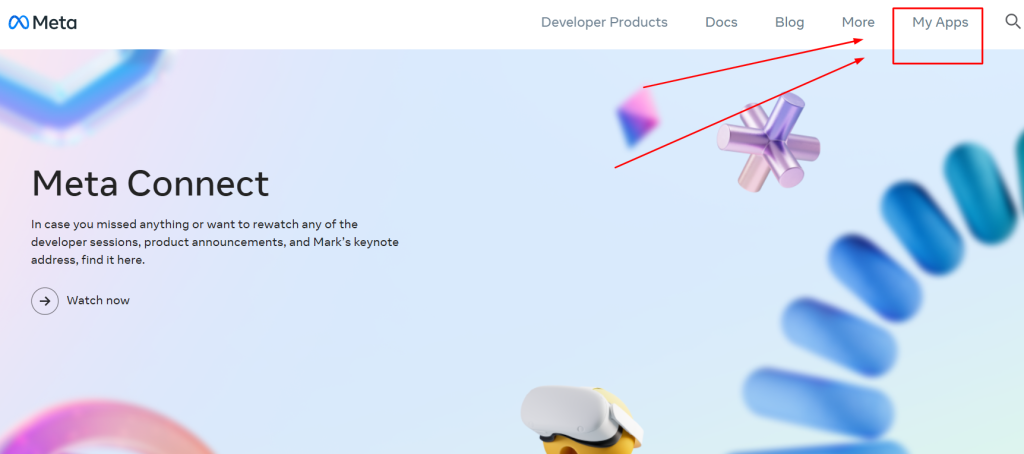
STEP 2: Go to My Apps. This section will take you to create a new app dashboard.
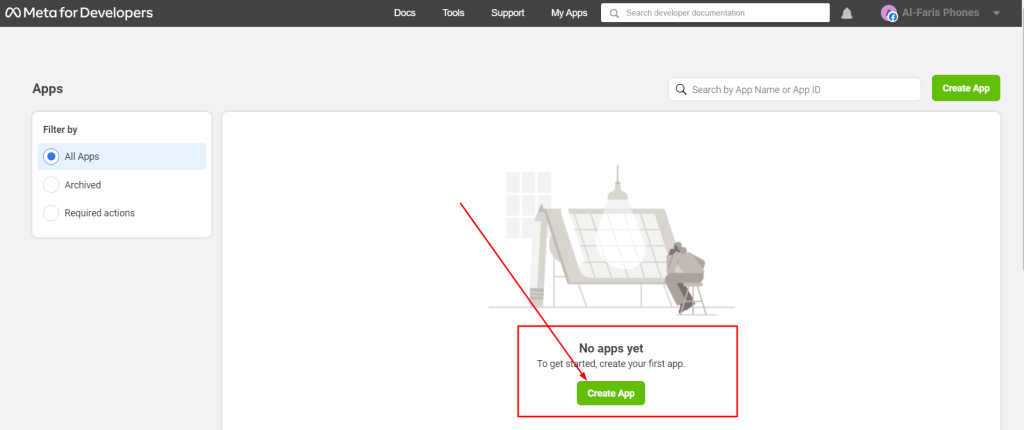
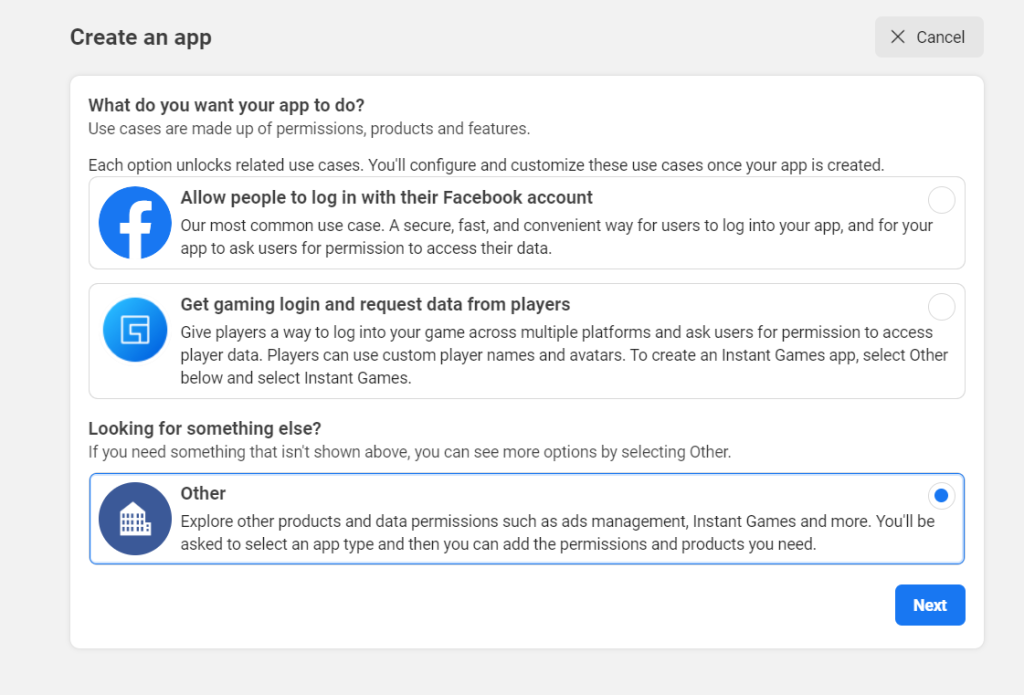
STEP 3: The next step is to click on Create App and then proceed by clicking Others and then click Next.
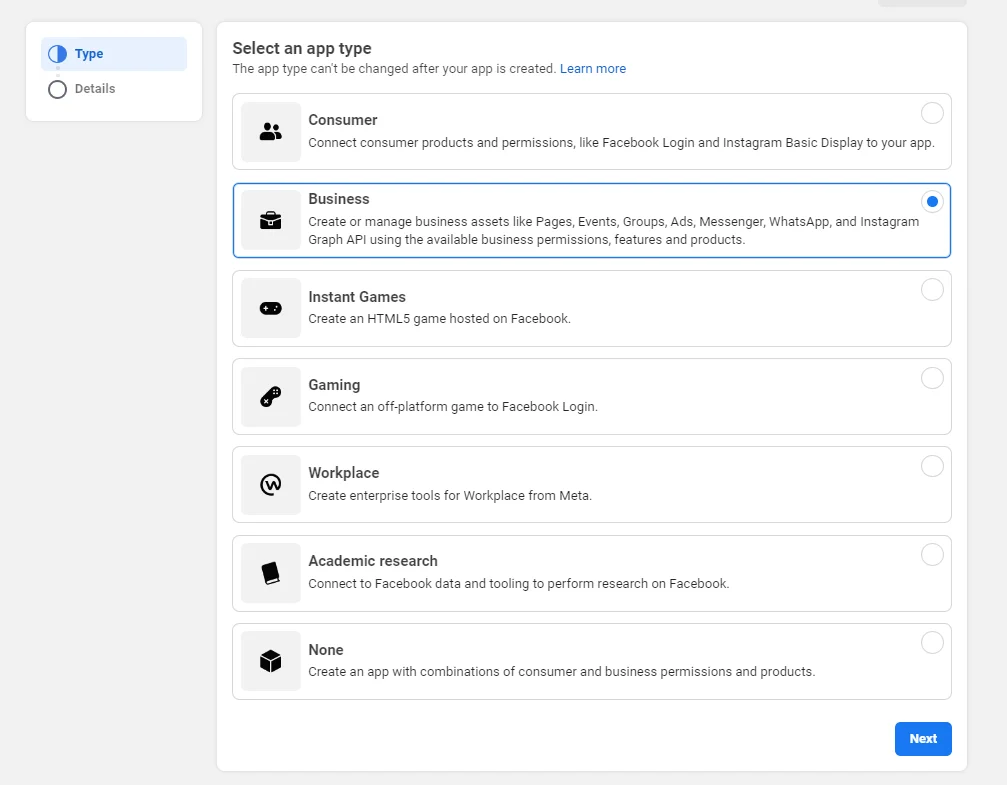
STEP 4: Select the App type in your next step. It should be business because you are going to use the API. Then click next.
STEP 5: Give name to your App. You can write any name. This is only for reference number and won't be displayed anywhere. If you have multiple business account then choose the once into which you are planning to setup the api. Make sure you choose the right business account. It is written optional but if you are serious about using WhatsApp api then you must choose the business account. Because then only you will become eligible for business verification.
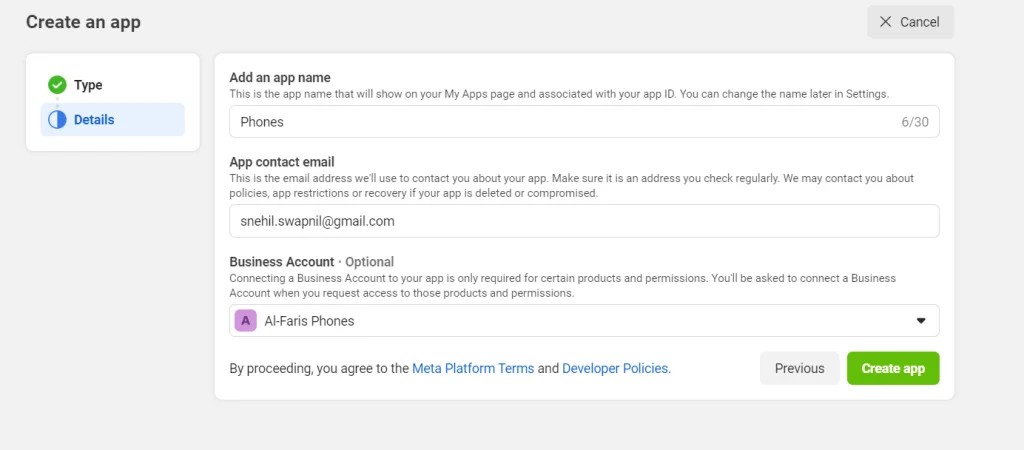
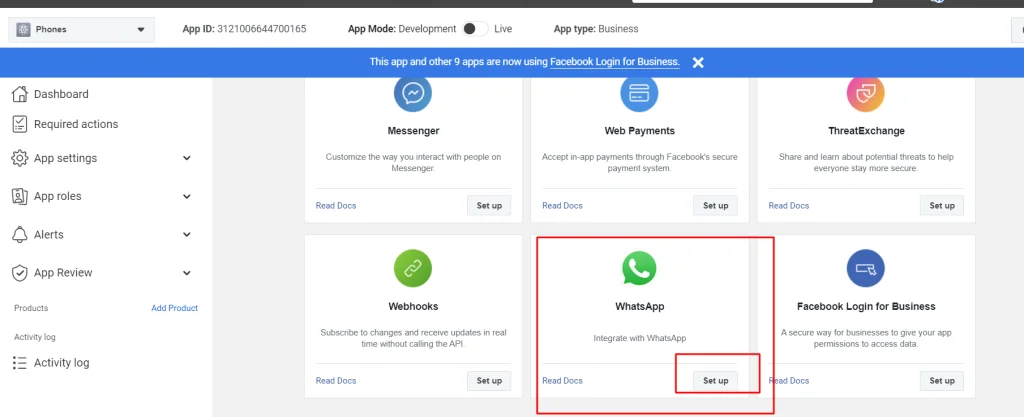
STEP 6: It will take you to your app dashboard where you have to scroll down to choose WhatsApp setup. Click on setup to procced to configure your WhatsApp API. Click continue in the next step and proceed.
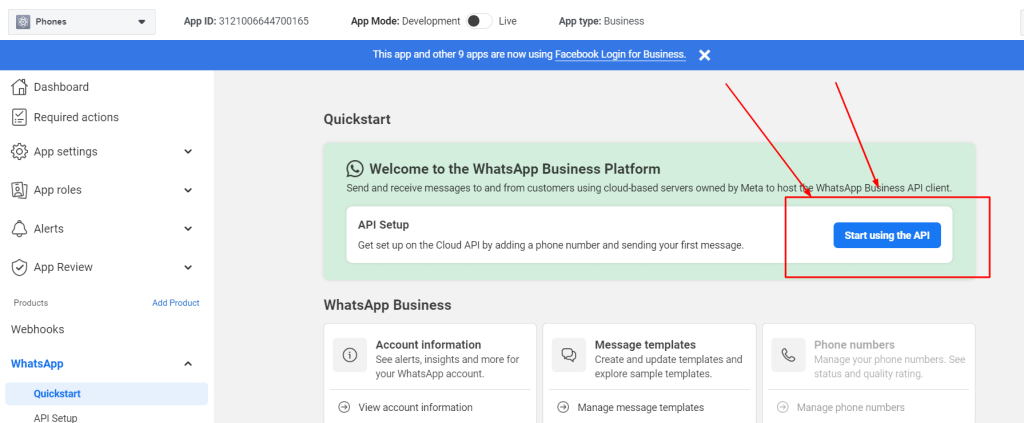
STEP 7: Complete configuration setup. Click start using WhatsApp API
STEP 8: Add Phone numbers to your WhatsApp API. For this you need to scroll down and add your number. You are initially allowed to add only two WhatsApp numbers. Also make sure that you add your payment methods right away at this place. This is 100% required if you want to run your WhatsApp marketing campaign.
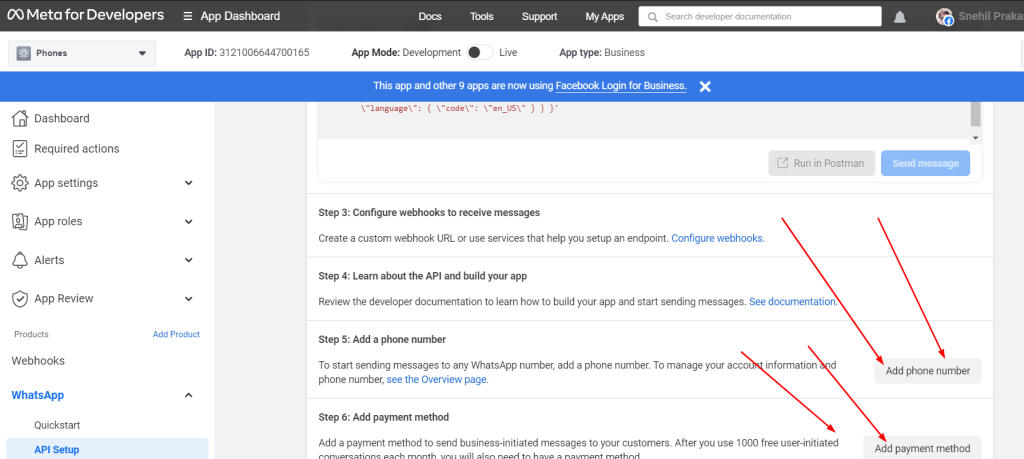
When adding phone numbers, you will have to enter your business name. Business website or profile page. [Recommended to add business website since it will also be added during business verification.
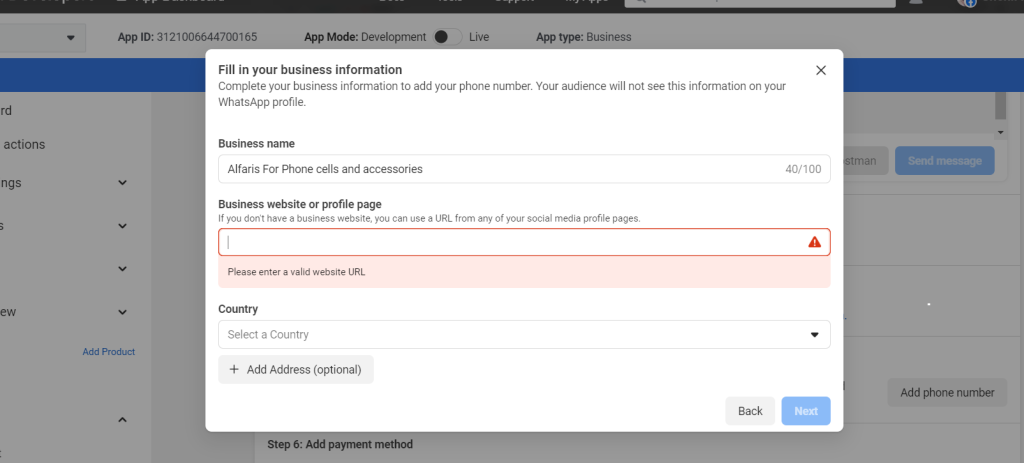
STEP 9: This is a very critical step. You must not do anything wrong in entering your info. In this step, you will add your WhatsApp Business Profile Display Name. This name should be your brand name. Business name is different, brand name is different. When you apply for a green tick, WhatsApp ask if your brand name is notable or not. They confirm this by asking you to share those website links from high authority sites that have mentioned this same WhatsApp Business Profile Display Name. It is your brand name. Enter the correct timezone because scheduled messages will go according to this time zone.
STEP 10: Enter your phone number and verify it with a security code sent to you via text message or call.
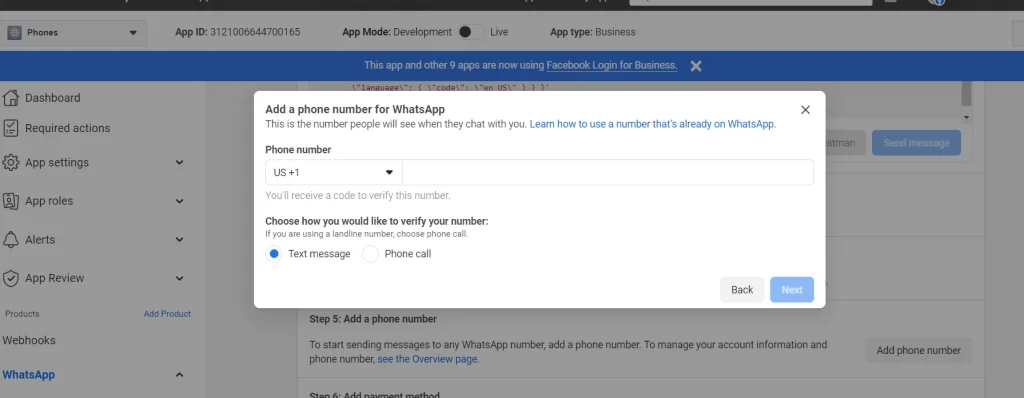
Once the number is added, you will be shown with an alert message on your API dashboard.
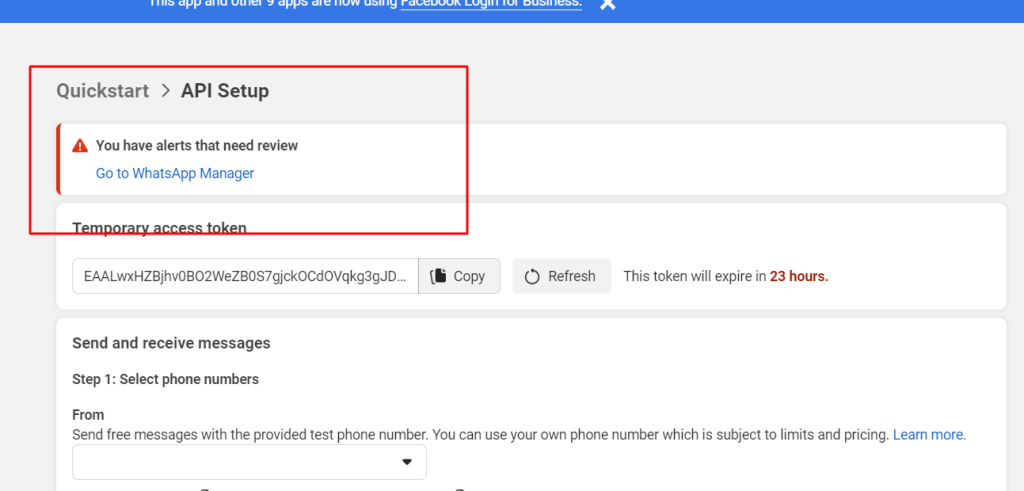
This happens because you have not verified your Facebook business manager account so you won't be able to use the API.
So, now go to the procedure explained in the LOOP below to complete your business verification process.
Solution to Loop 2: Setting up API and then going for business verification.
In order to follow this path. You will follow the below step
STEP 1: Go to your business info page insider your business manager account of facebook. Click here business info [If you have multiple business facebook account then please choose the one over which you need to setup your api and also get your business verification done.
STEP 2: Here you need to enter all your business details. Don't skip any info. Your chances of rejection will increase. Also make sure that the information matches 100% as per your business registration document that you will be uploading during your business verification process.
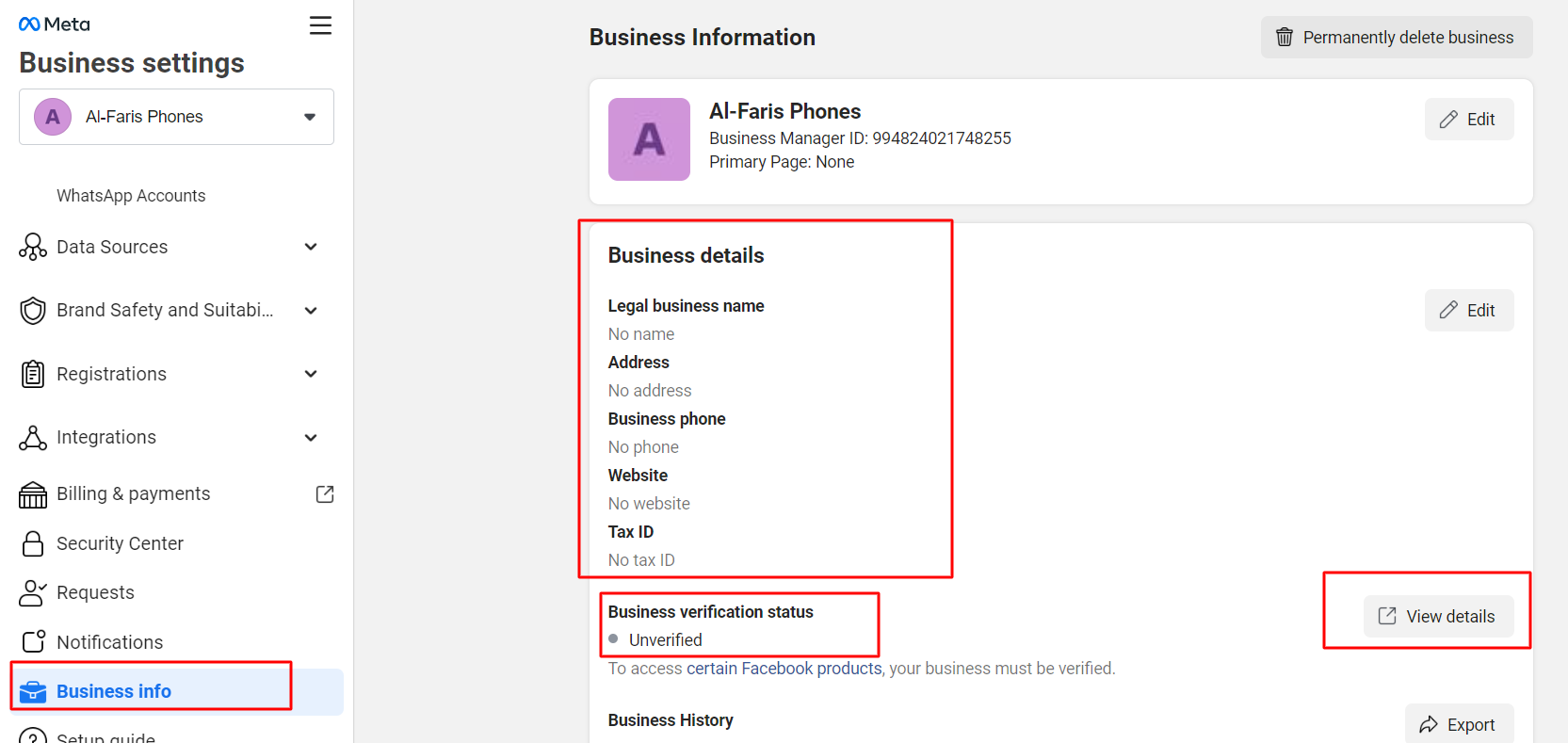
Once you enter all these details. You will have to click "View details" button that will take you to the page where you will begin the document submission.
But, as i said, if you follow loop 2, you will be shown that you are ineligible for business verification. Something like below.
Turn this learning into your next WhatsApp campaign.
Start with Sendwo’s free plan, explore WhatsApp broadcasts, automation, AI chatbot flows, and upgrade only when your business needs more power.
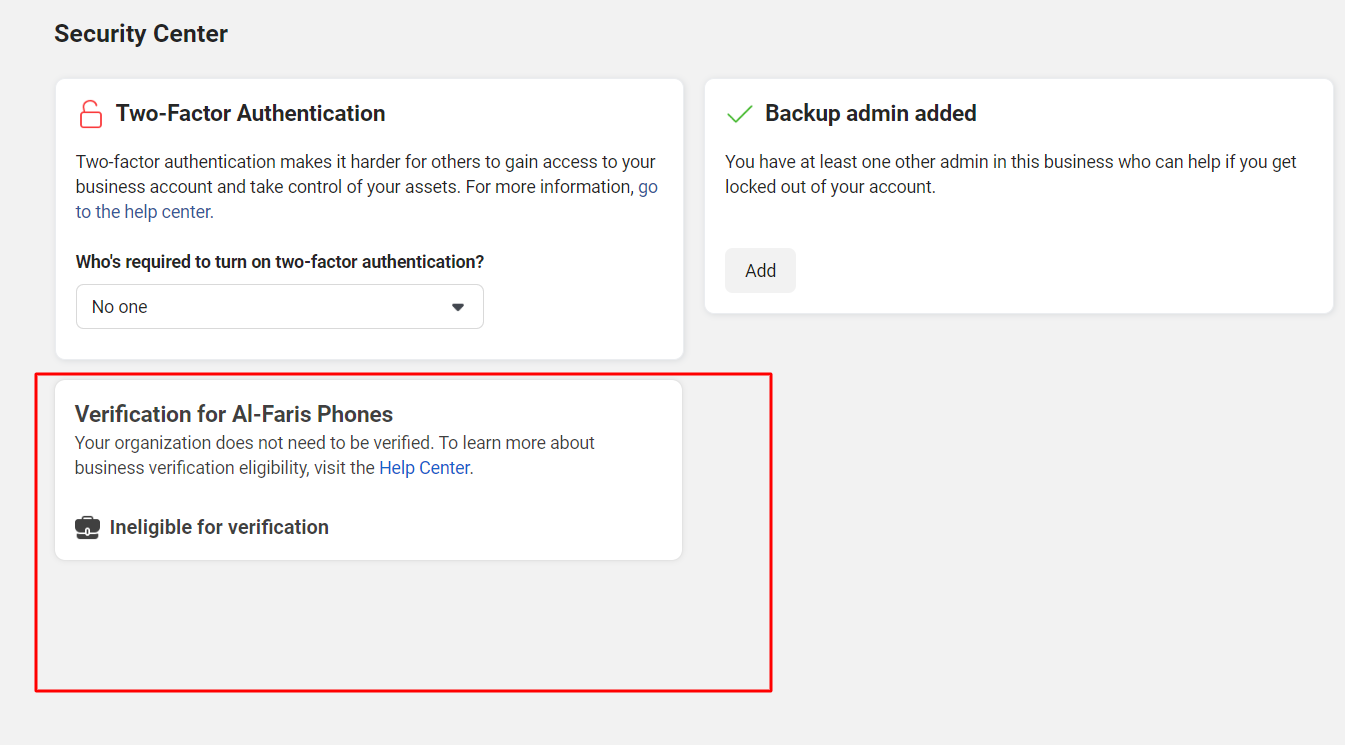
You will face this error and won't be able to submit your documents for business verification. The reason is, people are eligible for busines verification only when you are trying to use advanced features of meta company like using an API.
So, if you follow this Loop 2, you wont be able to get your business verification done. This path is 100% wrong when you are planning to setup your Whatsapp API.
You will get stuck and look for solution or integration consultant at this point to solve this problem. While the solution is hidden in the Loop 1 process which I already explained above.
Completing the business verification process.
We are asusming that you followed the above loop 1 process that I explained. You have to visit the security center page of your facebook business manager account in order to complete your business verification process.
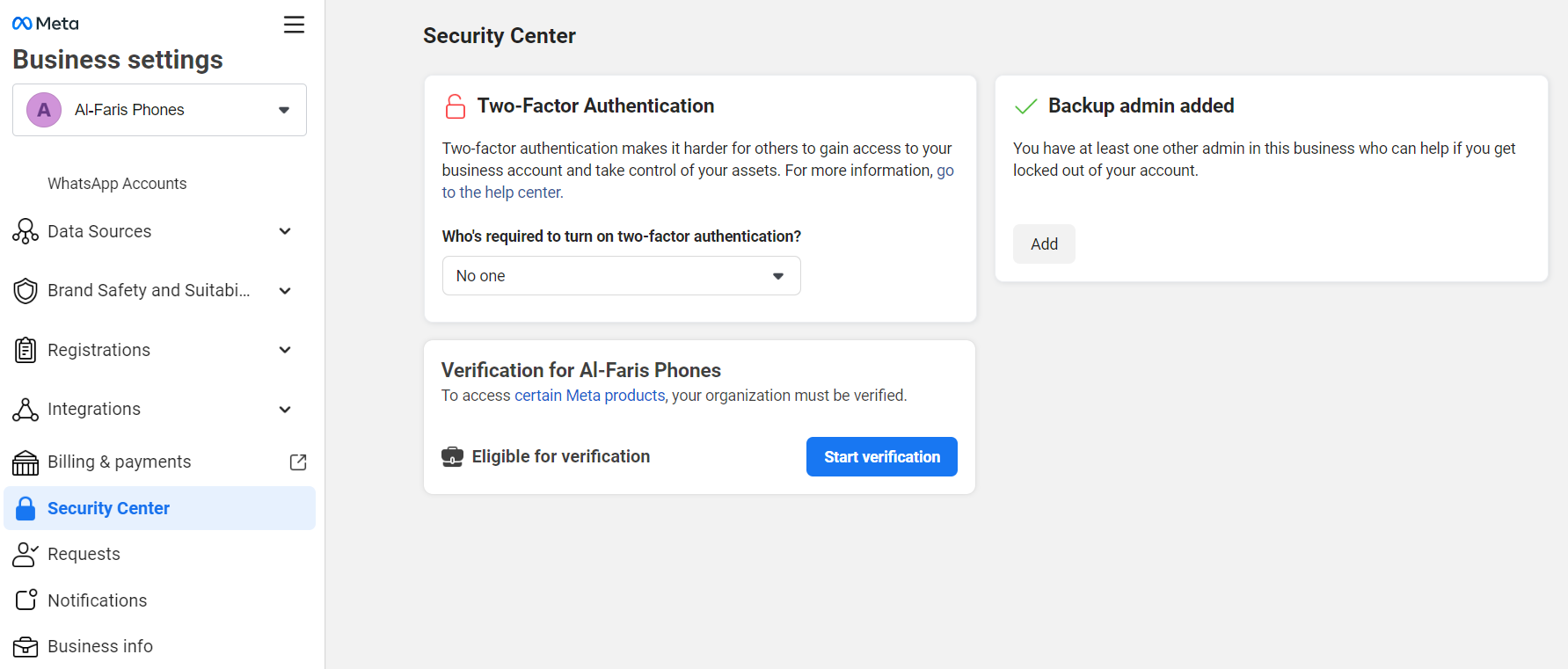
STEP 1: Click start verification and go to next dashboard. Choose your country and click next to enter all your business info correctly according to your business registration document.
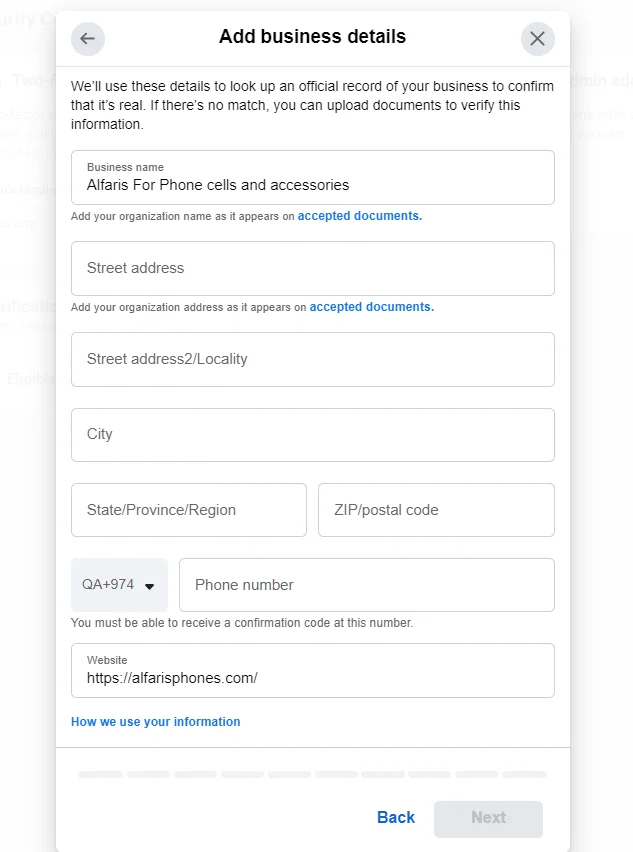
There are multiple supported languages for business verification. So, if your business documents are in your regional language, you can upload them also.
WhatsApp Coexistence: Can You Use WhatsApp Business App and API Together?
Traditionally, when a number moved to WhatsApp Business API, the business could not continue using the same number in the WhatsApp Business App in the normal way. That created friction for small businesses that already had teams, customers, labels, and daily chats inside the WhatsApp Business App.
Coexistence is designed to reduce this friction in supported cases. In simple terms, coexistence can allow an eligible WhatsApp Business App number to connect with Cloud API while the business continues using the app experience alongside API-powered workflows.
However, coexistence is not something you should assume blindly. Availability can depend on country, provider, number status, onboarding flow, Meta rules, and whether the platform supports the correct Embedded Signup or coexistence flow.
When Coexistence May Be Useful
- You already use the WhatsApp Business App daily.
- You do not want to immediately disrupt your current app-based team workflow.
- You want to add API-powered broadcasts, automation, templates, and CRM workflows.
- You want a smoother transition from app-based WhatsApp to platform-based WhatsApp.
When Coexistence May Not Be the Right Choice
- Your country or number is not eligible.
- Your provider does not support the required onboarding flow.
- You need a clean API-only setup for a sales or support team.
- Your number is already connected to another WhatsApp API provider.
- You need full control over templates, team inbox, automations, and webhooks without app-side limitations.
Before choosing coexistence, check your number eligibility, country support, provider support, and whether your current WhatsApp Business App workflow can continue as expected.
Common WhatsApp API Approval Issues and How to Avoid Them
Many WhatsApp API setup failures happen because the business is not ready before starting the process. Use this checklist before submitting business verification, display name approval, or template approval.
| Issue | Why It Happens | How to Fix It |
|---|---|---|
| Business verification rejected | Business name, address, phone number, or document details do not match Meta Business Manager details | Use the exact legal business name, address, website, and phone details from your official documents. |
| Website not accepted | Website is incomplete, has no privacy policy, has no terms page, or does not match the business | Add proper About, Contact, Privacy Policy, Terms, Refund, Shipping, or service policy pages where applicable. |
| Display name rejected | Display name does not match brand name, website, business documents, or public presence | Use your actual brand name and make sure it appears clearly on your website, social profiles, and business assets. |
| Phone number cannot be added | Number is already connected to WhatsApp, WhatsApp Business App, or another API provider | Check whether you need migration, deregistration, or coexistence instead of adding the number as new. |
| OTP not received | Wrong number, blocked international SMS or call, IVR issue, or number cannot receive verification | Use a number that can receive SMS or voice call directly. Avoid complex IVR unless call routing is configured correctly. |
| Template rejected | Template is too promotional for the selected category, unclear, misleading, or missing required context | Choose the right template category and write clear, compliant, user-expected message content. |
| Payment method missing | Meta billing is not set up or payment method is not added | Add a valid payment method in Meta Business or WhatsApp billing before running real campaigns. |
| Business category not allowed | Business falls under restricted or unsupported WhatsApp commerce or policy categories | Review WhatsApp Business Messaging Policy and Commerce Policy before applying. |
| Webhook not receiving messages | Callback URL, verify token, webhook fields, or app permissions are incorrect | Recheck webhook URL, verification token, subscribed fields, app permissions, and platform connection. |
The easiest way to avoid setup issues is to prepare your documents, website, phone number, display name, Meta Business access, billing, and templates before starting the API process.
Completing the Business Verification Process
If your Meta Business Manager is not verified, you may need to complete verification before using WhatsApp Business API at scale. Visit the Security Center or Business Info area inside your Meta Business Manager and follow the verification process.
Business Verification Checklist
- Use the exact legal business name from your registration document.
- Use the exact business address from your official document.
- Add the business phone number if it is available on official documents.
- Add a valid business website.
- Make sure your website contains Privacy Policy and Terms pages.
- Upload accepted business documents that are clear and not expired.
- Make sure your submitted information matches your website and documents.
Accepted Document Types
The primary document types that may be accepted for business verification include:
- Certificate or Articles of Incorporation
- Business Registration or License Document
- Government-Issued Business Tax Document
- Business Bank Statement
- Utility Bill for business address or phone number verification
Make sure the document is issued by a relevant authority, is not expired, and clearly shows the information Meta is trying to verify.
Setup WhatsAp API inside Sendwo
Now I assume that your business manager is verified. In the next steps, you have to implement your API with the WhatsApp marketing software.
It is important to note that you cannot run WhatsApp API-approved numbers in your WhatsApp mobile app. You must have to subscribe to a WhatsApp API-supporting application that will help you send WhatsApp messages and receive replies.
We are taking the example of the Sendwo Official API platform to setup your dashboard.
Linking WhatsApp API enabled phone numbers
STEP 1: Signup to Sendwo official API application here
STEP 2: Go to WhatsApp feature to add your number. Click on "Add new account"
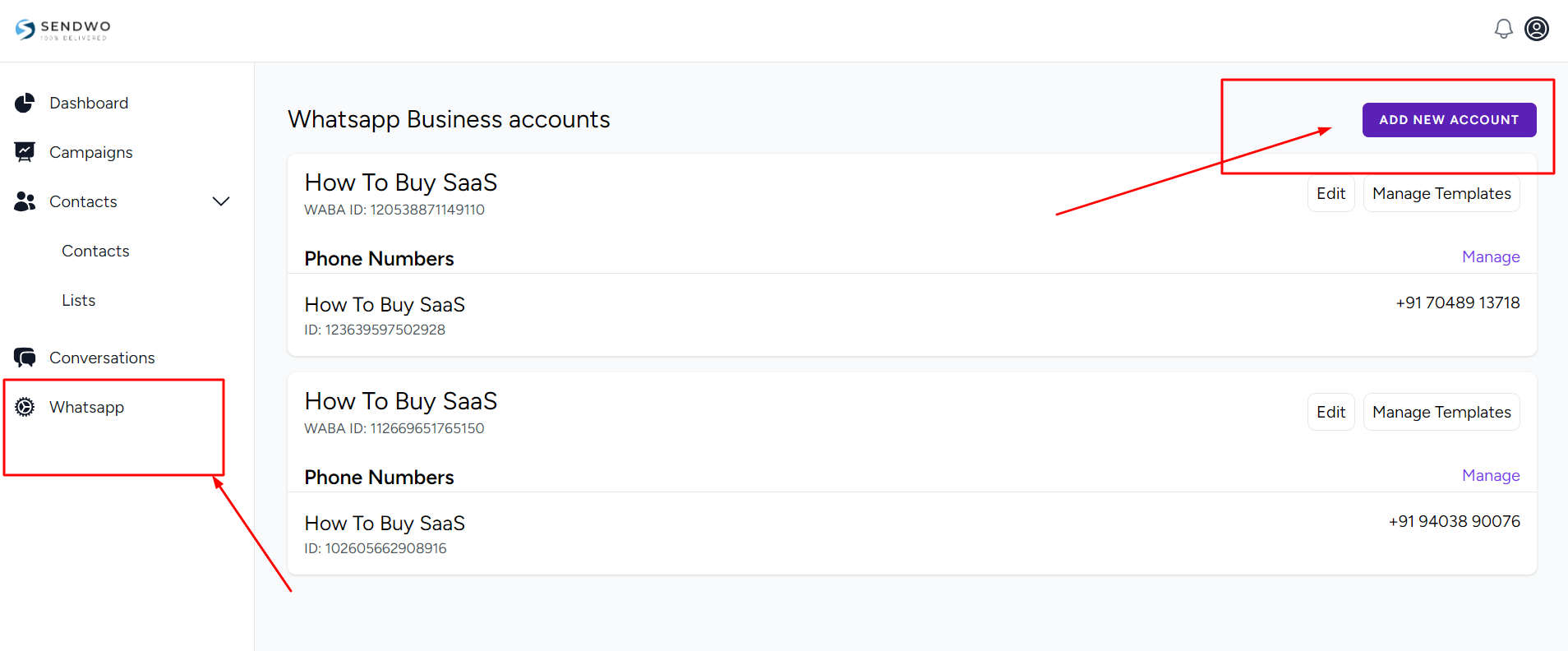
STEP 3: In order to add new number, you need to add your WABA ID and access token.
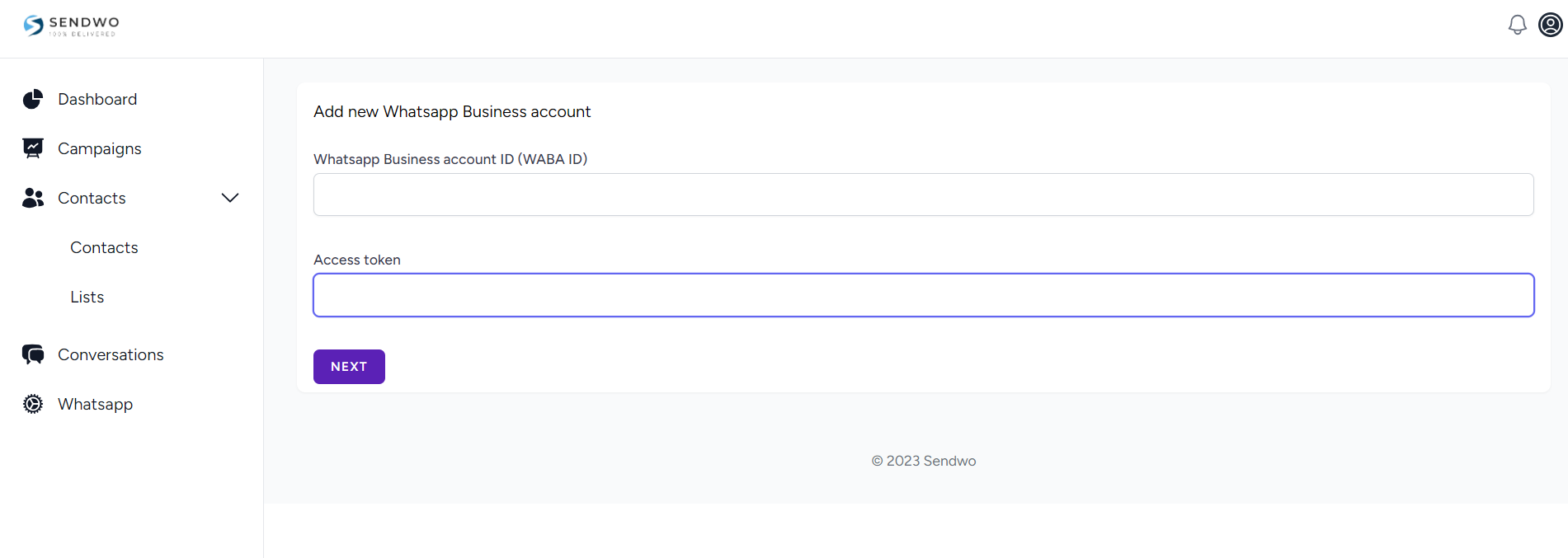
STEP 4: How to get the WABA ID and access token? Please follow the below step.
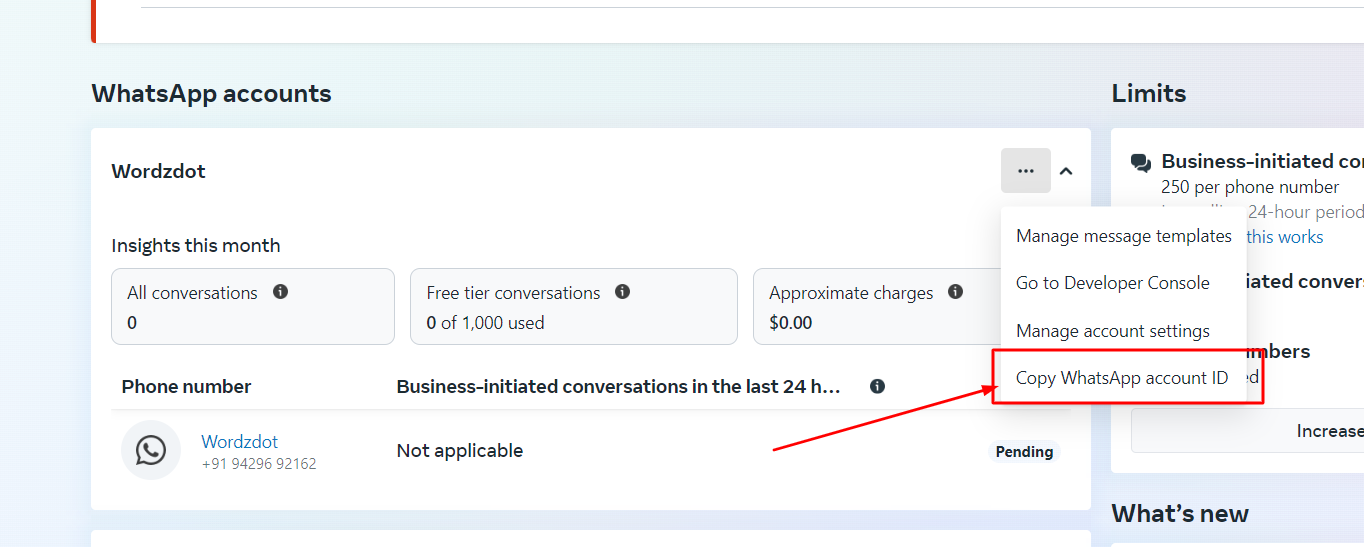
Go to your WhatsApp Manager dashboard from here
Here, choose the number which you want to link as per the image below, copy the WABA ID
STEP 5: Get the Access Token by following the step below.
In order to generate an access token, you need to add a system user. You may already have one. If not, check the screenshot below to understand how to create a system user and then generate the access token.
Go to the system user option inside your business manager from here
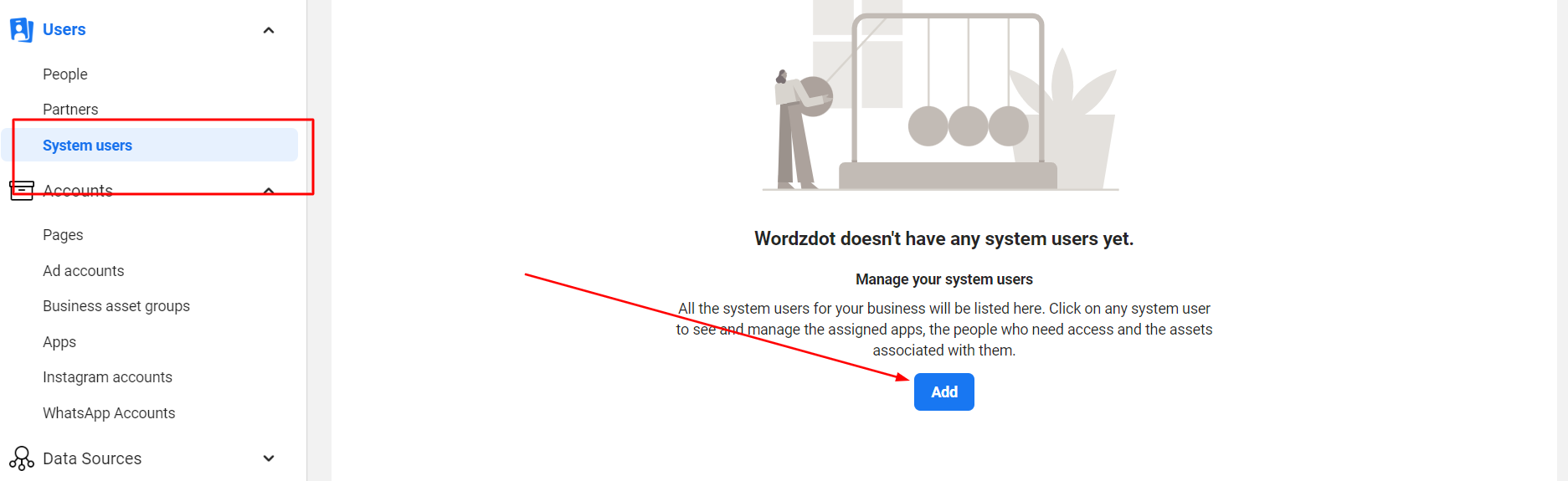
When you click on add, you have to click next and then a new dialogue box will open. Give a system user name and set it to admin.
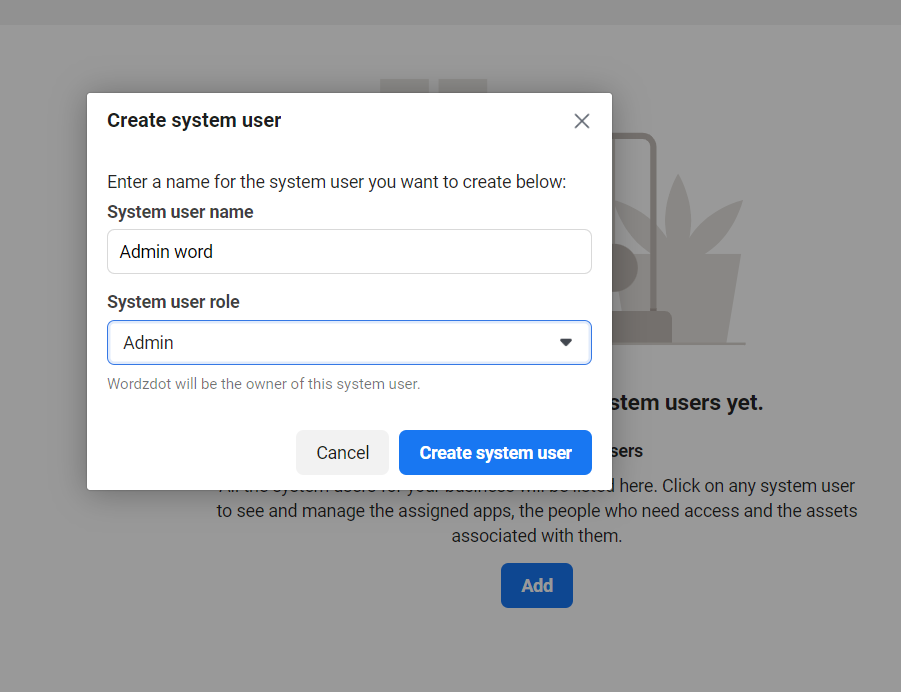
So, this will create a new dashboard that will help you generate your access token.
Click Generate access token, and select the app that you have created in the earlier step above on your business manager account. Then select the token expiration time to never and tick mark the option named as "whatsapp_business_messaging" and "whatsapp_business_management" just like the screenshot below and click generate the token.
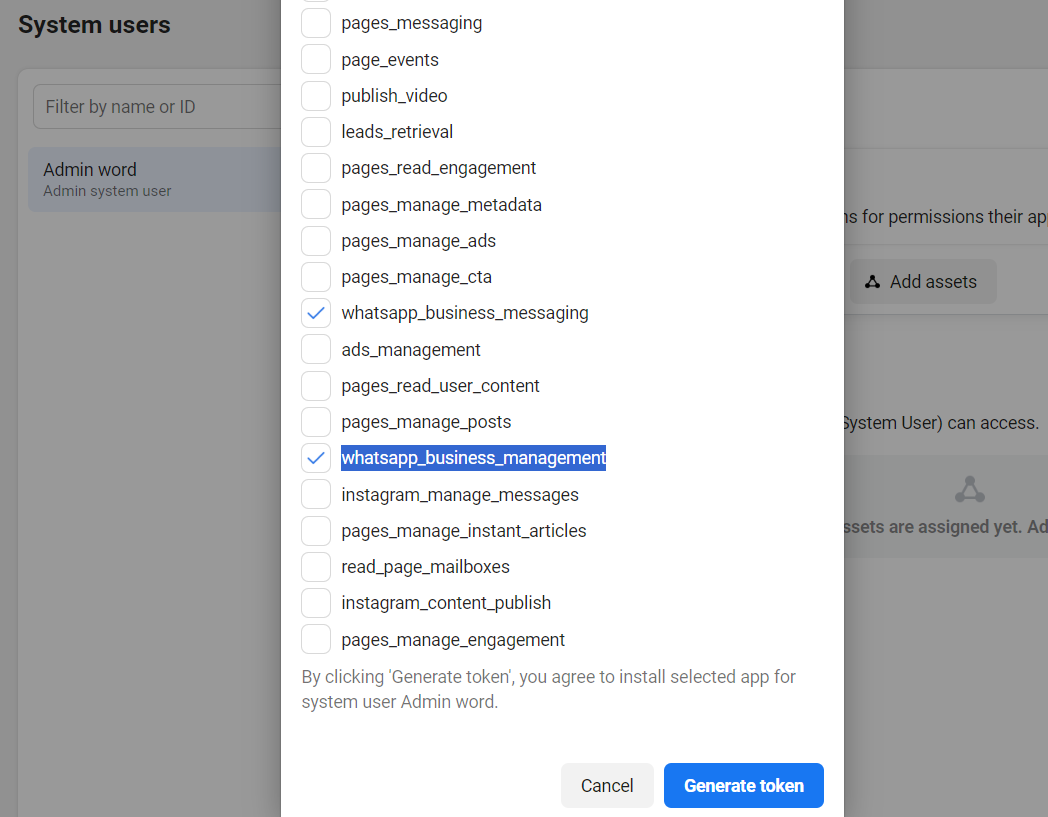
Copy the new access token that will be generated and paste it inside the Sendwo dashboard just below the WABA ID.
Once you complete this process then your WhatsApp manager accounts get linked to Sendwo. In the next step, you need to fetch all the numbers that you have added inside your WhatsApp manager. So, lets go to STEP 6.
STEP 6: Fetching phone numbers inside dashboard. Click the "get phone number from facebook"
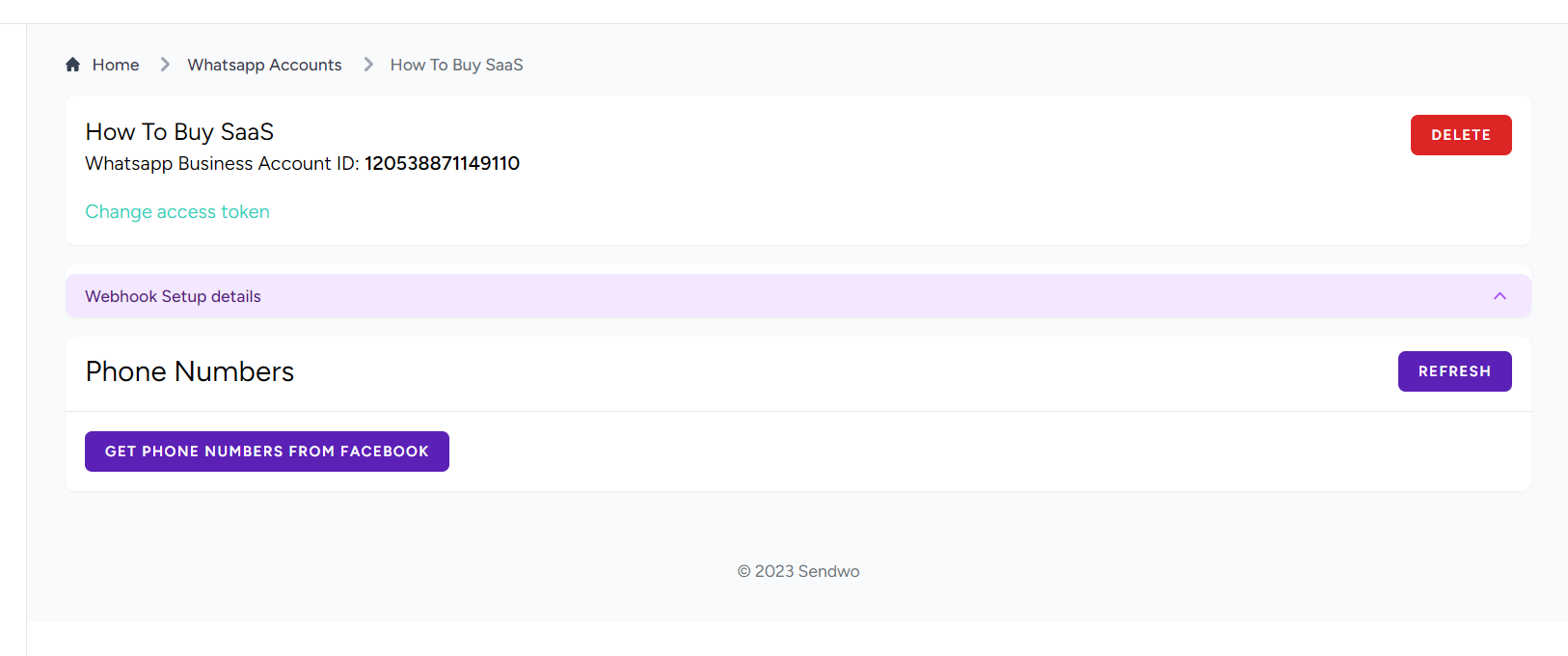
It will fetch the phone numbers that we have earlier added while setting up the phone numbers over API.
Click on ADD for the phone numbers that have been fetched from Facebook.
Now we need to setup inbox so that we can receive replies and send reply while having conversations over WhatsApp API-enabled phone numbers.
Setting up Inbox for conversation inside Sendwo
STEP 1: Go to WhatsApp menu inside Sendwo dashboard.
STEP 2: Click manage, over the phone number for which you want to setup inbox.
STEP 3: Click on webhook details and copy URLs and verification codes.
STEP 4: Go to your developer console of facebook where you have created the app for your API and go to configration option. Check the screenshot below to understand better
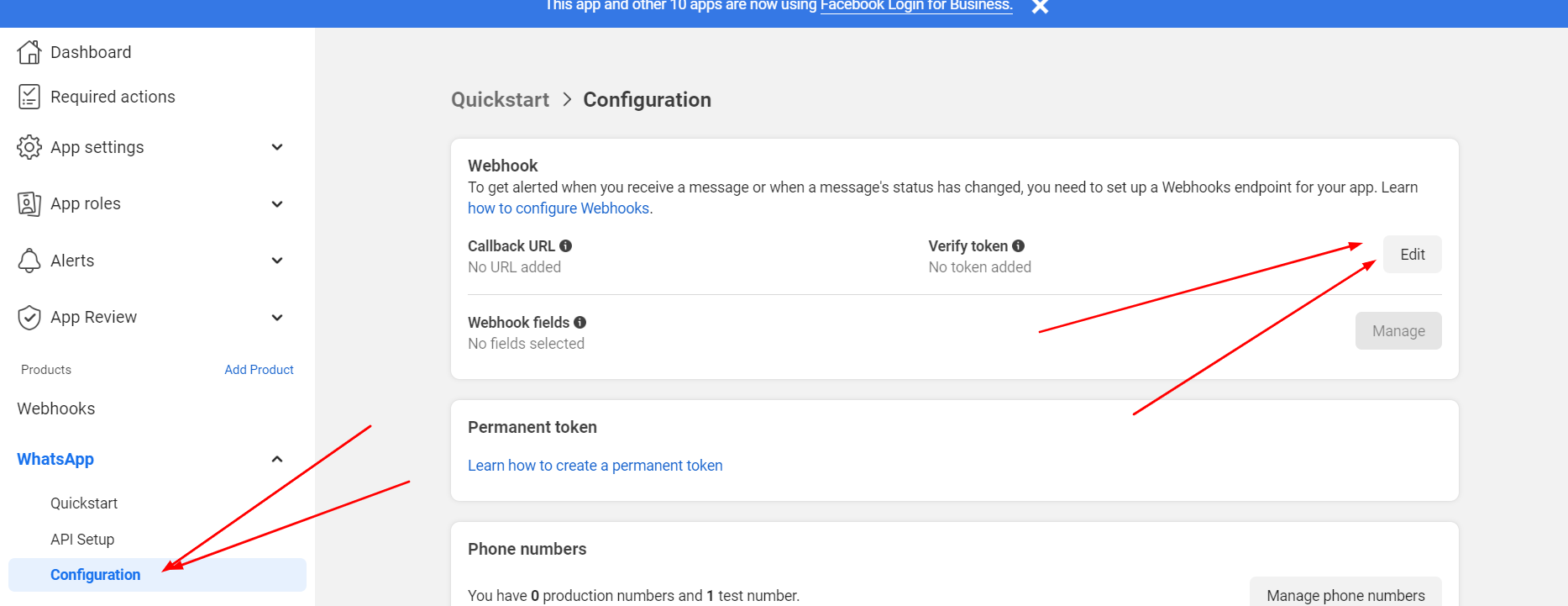
Here you have to click on edit as above and enter the webhook URL in the callback URL and webhook verification code inside the verify token option and then hit save.
You also have to click on manage button as in the above screenshot beside the "Webhook fields" and click on all check boxes to subscribe to all as in the screenshot below.
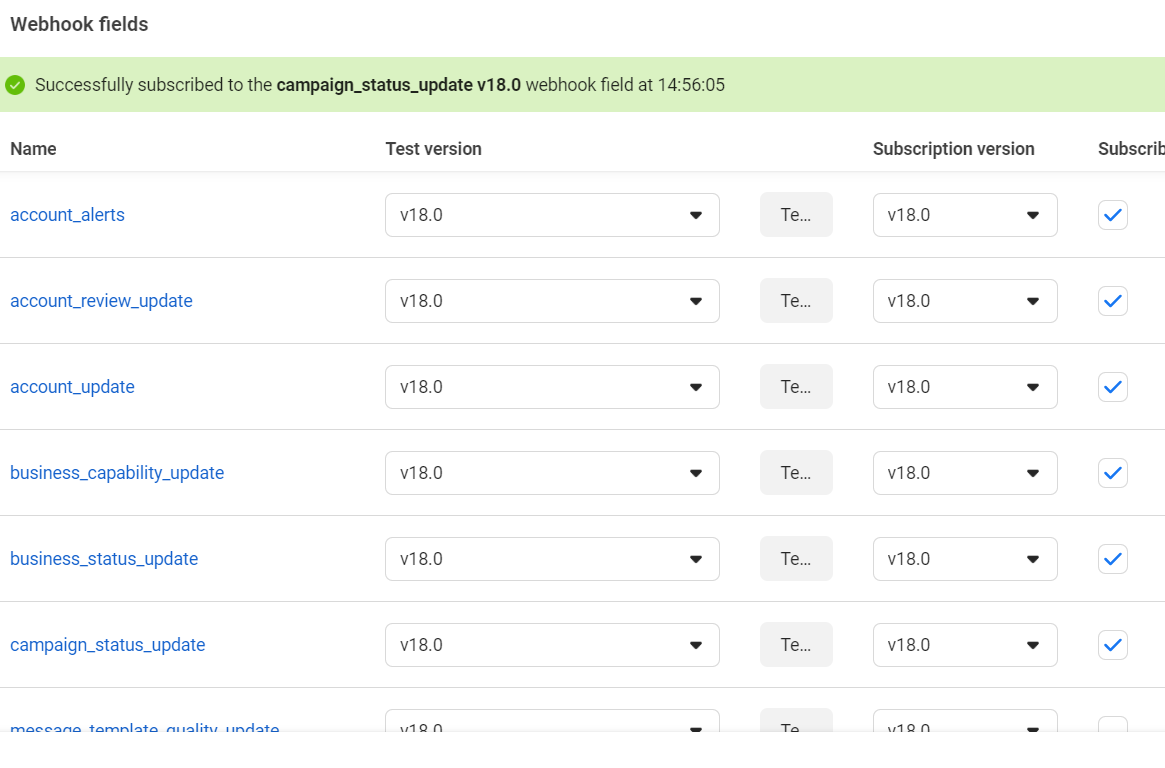
Hit done and you are all set.
This way you have setup your WhatsApp API and integrated it inside sendwo. Now you can easily create campaigns inside sendwo and run your WhatsApp marketing show.
What to Do After Connecting WhatsApp API to Sendwo
Connecting the number is only the beginning. After your WhatsApp API number is connected to Sendwo, complete these steps before running your first real campaign.
- Complete WhatsApp Business profile: Add display name, description, business category, website, email, address, and profile image.
- Create message templates: Prepare templates for marketing, utility, authentication, abandoned cart, order updates, appointment reminders, lead follow-ups, and support use cases.
- Set up inbox: Make sure replies are received inside Sendwo live chat or shared inbox.
- Import or organize contacts: Upload contacts only if you have proper opt-in and segment them with labels or custom fields.
- Build chatbot flows: Create simple FAQ, lead qualification, appointment booking, ecommerce support, or customer service flows.
- Connect ecommerce if needed: Use Shopify or WooCommerce integration for cart recovery, order updates, COD confirmation, and customer notifications.
- Test with a small campaign: Send a small internal test before broadcasting to customers.
- Monitor analytics: Track delivery, failed messages, replies, engagement, and conversions.
For ecommerce businesses, also explore abandoned cart templates, COD confirmation templates, WhatsApp template library, and WhatsApp campaign examples.
What Businesses Can Do With WhatsApp API After Setup
Once your WhatsApp API number is connected to Sendwo, you can use it for multiple business workflows.
| Use Case | How Sendwo Helps | Relevant Internal Page |
|---|---|---|
| WhatsApp broadcasts | Send approved campaigns to segmented contacts with templates and reports. | WhatsApp broadcast campaigns |
| AI chatbot automation | Use AI replies, chatbot training, automated flows, and support automation. | Sendwo AI |
| Shared inbox | Manage customer replies, assign conversations, add notes, and organize chats. | Shared team inbox |
| Shopify automation | Send cart recovery, order updates, and ecommerce notifications. | Shopify WhatsApp integration |
| WooCommerce automation | Automate order updates, cart reminders, and WordPress ecommerce messages. | WooCommerce WhatsApp integration |
| Forms and flows | Collect lead data, appointment details, feedback, survey responses, and customer information. | WhatsApp forms |
| Developer workflows | Use APIs, webhooks, and integrations to connect WhatsApp with business systems. | Sendwo API overview |
Final Thought
Setting up WhatsApp Business API in 2026 is not only about creating a Meta developer app or adding a phone number. You need to choose the right setup path, understand Meta’s per-message pricing, prepare your business documents, use a compliant website, select the right display name, create approved templates, connect your number to a reliable dashboard, and test inbox or webhook behavior before running campaigns.
The manual developer setup explained in this guide is still useful for technical users. But if you want a faster and simpler route, use Embedded Signup or request guided setup through Sendwo.
Sendwo helps businesses connect WhatsApp API, run broadcasts, manage replies, create chatbot flows, use AI replies, build WhatsApp forms, connect ecommerce workflows, and scale customer communication with 0% Sendwo markup on official Meta WhatsApp API pricing.
FAQs About WhatsApp Business API Setup
1. What is the easiest way to set up WhatsApp Business API in 2026?
The easiest way is to use Embedded Signup through a WhatsApp API platform such as Sendwo. This reduces manual work because business details, WABA connection, phone number connection, and platform access can be handled through a guided flow.
2. Can I still set up WhatsApp Business API manually?
Yes. You can still manually create a Meta developer app, add the WhatsApp product, create or select a WhatsApp Business Account, add a phone number, generate access token, copy WABA ID, configure webhooks, and connect it to a platform such as Sendwo.
3. How does WhatsApp API pricing work in 2026?
Meta charges WhatsApp Business Platform messages on a per-message basis when a message is delivered. Pricing depends on the recipient’s market and message category: marketing, utility, authentication, or service.
4. Does Sendwo add markup on Meta WhatsApp API pricing?
No. Sendwo charges 0% markup on official Meta WhatsApp API pricing. Businesses pay for the Sendwo software plan separately, while Meta WhatsApp API charges remain separate based on official usage.
5. Can I use the same number on WhatsApp Business App and WhatsApp API?
In supported cases, coexistence may allow eligible businesses to use the WhatsApp Business App and Cloud API together. However, this depends on country, number eligibility, provider support, and onboarding flow. Always confirm eligibility before starting.
6. Why is my WhatsApp Business API setup rejected?
Common reasons include mismatched business details, incomplete website, missing policy pages, unsupported business category, display name mismatch, incorrect phone number setup, missing payment method, or policy violations.
7. Why is my WhatsApp display name rejected?
Display names are commonly rejected when they do not match the brand, website, business documents, or public business presence. Use the exact brand name customers recognize and make sure it appears on your website and business assets.
8. Do I need business verification for WhatsApp API?
Business verification may be required depending on your setup, limits, business needs, and Meta’s review requirements. You should prepare business registration documents, tax documents, business bank statement, utility bill, website, and matching business details before applying.
9. What should I do after connecting WhatsApp API to Sendwo?
Complete your business profile, create templates, set up inbox, configure webhooks if required, import opted-in contacts, create labels, build chatbot flows, test campaigns, and monitor delivery and replies.
10. Can Sendwo help with WhatsApp API setup?
Yes. Sendwo can help businesses connect WhatsApp API, run campaigns, set up templates, manage replies, build chatbot flows, configure ecommerce workflows, and use WhatsApp marketing automation.
11. Can I migrate from another WhatsApp API provider to Sendwo?
Yes. If you already use a provider such as WATI, AiSensy, Interakt, Zoko, Gupshup, or another WhatsApp API platform, review your WABA ownership, phone number status, templates, contacts, chatbot flows, ecommerce workflows, and billing before migration. You can review the migrate to Sendwo page before switching.
12. What type of templates should I create first?
Most businesses should start with utility and marketing templates for their main use cases. Examples include lead follow-up, appointment reminder, order confirmation, payment reminder, abandoned cart, COD confirmation, delivery update, webinar reminder, and customer support follow-up.
Aditi Kamini
Aditi, a content marketer at SendWo, is a passionate writer and marketing enthusiast. She excels in driving revenue campaigns, building client relationships, and mastering content creation, SEO, customer service, and project management.