In today’s digital age, WhatsApp is transforming how teachers, students, and parents connect. This messaging app, once just for friendly chats, is now a powerful educational tool bridging the classroom and home. With over 2.78 billion active users globally (as of 2024), WhatsApp’s widespread adoption makes it a natural choice for schools. Educators are leveraging it to share instant updates, coordinate learning activities, and build a supportive community beyond school walls. The result? More engaged students, better-informed parents, and a stronger school-home partnership.
In this comprehensive guide, we explore why WhatsApp is a game-changer for education, how it can engage students and parents through innovative strategies, and best practices to maximize its impact. We’ll also address common questions about using WhatsApp in education. By the end, you’ll see how WhatsApp can enrich communication in your school – and be ready to put it into action.
1. Everyone’s Already There
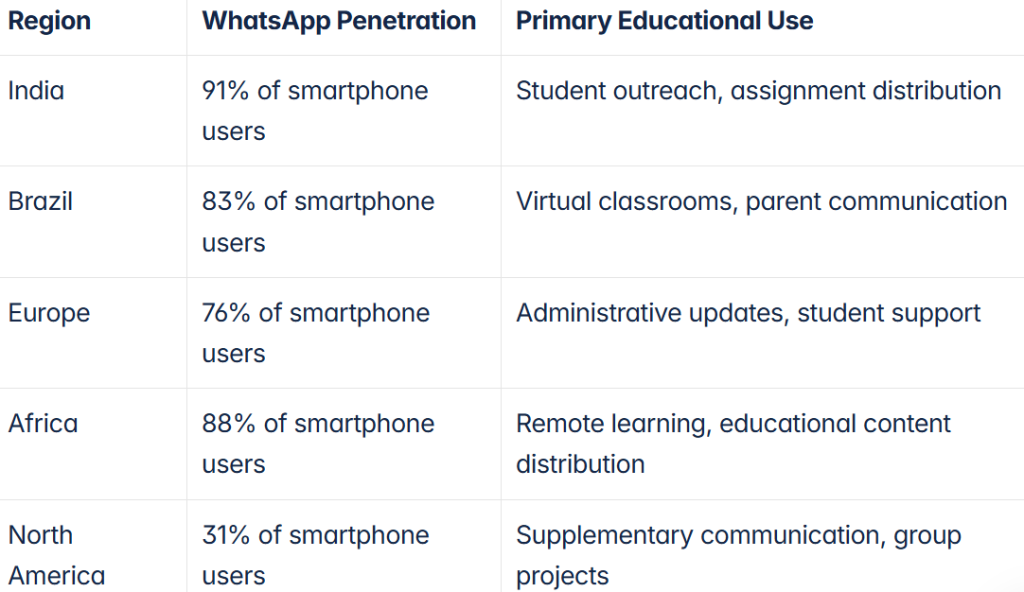
One of WhatsApp’s biggest advantages is its ubiquity. Parents, students, and teachers are likely already using it daily. This means no learning curve or new app to install – communication can start right away on a familiar platform. In many countries, WhatsApp is nearly universal: for example, messaging app penetration is around 97-98% in places like Brazil and India. With such reach, schools can reliably contact almost their entire community with a single message.
2. Instant, High-Engagement Messaging
WhatsApp delivers messages in real time, leading to rapid responses and engagement. Unlike school emails that might sit unopened (the average open rate for emails is only ~25%), WhatsApp messages boast an open rate of about 98%. In fact, education tech experts note that WhatsApp outperforms email and SMS in student engagement by over 75%. This immediacy is invaluable – urgent announcements (like a weather closure or schedule change) reach everyone within minutes. As one college administrator put it, “receiving immediate responses to campaigns is a great modern way to communicate with learners who do not always read their emails!”.
3. Multi-Modal and Interactive
WhatsApp isn’t just text – it’s images, videos, voice notes, documents, and even quick polls. This multimedia support makes communication vibrant and clear. Teachers can send a photo of the day’s homework on the board, a quick voice note to explain a tricky concept, or a video snippet of a class activity. Such rich content turns static announcements into engaging storytelling. Students respond better to these interactive messages than to plain text, and parents appreciate the window into their child’s day. The app’s features (like emojis, stickers, GIFs) can add a bit of fun and personality, making conversations feel more human and approachable.
4. Cost-Effective and Accessible
WhatsApp is free and works on almost any smartphone with internet. Schools don’t need costly new communication systems when a simple WhatsApp group can do the job. There are no SMS fees, and messages can be sent anywhere globally at no extra cost. This is a boon for schools with families spread across regions or countries. It also works on Wi-Fi, so even those with limited mobile data can stay connected. By eliminating geographical barriers and high costs, WhatsApp opens countless opportunities for learning and collaboration, from urban centers to remote communities.
5. Secure and Private
Concerned about privacy? WhatsApp’s messages are protected with end-to-end encryption, meaning only the sender and receiver can read them. Even WhatsApp itself can’t access the content. This is critical when sharing school-related information. Communications like student progress updates or grade reports stay confidential to the group or individual chat. The platform is also compliant with major data protection regulations (like GDPR in Europe) and continually adds safety features. In short, messages are secure from prying eyes – a reassuring fact for schools and parents alike.
Story Spotlight: At a public school in New York City, a simple WhatsApp group became “the heart” of the school community during the COVID-19 lockdown. Parents and teachers exchanged hundreds of messages, sharing everything from virtual talent show videos to urgent tech support tips for online classes. Remarkably, this constant communication helped keep student attendance at 98% during remote learning. The WhatsApp group wasn’t just about academics; it became a lifeline, organizing food drives, troubleshooting internet issues, and keeping morale up in a challenging time. This real-world example shows WhatsApp’s power to hold a school community together, even in crisis.

WhatsApp enables students to ask questions anytime and receive quick responses from teachers or peers. This immediate support strengthens understanding, prevents confusion from compounding, and promotes continuous learning. Whether it’s homework help or concept clarification, real-time communication boosts student confidence and motivation.
WhatsApp groups act as virtual study spaces, encouraging students to discuss assignments, share resources, and collaborate on projects. Group chats promote peer-to-peer learning, communication skills, and inclusivity, especially for students less likely to speak in class. The platform supports continuous academic interaction beyond school hours.
Teachers can share images, videos, audio clips, and documents to explain concepts more vividly. From science demos to pronunciation practice or quick polls, WhatsApp turns lessons into engaging experiences. These varied formats cater to different learning styles and make studying feel more dynamic and fun.
One-on-one chats allow teachers to give targeted feedback or encouragement to students needing extra support. This personal attention fosters stronger relationships, helping students feel seen and supported in their learning journey.
Whether during absences, field trips, or school closures, WhatsApp ensures learning continues. Teachers can post recaps, assignments, and updates anytime. The app supports educational continuity across different contexts, including vacations and remote learning.

Engaging parents in their child’s education is crucial – studies have long shown that active parent involvement leads to improved student performance and better learning outcomes. WhatsApp makes it significantly easier for schools to keep parents in the loop and foster a supportive community. Here’s how:
No more crumpled notices lost at the bottom of a backpack! With WhatsApp, schools can send instant announcements directly to parents’ phones. Whether it’s a reminder about upcoming parent-teacher meetings, a change in the school schedule, or a notice that “Grade 5’s field trip will return at 5 PM, not 4 PM”, WhatsApp ensures the message is seen promptly. Many schools create a broadcast list or a parents’ group for each class to share homework updates, test schedules, and event invitations. Because messages pop up as notifications, parents are far more likely to see them compared to emails or printed flyers. This immediacy gives parents more time to plan and respond, for example, making arrangements for a late pickup on that field trip day. In one survey, school administrators noted they could reach more parents via WhatsApp and get responses faster than any other platform.
Traditionally, parents heard about their child’s progress only during report card time or occasional conferences. WhatsApp enables more continuous, informal communication about how a student is doing. Teachers can quickly message a parent to share a small victory (“Johnny solved a tough math problem today!”) or note a concern early (“I noticed Ana seemed distracted in class this week.”). These quick exchanges help catch issues before they escalate and reinforce positive behavior in real-time. Some teachers even share snapshots of a student’s artwork or a short video of them presenting in class, giving parents a proud glimpse of classroom moments. This kind of ongoing dialogue builds trust – parents feel the teacher truly knows and cares about their child, and teachers gain insights from parents that help in class. The home-school connection becomes stronger, forming a team around the student.
WhatsApp groups that include parents (and sometimes students with the teacher, depending on age) can function as vibrant mini-communities. In these groups, parents can ask questions, share ideas, and support each other. For example, a parent might ask if any other child struggled with a homework question, and another parent (or the teacher) can clarify it. When used positively, these groups create a sense of “we’re all in this together.” Parents celebrate each other’s children’s achievements shared in the group, be it a sports win or a good grade, fostering a supportive atmosphere. During lockdowns and remote learning phases, many schools found that parent WhatsApp groups became indispensable for mutual help, from sharing tips on setting up Zoom to arranging neighborhood study pods. In a Brooklyn school’s parent WhatsApp chat, families even coordinated food drives and tech support for each other during COVID-19, truly becoming “una gran familia” (one big family).
When communication is easy and open, parents naturally become more involved. WhatsApp lowers the barriers – parents don’t have to wait for the monthly newsletter or struggle to find time for a phone call; they can engage on the go. A quick query about homework or a clarification about an upcoming event is just a message away. This convenience particularly helps busy working parents stay connected. Engaged parents can reinforce classroom messages at home, help students with assignments they know about, and generally create a more consistent support system for the child. However, with great connectivity comes the need for boundaries: Teachers should set expectations that while they welcome messages, replies might be within work hours. It’s also wise to establish etiquette (for example, no spamming the group with unrelated forwards or gossip). When managed well, increased engagement via WhatsApp is a win-win: parents feel heard and informed, and teachers gain allies who reinforce education at home.
By leveraging WhatsApp, schools demonstrate transparency – an openness to communicate regularly and directly. This can significantly build trust between families and the school. Parents are more likely to trust a school when they feel informed about what’s happening and have a direct line to ask questions. Whether it’s curriculum changes, updates on a child’s behavior, or emergency communications, WhatsApp keeps everyone on the same page. A trusted relationship means parents will be more comfortable reaching out with concerns, and also more receptive to feedback or suggestions from teachers. Over time, this trust leads to a stronger collaborative effort toward each child’s success.
While WhatsApp is a fantastic tool, its effective use in schools requires some planning and policy. Here are the best practices to ensure smooth, productive communication that benefits everyone:
1. Establish Clear Guidelines: Set the ground rules from the start. Decide who can post in groups and what content is appropriate. For instance, a class group may be for academic topics and important announcements only, not idle chit-chat. Some schools choose a one-way “announcement group” (only admins/teachers can post) for official notices, and a separate discussion group for Q&A and general chatter. Clearly communicate expected etiquette: no sharing of anyone’s personal data, no rumors or inappropriate language, and respect for privacy. Also define “quiet hours” when teachers will not respond (e.g., not after 8 PM or on Sundays) to maintain work-life balance. A 2017 study on parent-teacher WhatsApp use concluded that the tool is “necessary and beneficial” – but only if boundaries are defined and respected. So, outline those boundaries early!
2. Get Consent and Be Inclusive: Before adding someone to a group, especially parents, get their consent. Not everyone may be familiar or comfortable with group messaging. Explain the purpose of the group and how it will be used. It’s also important to ensure no one is left out – if a family doesn’t use WhatsApp, have an alternative way to reach them (like SMS or email) for important info, or help them get set up if possible. In multicultural communities, consider language needs – you might need to have bilingual announcements or appoint a parent volunteer who can translate key messages in the chat so all parents understand. Inclusion builds trust and maximizes the reach of your communication.
3. Use Groups (and Communities) Strategically: Avoid the chaos of a single giant group for the whole school. Instead, organize WhatsApp communication by relevance:
4. Protect Privacy: Remind all participants that WhatsApp shows phone numbers to group members (unless using Communities, where members of separate groups don’t see each other’s numbers). Encourage respect for privacy – no one should share a contact’s number outside the group or use it for unsolicited messaging. For sensitive communications (like discussing a child’s specific issue), a direct one-on-one WhatsApp chat or a phone call is better than a group message. Never post confidential student information (e.g., grades, medical info) in a group chat. If sharing photos or videos from class, make sure parents are okay with it (many schools include media consent in their onboarding forms). It’s also wise for teachers/admins to use features like disappearing messages for certain chats if discussing something sensitive – this adds an extra layer of privacy. By being mindful of privacy, you create a safe space that people feel comfortable participating in.
5. Moderate and Manage Kindly: Every WhatsApp group needs an admin who can steer the conversation and step in if things go off track. For class groups, the teacher (or a responsible parent representative) should monitor that the chat stays on topic. If a heated discussion or misinformation starts brewing, intervene calmly: clarify facts or suggest taking detailed debates offline. Enforce the rules consistently – e.g., if someone shares a non-school promotional link, gently remind them of the group’s purpose and delete the message if needed. WhatsApp now allows admins to delete messages for everyone, which can be useful to remove inappropriate content quickly. Also, use the “only admins can post” setting for announcement groups to avoid noise. By keeping groups well-managed, you ensure they remain valuable and everyone feels respected.
6. Leverage WhatsApp Features for Efficiency: Use WhatsApp’s built-in tools to your advantage. Star important messages (like an address or deadline a parent shared) so you can find them later. Use labels (if using WhatsApp Business) to tag conversations (e.g., “Fees query” or “Transport”) for easy follow-up. The search function can help locate past info (like if a parent asks, “When is the annual day?”, you might find you posted it last month). You can also pin the most important group (perhaps your class group) to the top of your WhatsApp for quicker access. For schools handling large volumes of chats, there are even WhatsApp Business API solutions that integrate with CRM systems to broadcast messages or manage inquiries at scale, but for most, the regular app suffices. The key is to stay organized and use these tools so that WhatsApp remains a help, not a distraction, in your workflow.
7. Maintain Professionalism and Tone: WhatsApp feels casual, but when using it for school, maintain a friendly yet professional tone. Avoid slang that could be misinterpreted, and be mindful of cultural differences in communication. Emojis can help convey warmth, but use them judiciously. Also, remember that written text lacks tone – what’s meant as a lighthearted comment could be taken seriously by someone else. So, when in doubt, err on the side of clarity and courtesy. Encourage parents and students to do the same. By setting an example of a positive, respectful tone, you’ll prevent most misunderstandings and make the group a pleasant place for all.
8. Know When to Switch Channel: Not every conversation is best on WhatsApp. If an issue is complex or sensitive (e.g., a serious concern about a student’s performance or behavior), it might be better addressed through a phone call or in-person meeting rather than an extended chat exchange. Use WhatsApp to schedule a meeting or call in such cases (“I understand your concern. Can we discuss this over a call tomorrow?”). This keeps the chat from becoming an overwhelming wall of text and ensures important discussions get the attention they deserve. Also, if a parent or student is unresponsive on WhatsApp, have a backup plan to reach them (some people mute groups, or they might change numbers).
Following these best practices will help your WhatsApp communications run smoothly, minimizing hiccups and maximizing the benefits for your educational community.
While WhatsApp offers numerous benefits, educators should be aware of potential pitfalls and how to address them:
WhatsApp’s impact on education isn’t just theoretical – numerous schools and institutions have reported tangible improvements after adopting the platform for communication:
As mentioned earlier, during remote learning phases, active WhatsApp communication helped some schools maintain astonishingly high attendance. In one example, a school achieved 98% attendance in virtual classes thanks in part to consistent WhatsApp updates and check-ins with parents. Students felt accountable and supported, knowing their teacher and classmates were just a message away each day. Even in traditional settings, teachers note that students participate more in learning activities when a WhatsApp forum is available for follow-up questions and discussions.
Schools utilizing WhatsApp often see an uptick in parent satisfaction and involvement. Busy parents appreciate being informed without needing to dig through emails or wait for newsletters. Quick resolution of doubts (e.g., confirming if it’s a dress-down day or uniform day) reduces anxiety and last-minute scrambles. In feedback surveys, parents frequently cite the class WhatsApp group as a highlight, making them feel “in the loop” and connected to the school community. This goodwill can translate into more parent volunteers for school events and a generally positive school reputation.
From coordinating last-minute schedule changes to rallying help for a family in need, WhatsApp speeds up the mobilization of resources. Case in point: In the Brooklyn school community chat, when families mentioned they were short on food or had tech trouble, responses and solutions were crowdsourced within hours. In another instance, a high school used WhatsApp to coordinate tutoring sessions for struggling students; volunteer seniors stepped up to help sophomores once the need was posted in a group. This agility means small issues are addressed before they become big problems, creating a safety net through collective effort.
While WhatsApp itself is not teaching content, the increased communication often leads to better academic support. Students who might procrastinate on projects get gentle reminders in the group. Those who are confused can ask questions and get clarifications, leading to less frustration and better homework completion. Some teachers run fun quizzes or share extra learning videos on WhatsApp, which reinforce classroom learning. Over a term or year, these little boosts add up. It’s hard to directly measure, but teachers report higher homework turn-in rates and even test score improvements in classes that actively use WhatsApp for academic support. Moreover, a systematic review of WhatsApp utilization in education found positive effects on collaborative learning and student motivation in multiple studies.
Perhaps the most significant impact is the strengthening of trust and rapport between the school and families. Instead of parents only hearing from school when there’s a problem or at formal meetings, WhatsApp keeps a steady flow of two-way communication. This transparency and frequent, informal touchpoints mean that when a serious issue does arise, there’s already a foundation of trust to build upon. Teachers become more approachable figures rather than distant authorities – a win for student support. Parents, on the other hand, feel more accountable and engaged in the education process. Over time, the school community transforms into something more tight-knit and supportive, much like an extended family aligned for the students’ well-being.
Some educators have creatively integrated WhatsApp into their pedagogy. For example, language teachers set up WhatsApp “immersion” chats where only the foreign language is allowed, giving students daily practice. History teachers ran a week-long role-play in a WhatsApp group, with students posting messages as historical figures during a mock crisis, blending fun with deep learning. Science teachers share “fact-of-the-day” or short puzzles on WhatsApp to spark curiosity outside class hours. These innovations keep students excited and thinking about subjects beyond the classroom. WhatsApp’s informal medium often encourages students to engage in ways traditional methods did not, simply because it feels less like school and more like a personal challenge or game.
These success stories illustrate a common theme: when used thoughtfully, WhatsApp can significantly enhance engagement, support, and outcomes in education. It’s not a magic bullet – good teaching and involved parenting are still the core. But WhatsApp serves as a powerful enabler, connecting those elements more efficiently and humanizing the educational experience.
WhatsApp has emerged as a dynamic ally for educators and parents aiming to enrich the learning journey of students. Its real-time, conversational style of communication brings a human touch that formal emails and portals often lack. From instant clarifications on assignments to sharing the joy of student achievements, WhatsApp bridges gaps and brings the classroom into the palm of your hand. We’ve seen how it boosts student engagement through collaborative learning and timely support, and how it empowers parents to be more involved without being intrusive. By implementing best practices and clear boundaries, schools can harness WhatsApp’s benefits while minimizing potential downsides.
It has been very evident by now that schools that communicate better, perform better, and WhatsApp is helping make that happen with ease and speed. Education in the digital era is all about connectivity and community, and WhatsApp delivers both in spades.
Now, it’s your turn. Is your school or classroom ready to join the WhatsApp revolution? Don’t be left behind – many forward-thinking educators are already transforming their communication and seeing happier, more engaged students and parents. Take action today by creating a class WhatsApp group with clear guidelines, or introduce the idea of a school-wide WhatsApp community to your PTA or principal. Even a small step can make a big difference in how information flows and how everyone feels supported.
Go ahead and unlock the power of WhatsApp in your educational community. By doing so, you’ll not only save time and reduce communication gaps – you’ll also build stronger relationships that ultimately enhance the educational experience for all. In the journey of education, let’s stay connected and learn together – one WhatsApp message at a time.
The sooner you embrace these tools, the sooner your students and parents will feel the difference. Engage, inform, and inspire – with WhatsApp as your partner, the possibilities are endless.
WhatsApp can be used in education by creating class groups for discussions, sending announcements and reminders, sharing learning materials (like PDFs, videos, links), and enabling quick Q&A between students and teachers. Teachers often use it to provide homework help or feedback in real-time, while schools use it to update parents about events and student progress. The key to effectiveness is setting clear guidelines for its use (for example, keeping chats on-topic and during reasonable hours) and ensuring all participants have access. When used well, WhatsApp becomes a virtual extension of the classroom, increasing engagement and ensuring everyone stays informed.
There are many benefits. First, WhatsApp offers real-time communication, so students can get doubts cleared quickly rather than waiting for the next class. Second, it enables collaborative learning – group chats let students brainstorm and help each other anytime, building a supportive peer network. Third, WhatsApp’s multimedia features make learning interactive; teachers can share videos, images, and voice notes to explain concepts in diverse ways. Finally, because students are comfortable on WhatsApp, they are more likely to participate – studies have found that student engagement on WhatsApp is significantly higher compared to traditional channels. All these factors lead to more motivated students who take initiative in their learning.