In the digital age, patient communication and engagement have become as critical as the medical care itself. Healthcare clinics and doctors worldwide are turning to WhatsApp as a marketing and communication channel – and for good reason. WhatsApp boasts over 2 billion active users globally, offering a direct line to patients on a platform they already use daily. With its personal, instant, and convenient nature, WhatsApp marketing for healthcare has emerged as a game-changer in how clinics and practitioners connect with patients.
Imagine a patient receiving a friendly WhatsApp reminder about their upcoming appointment, or a doctor broadcasting wellness tips to hundreds of subscribers with one click. The result? Higher patient satisfaction, reduced no-show rates, and stronger doctor-patient relationships.
In this comprehensive guide, we’ll explore why WhatsApp marketing is so powerful for clinics and doctors, how to implement it effectively with real-world use cases, best practices to follow, tools you can leverage, and important privacy considerations. By the end, you’ll see how embracing WhatsApp can elevate your practice’s outreach and patient care – and you’ll be ready to put it into action with confidence.

A healthcare professional leveraging WhatsApp to connect with patients, illustrating the power of direct messaging in modern healthcare marketing.
WhatsApp is one of the most widely used messaging apps in the world, available in over 180 countries and approaching 3 billion users. Patients of all ages are on WhatsApp, which means your clinic can reach a broad audience instantly. Moreover, WhatsApp messages enjoy an open rate of around 98%, far higher than email’s typical ~20%. In other words, nearly every message you send will be seen and read, often within minutes, giving you a direct line to patient attention.
Unlike traditional marketing channels, WhatsApp enables two-way conversations in real time. Doctors and clinics can chat directly with patients in a personal, conversational manner. This immediacy means questions get answered faster and issues addressed sooner, improving the patient experience. In fact, responding quickly via WhatsApp helps patients get help quicker, with less waiting, leading to a better overall experience. The personal touch – using the patient’s name, addressing their specific needs – also builds trust and a deeper connection.
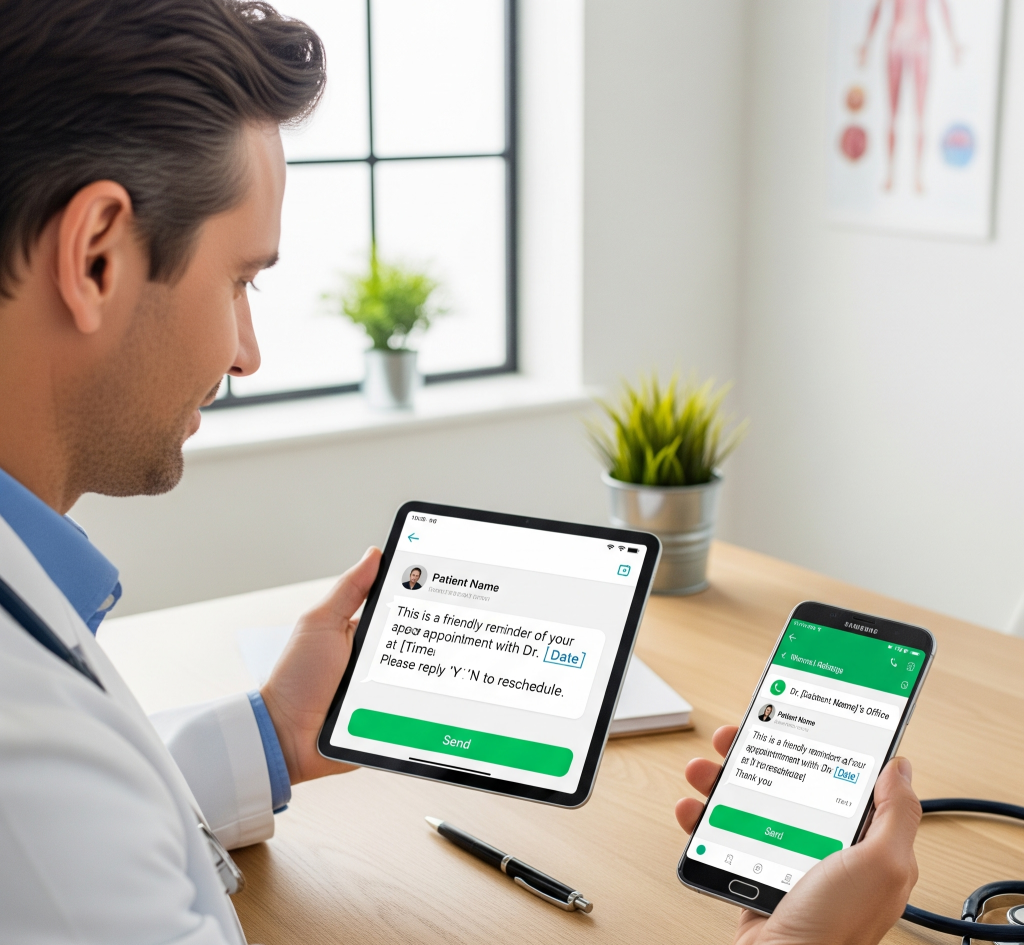
One practical impact of WhatsApp marketing in healthcare is more efficient appointment management. Sending patients an automated reminder or a quick “See you tomorrow at 10 am” message can dramatically reduce no-shows.
Case in point: one hospital saw a 30% reduction in missed appointments by using WhatsApp reminder messages. Patients appreciate the nudge, and clinics maintain a smoother schedule – a win-win. Additionally, via WhatsApp, you can allow patients to confirm, reschedule, or cancel appointments with a simple reply, making the process convenient and keeping your calendar up-to-date.
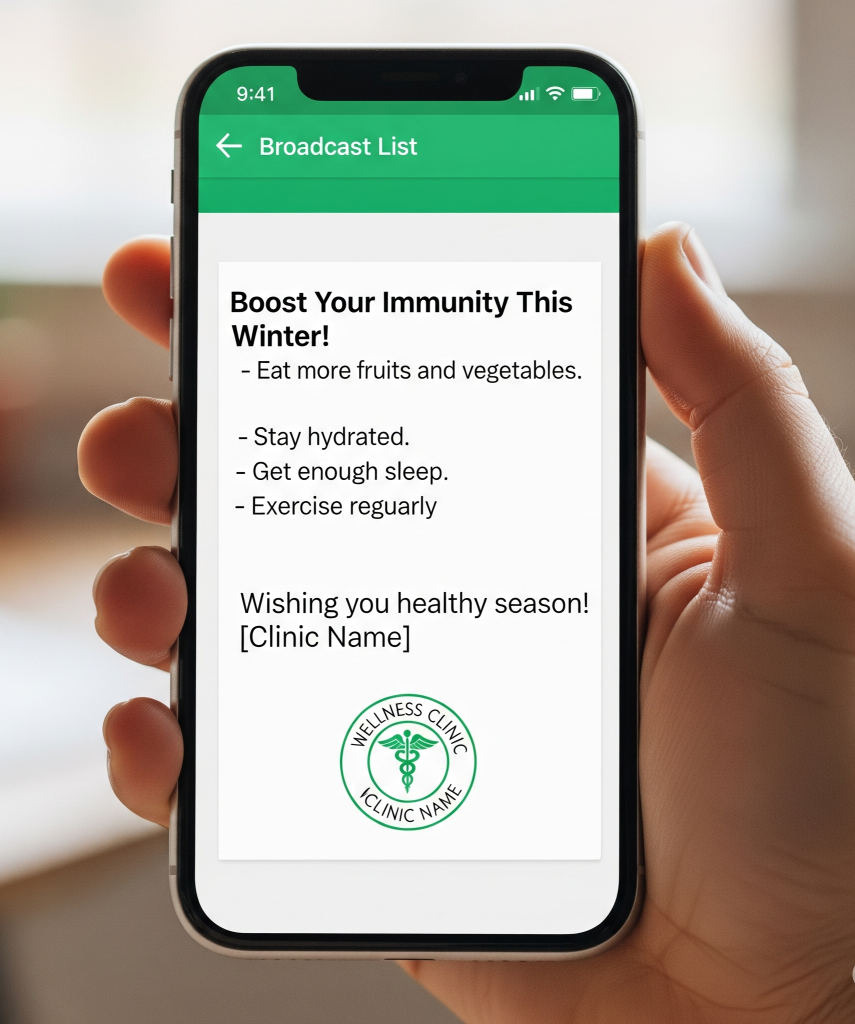
WhatsApp isn’t just about logistics – it’s an excellent medium for patient engagement and education. Healthcare providers can send out wellness tips, preventive care advice, and health educational content straight to patients’ phones. For example, a nutrition clinic might broadcast weekly healthy eating tips, or a pediatrician might share child wellness advice to young parents. Because messages arrive in a personal chat, patients are more likely to pay attention and interact. They can even ask follow-up questions easily, turning marketing into a two-way engagement. Regularly sharing health tips, reminders, and educational materials via WhatsApp keeps patients informed and invested in their health, and it keeps your clinic top-of-mind when they need services.
Healthcare topics can be complex, but WhatsApp allows you to simplify them with multimedia. You can send images, short videos, PDFs, or voice notes to explain things in a clearer, more engaging way. For instance, a doctor can share an infographic about managing diabetes or a short video message about an upcoming vaccination camp. Visual and audio content can make your messaging more impactful than text alone. WhatsApp’s support for photos, videos, and voice messages makes it easier to explain and understand complex health information compared to a phone call or email. This not only helps in marketing your services (by demonstrating expertise and care) but also in enhancing patient understanding of medical advice.
For clinics and practitioners with limited marketing budgets, WhatsApp is a cost-effective solution. Sending WhatsApp messages uses internet data and is essentially free – there are no SMS fees or postage costs, and the WhatsApp Business app itself is free. Compared to traditional marketing (print mailers, phone calls) or even SMS campaigns, WhatsApp marketing costs pennies but yields high impact. It’s an efficient channel where a single message can reach thousands (if you use broadcast lists or groups) without the need for expensive ad spends. In many markets, WhatsApp is more widely used than email, meaning you might reach people here that you’d miss elsewhere. This high return on minimal investment makes WhatsApp an attractive channel for healthcare outreach.
Studies even show WhatsApp marketing can deliver significantly better message delivery and conversion rates than other channels. It has a vast global reach, near-guaranteed message visibility, immediacy, and personal touch – all of which are invaluable in healthcare communication. Whether you run a small clinic or a large hospital department, these benefits translate to stronger relationships with patients and more effective marketing of your services.
Knowing the benefits is one thing, but how can healthcare providers actually use WhatsApp in practice? The possibilities go far beyond simple chat. Let’s explore some practical WhatsApp marketing strategies and examples for clinics and doctors:
Example: Dr. Rina, a pediatrician, decided to use WhatsApp to keep in touch with parents between visits. Each month, she broadcasts a “Child Health Tips” newsletter via WhatsApp – short messages about nutrition, common seasonal illnesses, or child safety reminders. Parents love it – they feel like their doctor is proactively caring for their child’s well-being. One mother, Sarah, received a tip about managing pollen allergies, which helped her child tremendously. When it was time for Sarah to choose a pediatrician for her second baby, she stayed with Dr. Rina, citing those helpful WhatsApp tips as a reason for her loyalty. This is the power of providing consistent value through WhatsApp – it fosters trust and keeps your clinic at the forefront of patients’ minds.
From appointment scheduling to education and support, WhatsApp can touch many aspects of the patient journey. Start with one or two of the above strategies that fit your practice. For instance, you might first roll out automated reminders, then gradually add a weekly health broadcast or a chatbot for FAQs. The key is to use WhatsApp in ways that genuinely enhance patient convenience and care – when you do that, it naturally serves as a highly effective marketing and retention tool for your clinic.
Here are the best practices and tips to ensure your WhatsApp marketing is effective, professional, and patient-friendly:
Always ask for explicit permission before adding patients to WhatsApp lists or groups. This can be a checkbox on forms or a direct verbal ask. Never message patients without their approval, as this builds trust and fulfills legal requirements like HIPAA (U.S.) and GDPR (Europe). Make clear what kind of messages patients will receive, and always provide a simple opt-out path (such as replying “STOP”). Respecting these preferences is essential for ethical and legal communication.
Messages should be friendly but always professional. Use a conversational style that feels personal, but avoid slang or informality. When delivering reminders or updates, express genuine care: “Hi Sarah, hope you’re well. It’s time for your annual check-up—shall we schedule it?” For sensitive or complex topics—like test results or diagnosis—use WhatsApp to arrange a call or visit, rather than providing all details via text. This helps maintain empathy and clinical professionalism.
Each message should be meaningful: appointment info, health tips relevant to the patient’s needs, medication reminders, or personalized wellness advice. Use the patient’s name and reference specifics (for example, “We hope your physiotherapy is going well!”). Segment your audience—send specific advice to relevant groups (like prenatal care tips to expecting moms, or diabetes management to those diagnosed). Tailored content increases engagement and makes patients feel cared for, not spammed.
Avoid overloading patients with frequent or lengthy messages. Schedule communications—such as reminders a day or two before appointments, or health tips once a week. Use concise, clear wording; send attachments (like PDFs) for lengthy instructions rather than packing everything into a long text. For instance, “Reminder: Your appointment at Sunrise Clinic is tomorrow at 10:00 AM. Reply ‘1’ to confirm.” Quality trumps quantity—patients appreciate timely and relevant information, not constant notifications.
Fill out your clinic’s business profile with address, hours, and contact info. Use Quick Replies for common questions (like directions or office hours), Greeting Messages for first-time contacts, Away Messages for out-of-hours responses, and Labels to keep track of patient status (e.g., new, follow-up needed). These tools streamline operations and personalize the patient experience.
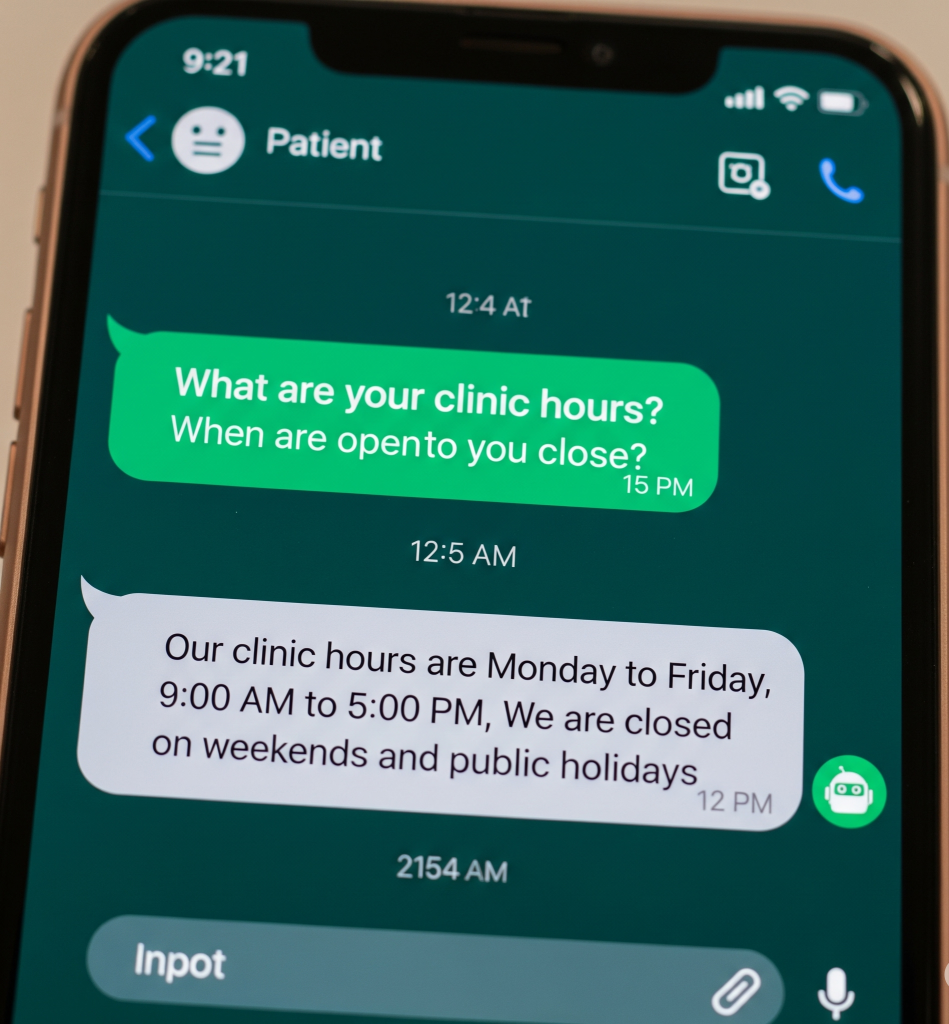
For larger-scale needs, a WhatsApp chatbot or integration with the Business API can help handle repetitive tasks—such as booking appointments, answering FAQs, or sharing clinic hours—24/7. However, always provide an option to escalate to a real staff member for complex or emotional concerns. Automation should enhance, not hinder, patient support.
Even though WhatsApp offers end-to-end encryption, be very cautious with any personal health information. Only share sensitive details if absolutely necessary and with patient consent. Always verify who you are communicating with before sharing results. Avoid patient-identifiable details in group chats. Secure all devices, turn off message previews on lock screens, and train staff on privacy best practices. Stay compliant with legal frameworks—document consents and provide opt-outs as required.
Watch how patients respond—track reads, replies, and opt-outs. Pay attention to feedback: if many patients opt out of certain messages, consider adjusting the content or frequency. Encourage feedback proactively (“How can we improve our communication?”). Learn from patient interactions to continuously improve your WhatsApp outreach and service.
By following these best practices, your WhatsApp marketing efforts will remain patient-centric, effective, and compliant. You’ll nurture a community of patients who not only appreciate your medical expertise but also your thoughtful communication. Remember, at the heart of healthcare marketing is building trust, and every WhatsApp message you send is an opportunity to strengthen that trust by being helpful, respectful, and responsive.
To maximize the effectiveness of your WhatsApp marketing, especially as your communication volume grows, it’s essential to leverage specialized tools and potentially the WhatsApp Business API. Here’s how you can take your WhatsApp marketing to the next level and what platforms can help along the way:
If you’re just beginning, the free WhatsApp Business app (available for iPhone and Android) can cover basic needs. It allows single-user management of chats and features like quick replies, labels, and broadcast lists. However, there are limits—broadcasts are capped at 256 contacts per list, and there’s no support for multiple user access or software integrations. For larger operations or advanced requirements, the WhatsApp Business API is ideal. The API isn’t a standalone app; it’s an interface that enables businesses to programmatically send and receive messages at scale, typically by working with third-party solution providers. This approach lets you automate communications, use chatbots, integrate with CRMs or scheduling systems, and have multiple agents operate on one WhatsApp number. It’s particularly suitable for organizations like clinics or healthcare services handling high message volumes or requiring complex automation (e.g., mass appointment reminders or AI-powered triage).
To access the WhatsApp API, you'll need to work through a WhatsApp Business Solution Provider (BSP) or a certified software platform. These platforms (such as Twilio, MessageBird, WATI, SendWo, Infobip, 360dialog, and Yellow.ai) feature dashboards for managing bulk messages, building chatbots, and supporting team-based chat management. They also ensure compliance with WhatsApp’s rules, including template message approval for outbound campaigns. When evaluating these tools, consider usability, support for media-rich communications, chatbot sophistication, and cost structures—most offer either pay-as-you-go or subscription pricing, often based on messaging volume or user count.
Beyond the major API-driven providers, several standalone tools and desktop applications are available for organizations that may not need full-scale API integration but want efficient ways to manage outreach. SendWo is an example of a desktop-based WhatsApp messaging solution. This tool offers bulk messaging from your PC, helping organizations broadcast messages efficiently while including features like anti-blocking measures, multi-language support, personalization (such as customizing messages with recipient names), and bulk contact management. SendWo can be especially appealing to smaller clinics or businesses looking for a cost-effective, accessible solution to run campaigns such as appointment reminders or service updates.
Other helpful platforms include:
WATI: Offers a team inbox for shared message management and a no-code chatbot builder, ideal for clinics needing coordinated staff responses and automation.
Zoko: Focuses on multi-agent collaboration, e-commerce support (interactive buttons, quick replies), and unified communication channels.
Vepaar (formerly WhatHash): Adds CRM-like capabilities, letting you manage contacts and campaigns, gather responses, and even run polls within WhatsApp.
Browser Extensions: Chrome add-ons such as WAMessager or WhatsApp Web CRM tools can help with automating broadcasts, managing contacts, exporting chat histories, or facilitating translations—often very useful for one-off or small-scale campaigns. For example, some clinics use these to upload Excel contact lists and send out bulk appointment reminders with a customized message.
Selecting the Right Tools for Your Clinic or Business

Identify your needs based on patient volumes, campaign frequency, and required integrations. Small organizations with a few hundred patients might combine the WhatsApp Business app with desktop messaging tools like SendWo or browser plugins for affordable, straightforward outreach and campaign management. Larger practices, or those wanting chatbots and deep CRM integration, will benefit from API-driven platforms or providers like Twilio, WATI, or similar BSPs. No matter which tool you choose, it’s critical to ensure compliance with WhatsApp’s terms and prioritize patient privacy—official API solutions, for instance, maintain end-to-end encryption and restrict message data access.
Many platforms now make it possible to connect WhatsApp messaging to your CRM or electronic health record (EHR) system. This allows actions within your internal system (like marking an appointment) to trigger automated WhatsApp messages, with replies centrally logged for staff reference. Additionally, promoting your WhatsApp channel elsewhere—via website chat links, QR codes, social media, or printed materials—can make it easier for patients to reach you on their preferred platform.
The right combination of WhatsApp marketing tools can dramatically scale your patient engagement and operational efficiency. Whether you use simple desktop tools or a robust API-driven platform, always pair technology with thoughtful communication strategies, ensuring you have patient consent, provide valuable content, and respect privacy. This approach enables you to build a reliable, scalable, and trusted patient communication system without promoting any single vendor or solution.
When using WhatsApp for healthcare communication, privacy and compliance are non-negotiable. Healthcare clinics and doctors must be mindful of patient confidentiality, data security, and legal regulations at every step of their WhatsApp marketing strategy. Here’s what you need to keep in mind:
In summary, privacy and security must underpin your WhatsApp marketing efforts. The platform can be used safely for healthcare, provided you stick to guidelines: get consent, use encryption, share info responsibly, and follow the law.
As we’ve seen, WhatsApp marketing offers a powerful way for healthcare clinics and doctors to connect with patients in a direct, personal, and effective manner. From timely appointment reminders to educational health tips and responsive patient support, WhatsApp can enhance every step of the patient journey. Clinics that have adopted WhatsApp communication are already reaping rewards – higher patient satisfaction, improved appointment attendance, and stronger loyalty. With real-time messaging, you can provide the kind of attentive, accessible care that patients remember and value. In a world where patients expect convenience and quick communication, leveraging WhatsApp sets your practice apart as forward-thinking and patient-friendly.
Now is the time to embrace this modern channel by integrating WhatsApp into your marketing and communication strategy in small ways – send out that first broadcast of wellness tips, or set up WhatsApp reminders for next week’s appointments. Gradually, build on what works. Remember to follow the best practices (consent, value, personalization, and privacy) to maintain trust. If you need help managing scale, explore tools like SendWo or other WhatsApp Business API solutions to streamline your efforts. The barriers to entry are low, and the potential gains are high. Don’t miss out on the opportunity to engage your patients on a platform they already love and use daily. Whether you run a local clinic or a large healthcare facility, WhatsApp can become your secret weapon for patient engagement and practice growth. Take the next step today – set up your clinic’s WhatsApp Business account, let your patients know they can reach you there, and start experiencing the difference.
Healthcare providers can use WhatsApp in various ways to build patient relationships and improve communication. Doctors and clinics can send patients relevant, timely information – for example, updates on new services, wellness tips, or personalized health recommendations. WhatsApp is also used to streamline operations like appointment scheduling and reminders (reducing phone tag and no-shows). Providers might hold virtual consultations or follow-ups over WhatsApp’s chat or call features for minor issues or post-visit check-ins. It’s important to obtain patient consent before using WhatsApp and to maintain professionalism in chats. When used correctly, WhatsApp becomes a tool to engage patients with valuable content and provide quick support, which in turn serves as an effective marketing strategy by boosting patient satisfaction and loyalty.
WhatsApp marketing offers direct, high-visibility patient communication with a 98% message open rate. It enables instant two-way interaction, boosting patient engagement and trust. Clinics using WhatsApp reminders report fewer no-shows, some up to 30% reductions. It’s cost-effective and supports rich media like images and PDFs, helping patients better understand care instructions. Overall, it improves patient satisfaction, practice efficiency, and retention.