Imagine a customer’s phone buzzes with a WhatsApp notification early in the day. Within seconds, they check the message – after all, WhatsApp messages boast an open rate around 98% (versus ~20% for emails). The message is from your business. Will it spark their interest and lead to a click or purchase, or will it be swiped away like any other spammy promo? The answer lies in how well the message is crafted.
WhatsApp has over 2 billion users worldwide and is a powerhouse for marketing with sky-high engagement. In fact, marketing on WhatsApp can drive up to 89% higher purchases per user compared to other channels. Its personal, chat-based nature means customers tend to respond fast – the average response time is just 90 seconds! With such potential, writing high-converting WhatsApp marketing messages has become a must-have skill for businesses.
In this comprehensive guide, we’ll show you how to craft WhatsApp messages that engage customers and drive your conversions. We’ll cover best practices, from using a conversational tone and personalization to adding compelling calls-to-action, all presented in an easy-to-scan format. By the end, you’ll be equipped to write WhatsApp marketing copy that not only gets read but also compels readers to take action. So why wait? Let’s dive in!
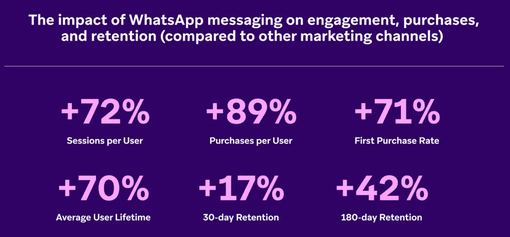
WhatsApp isn’t just another messaging app; it’s a marketing goldmine. With 2+ billion users in 180+ countries, it offers direct access to nearly a quarter of the world’s population. More importantly, people actually read WhatsApp messages. The platform’s open rates are around 98%, far higher than traditional email open rates. That means your promotional message is almost guaranteed to be seen, which is half the battle in marketing.
Not only are WhatsApp messages seen, but they also prompt quick engagement. Studies show the average user responds within 90 seconds on WhatsApp, reflecting how immediate and attention-grabbing this channel is. This real-time interaction can translate into impressive conversion metrics – WhatsApp campaigns have reported 20–60% conversion rates in turning leads into customers. For context, email marketing often sees conversion rates in the low single digits. Clearly, WhatsApp can be a high-converting channel when used effectively.
WhatsApp is inherently a one-to-one conversational platform. Messages land directly in a user’s chat list with no spam filters to worry about (WhatsApp messages are delivered ~9 out of 10 times, whereas many emails get filtered out). Crucially, customers on WhatsApp opt in to hear from you, ensuring your audience is genuinely interested in your brand.
This opt-in model means your WhatsApp contact list is a high-quality audience primed for engagement – a stark contrast to blasting messages at uninterested masses. When you reach out on WhatsApp, you’re meeting customers where they already chat with friends and family, making your marketing feel more like a friendly conversation than a sales pitch.
WhatsApp combines massive reach, extraordinary open rates, and an intimate communication style. It’s the perfect recipe for engagement and conversions – but only if your message itself is compelling.
In the next sections, we’ll explore how to write WhatsApp marketing messages that make the most of this platform’s strengths. From crafting the perfect opening line to adding a powerful call-to-action, here are the strategies that will set your messages (and your conversion rates) apart from the rest.
Each tip below is SEO-friendly and rooted in what works in 2025’s marketing landscape.
✔️High-converting messages start with understanding who you’re talking to.
✔️Take time to research your target audience’s demographics, interests, and pain points.
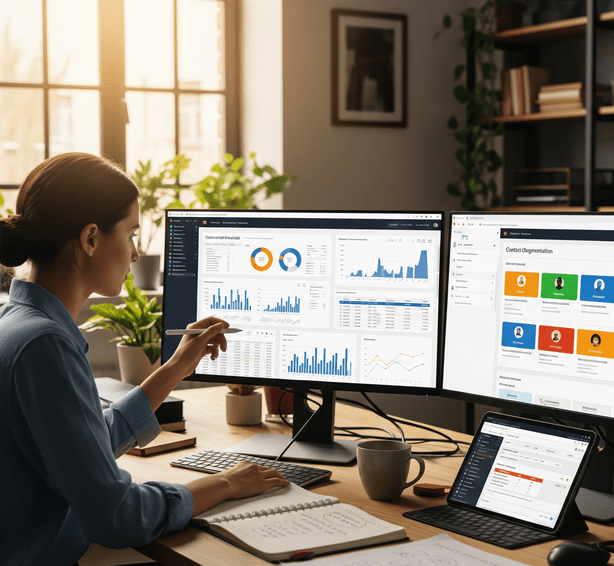
✔️Use your customer data and analytics to segment your WhatsApp contact list into relevant groups (by preferences, purchase history, location, etc.).
✔️A one-size-fits-all blast is far less effective than a tailored approach.
For example, if you run an e-commerce store, you might segment customers into groups like “frequent buyers”, “interested in electronics”, or “holiday shoppers”, and then send slightly different messages to each. By knowing your audience, you can speak to their specific needs, which dramatically increases the chances they’ll engage.
Always ensure that these contacts have opted in to receive your WhatsApp updates (offer incentives for opt-ins if needed). A high-quality, permission-based list will yield much better conversion results than a large but cold list.
✔️Before typing a single word, ask yourself: What is the goal of this WhatsApp message? ✔️Every high-converting message has a single, focused objective.
✔️Are you aiming to generate leads, drive a sale, announce a new product, or increase brand awareness?
✔️Define one primary call-to-action or outcome per message. This clarity will keep your copy on track and actionable.
For instance, if your goal is to recover an abandoned cart, your message objective might be to get the customer to click your cart link and complete the purchase. Everything in that message, from the text to the button, should serve that specific goal.
Avoid mixed messages; don’t cram multiple offers or requests together, as it confuses the reader. A clear objective ensures your WhatsApp marketing copy stays focused and high-converting.
✔️WhatsApp is a personal, chatty platform, so your marketing messages should feel friendly and individualized, not like mass spam.
Use the recipient’s name and any relevant details you know about them (past purchases, interests) to show the message is tailored for them.
For example: “Hi John, thanks for being a loyal customer! We thought you’d enjoy this update…” – This kind of opener immediately feels more personal than a generic “Dear customer”.
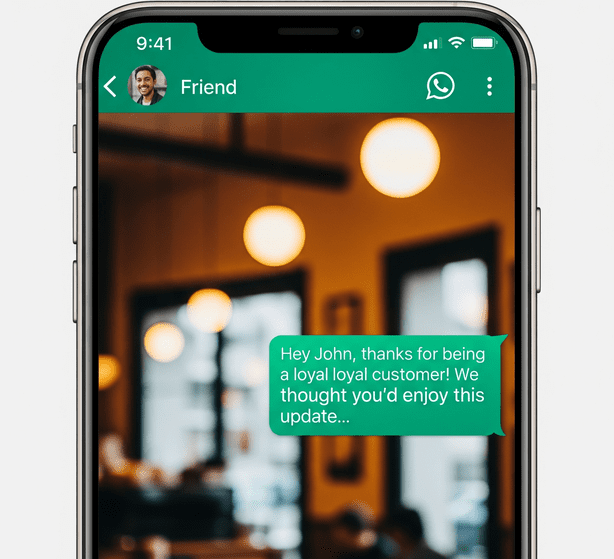
✔️Personalization can significantly boost conversions – studies have found that personalized marketing can increase conversion rates by up to 200+%. Along with personalization, use a conversational, human tone. Write as if you’re talking to a single person, not a faceless crowd.
Avoid overly formal language or jargon; emojis and a light tone can make your brand sound more approachable (more on formatting and emojis soon). The key is to make the reader feel like you’re speaking to them, not at them. This builds trust and rapport, which in turn makes them more likely to act on your message.
✔️The first sentence of your WhatsApp message is make-or-break. To maximize conversions, start with a hook that immediately draws the reader in. You have limited characters before a user might have to tap “Read more,” so put the most compelling idea up front. Great hooks could be: a question (“Looking to save on your next order?”), an interesting fact or stat (“Did you know 80% of our users double their savings with this tip?”), a personalized reference (“We noticed you liked our summer collection...”), or a bold statement (“Your exclusive offer inside, but only for 24 hours!”).
The hook’s job is to pique curiosity or address a need so the reader wants to read the rest.
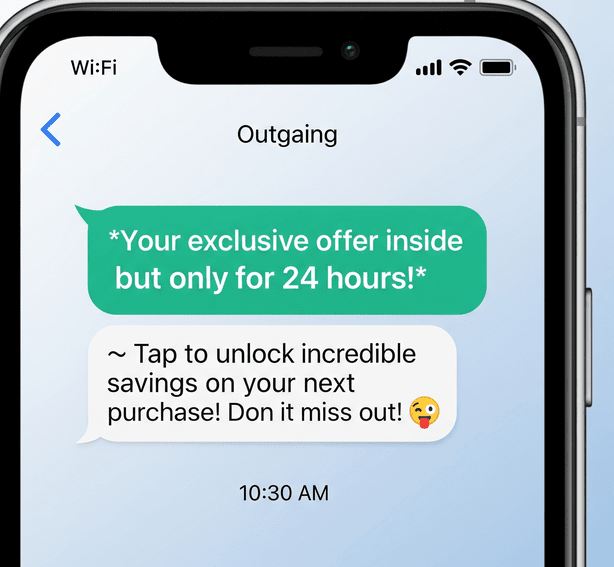
✔️Storytelling can also be a powerful hook – for instance: "👋 Hi Anna! Remember how you said you were too busy to shop? Imagine if your groceries could order themselves..." Such a narrative approach taps into the customer’s situation and makes them eager to see the solution. However you do it, make those first words count. An engaging opening line will vastly improve the chances that the user keeps reading and ultimately clicks through.
✔️When it comes to WhatsApp marketing messages, brevity is your friend. Users are on a mobile chat app, not reading a blog. If your message is too long or looks like a wall of text, many recipients will simply skip over it. Aim to convey your core message in a few concise sentences (3-5 lines max).
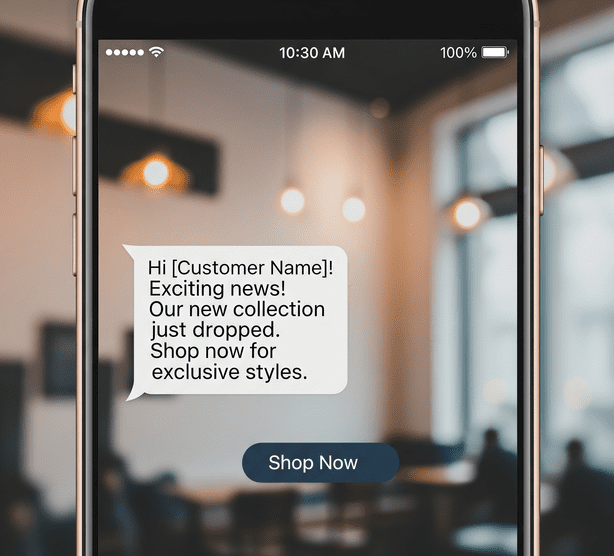
Get to the point quickly – what are you offering and why should the reader care? Use short sentences and simple language; cut out fluff, filler, and any overly technical jargon. A crisp, clear message respects the reader’s time and increases the likelihood they’ll read the whole thing.
✔️Focus on one main idea per message, and if you have more to say, consider sending it in a follow-up or using other content (like a link to a landing page or a brochure). Remember, WhatsApp is a “quick communication” platform – your marketing copy should feel quick to absorb as well. By keeping it short, you not only hold the reader’s attention but you also make your call-to-action more prominent.
✔️To convert readers into customers, your message must clearly answer their unspoken question: “What’s in it for me?” Instead of merely listing a product’s features or a generic offer, highlight the specific benefit or value the user will gain. For example, rather than saying “We offer 24/7 support,” frame it as a benefit: “Never worry about issues – our team is here to help you 24/7 so you’re always covered.” If you’re promoting a sale, don’t just say “50% off shoes”; add why it’s great: “50% off our best-selling running shoes – upgrade your comfort and performance for half the price!”.
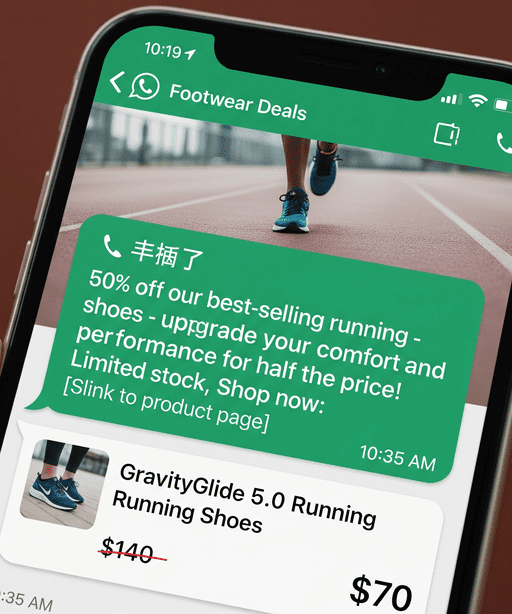
✔️By highlighting how your offer solves a problem or improves the customer’s life, you tap into their motivations. Use benefit-focused language that speaks to desires or pain points.
Remember, most recipients will quickly scan your message for value – make it obvious. You can even bold key benefit words or phrases to ensure they stand out (more on formatting later). The more a customer can envision the benefit they’ll gain, the more likely they are to click or convert. In fact, explicitly conveying value and personalization builds trust, making recipients more inclined to act.
✔️Humans are wired to act when they sense they might miss out on something great. Adding a bit of urgency or scarcity to your WhatsApp messages can significantly boost conversion rates. This doesn’t mean every message must be a flash sale, but if appropriate, let the reader know why they should act now. Phrases that convey urgency include: “Today only,” “Limited spots available,” “Offer expires in 24 hours,” “Only 5 left in stock,” etc. For example: “🔥 Flash Sale: 30% off all gadgets for the next 4 hours only!”.
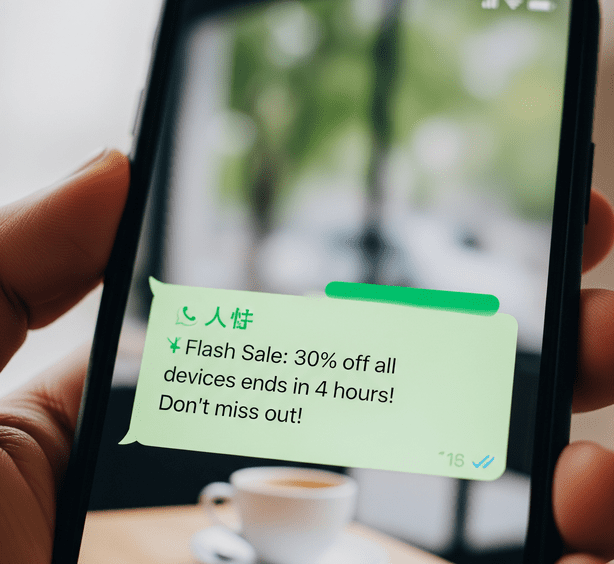
✔️You can even include a countdown or deadline to spur immediate action. FOMO (fear of missing out) is a powerful motivator – nobody wants to be the one who passed up a great deal or an exclusive opportunity. Use it ethically and sparingly (constant false urgency can annoy customers), but when you truly have a time-sensitive offer or limited quantity, make sure your WhatsApp message highlights that.
The combination of a personal channel + urgency often compels readers to stop what they’re doing and act, which is exactly what high-converting messages achieve.
✔️A WhatsApp marketing message without a call-to-action is a dead end. After hooking your reader and building interest, tell them exactly what to do next. Whether it’s “Shop Now,” “Claim Your Discount,” “Book Your Spot,” “Read More,” or “Reply YES to confirm,” make the CTA explicit and easy to follow.
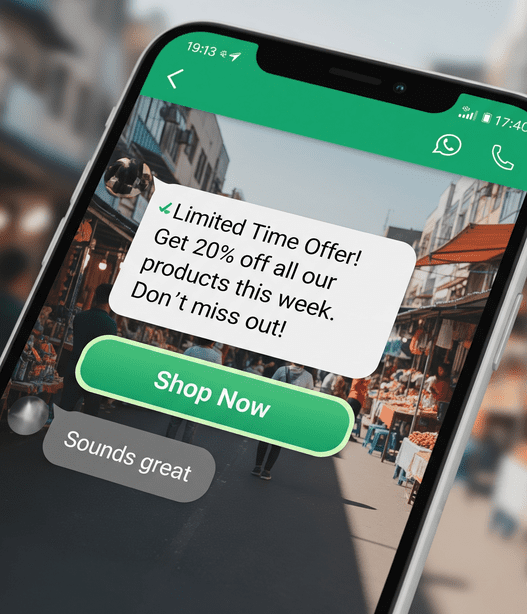
In WhatsApp, CTAs can be part of the text or even a button if you’re using WhatsApp Business templates (for example, a clickable button that says “Buy Now” or “View Details”). Keep the CTA short and action-oriented, and if possible, highlight the benefit of clicking: e.g., “Grab My 50% Off Coupon” is more enticing than just “Click here”. Also, only include one primary CTA per message – having multiple different actions (e.g., “click this link AND call us AND visit our site”) will confuse or overwhelm users.
✔️Make sure the action is something they can do immediately on their phone. For instance, if you want them to make a purchase, link directly to the product page and ensure the site is mobile-friendly. If you want them to reply, ask a simple question or provide a one-tap quick reply option. The CTA should stand out – consider using caps or emoji pointers 👉 to draw attention to it. By combining a strong CTA with the urgency and value from previous steps, you’re paving a direct path to conversion for the customer.
✔️A big block of text can be intimidating on a small screen. Format your WhatsApp message to be easy to scan and visually appealing. Break text into short lines or separate messages if needed, use line breaks to separate ideas, and consider using WhatsApp text formatting like bold or italics for emphasis on key points (for example, SALE 50% or limited time). WhatsApp also supports emojis, which can add personality and catch the eye. A well-placed emoji can convey emotion or draw attention, such as 🔥 for a hot deal or ⏰ for a time-sensitive offer.
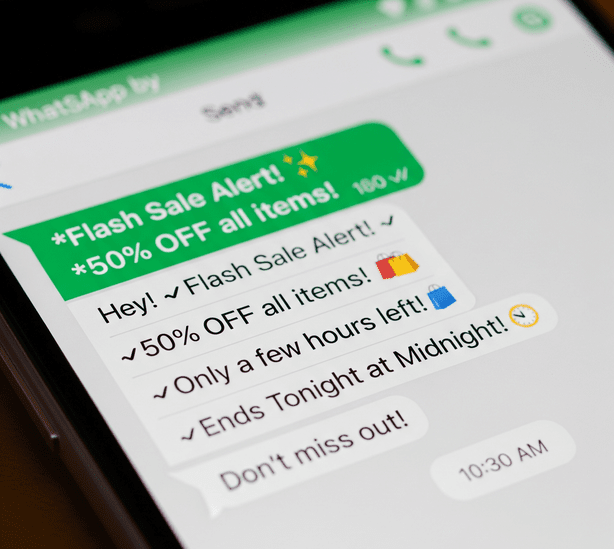
✔️However, use emojis strategically and sparingly – make sure they match your brand voice and message context. For instance, a friendly “😊” can warm up a greeting, and a pointed “👉” can direct attention to your link or CTA. Formatting elements like these help important information pop out when a user glances at the message.
✔️Bold text highlights your main message or offer, and bullet points or numbered lists (if your message is a bit longer or contains multiple items) can structure information clearly. The goal is that even if someone doesn’t read every word, their eyes quickly catch the highlights: the offer, the deadline, the CTA.
✔️Given that WhatsApp is mobile, always preview your message on a phone to see how it appears. A clean, organized message with some visual flair (but not clutter) will hold attention and improve your conversion chances significantly.
✔️Remember the saying, “a picture is worth a thousand words”? On WhatsApp, an eye-catching image or short video can dramatically increase engagement. People are drawn to visuals; in fact, content with relevant images or media gets significantly more views and responses than text-only messages. If it suits your campaign, include a media attachment in your WhatsApp message: it could be a product image, a quick video clip, an infographic, or even an audio message.
For example, if you’re promoting a new product, an image of that product in action can spark interest immediately. If you’re announcing an event, a short video invitation or a poster graphic can convey excitement better than text alone. Visuals not only grab attention but also help convey complex info fast (like a flyer image summarizing an offer).
WhatsApp Business allows rich media messages, so take advantage of that. Keep file sizes reasonable so they send quickly, and ensure the visual is clear and high-quality on mobile screens.
✔️Also, consider adding a tiny bit of text overlay or caption on the image if needed (but avoid too much text on an image, as WhatsApp will show a preview). One important note: always make sure your image/video is relevant and adds value – don’t send a random picture unrelated to your message just to add flash. A pertinent visual plus your concise, value-focused copy can be a powerful one-two punch to drive conversions.
Tip: Many brands see great success with WhatsApp by sending product photos with a price and a “Buy Now” button right in the chat – it feels like a personal recommendation rather than an ad.
✔️WhatsApp offers interactive message features that can skyrocket conversion by reducing friction. If you have access to WhatsApp Business API or the WhatsApp Business app’s features, utilize quick reply buttons and call-to-action buttons in your messages. Quick reply buttons let users respond with one tap (great for surveys, confirmations, or simple yes/no offers), while CTA buttons can send users straight to a website or app from the chat.
For example, if your message is about scheduling a demo, you could include buttons like “✅ Yes, book my demo” and “📅 See other times,” making it effortless for the customer to respond. Likewise, a “Shop Now 🛍️” button next to your promotion can directly lead them to checkout.
These interactive elements make your WhatsApp marketing truly conversational and convenient, which encourages action. Customers appreciate when taking the next step is as easy as tapping a button, and this ease-of-use can greatly improve conversion rates. While crafting your message, think if any part of the user’s journey can be simplified with such features.
Just remember, these are available if you’re using templates or the Business API for outbound messages. Even if you don’t use buttons, you can simulate a similar effect by phrasing your CTA as something they can reply to (e.g., “Reply 1 for more info”). The key is to remove any barriers between the customer and the action you want them to take.
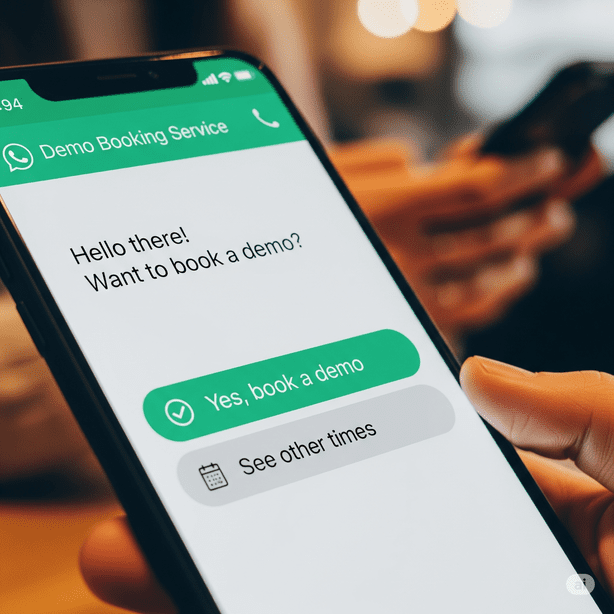
If you’re using Sendwo, these interactive elements can be built right into your WhatsApp campaigns without coding, making your marketing truly conversational and convenient. Customers appreciate when taking the next step is as easy as tapping a button, and this ease-of-use can greatly improve conversion rates.
Writing high-converting messages is part art and part science.
✔️Testing and iteration are crucial to keep improving your WhatsApp marketing performance. Don’t be afraid to A/B test different message variations with small segments of your audience. Try two different wording styles, emojis vs. no emojis, or different hooks, and see which version gets a better response or click-through rate. Track your metrics: delivery rates, open/read rates (WhatsApp’s double-check marks can give some insight), click rates on any links, and of course, the conversion rate (e.g., how many made a purchase or took the intended action).
✔️Pay attention to customer responses as well – are people replying positively, asking questions, or opting out? Each campaign’s data will teach you something. For instance, you might discover that messages sent in the evening get a higher response than morning, or that adding an emoji boosts engagement by 10%. Use these insights to refine your messaging strategy. Over time, you’ll identify the best message length, format, and tone for your specific audience.
✔️Also, stay updated on WhatsApp policy changes and new features (the platform evolves, e.g., new message template options or interactive elements might roll out). By continuously learning and tweaking, you’ll turn WhatsApp into a conversion engine for your business. Remember, what worked last year might not work now, so keep testing new ideas, and double down on what works best.
By following these tips, you’ll be well on your way to crafting WhatsApp marketing messages that not only reach your audience but also resonate with them.
WhatsApp marketing is all about turning a conversation into a conversion. By applying the strategies, which include knowing your audience, writing compelling and concise copy, and using the interactive tools at your disposal, you can transform a simple chat message into a catalyst for sales and customer loyalty. Remember that on WhatsApp you’re speaking in a personal space, so treat your customers like friends: be helpful, genuine, and respectful of their time. If you deliver real value in a friendly tone, your audience will welcome your messages rather than mute them.
Now it’s time to put these tips into action. Start crafting your own high-converting WhatsApp message today. Maybe it’s a warm welcome message for new subscribers, a time-sensitive promo for your VIP list, or a helpful tip that subtly showcases your product’s value – whatever it is, use what you’ve learned here to make it engaging and conversion-driven. Measure the results, keep refining, and watch as WhatsApp becomes a powerhouse in your marketing toolkit.
Ready to boost your conversions? Don’t just wait on the sidelines – apply these WhatsApp message writing tips now and turn those casual chats into loyal customers. Your next high-converting campaign is just a message away.
🚀 Start typing and happy converting!
Keep it personal, clear, and action‑driven. Greet the customer by name, hook their attention with a question or benefit, and highlight your offer in simple, friendly language. Use emojis for warmth, keep it brief, and end with a clear call‑to‑action (e.g., “Tap to claim your discount!”).
Keep it short—3‑5 brief sentences or 5‑7 bullet points max, so it fits on one screen. Use a friendly greeting, share your main offer or message, then give a clear call‑to‑action. Skip long paragraphs and link out if more detail is needed. Concise messages are more likely to be read and acted on.