WhatsApp Broadcast Replacing Cloud API- Easy Guide
Discover how WhatsApp Broadcast Replacing Cloud API for outbound marketing—while keeping it essential for inbound and utility messages.
 By Aditi Kamini
Published: April 13, 2026
Updated: May 1, 2026
8 min read
By Aditi Kamini
Published: April 13, 2026
Updated: May 1, 2026
8 min read
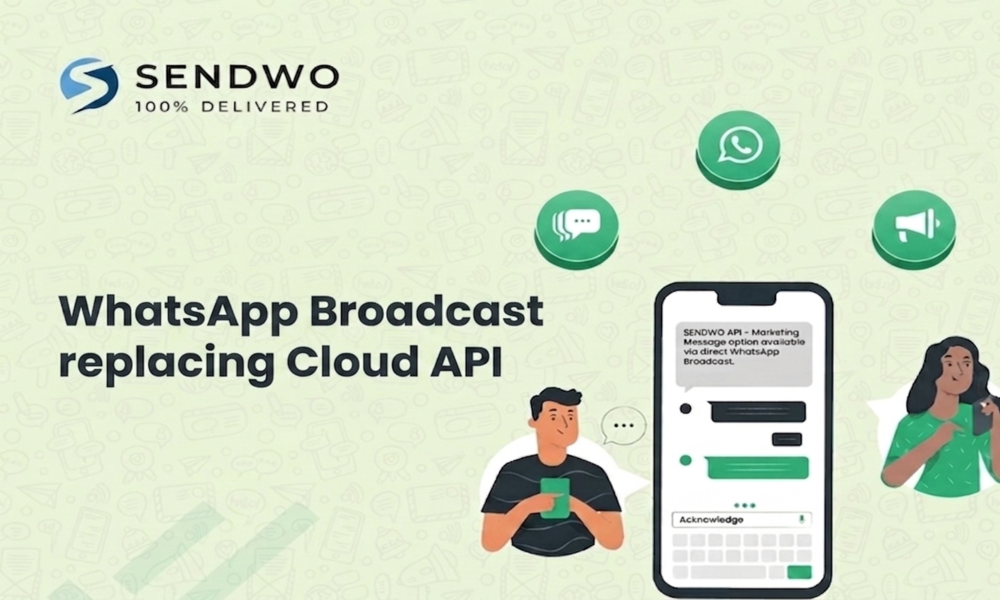
Discover how WhatsApp Broadcast Replacing Cloud API for outbound marketing—while keeping it essential for inbound and utility messages.
WhatsApp broadcast marketing” looks very different than it did even a year ago—because WhatsApp is actively pushing marketers toward more structured, policy-compliant, measurable campaign sending.Let see how Marketing Message Send Option in WhatsApp Broadcast Replacing Cloud API. Here is full guide for WhatsApp Broadcast Replacing Cloud API.
1. What’s actually changing in WhatsApp broadcasts for marketing
A lot of marketers still use “broadcast” to mean “send one message to many people.” On WhatsApp in 2026, that “one-to-many” goal can happen through multiple rails—each with different rules, reach, and reporting.
Broadcast lists are still here, but they were never built for modern marketing
The classic WhatsApp broadcast list (used on the consumer app and the Business app) still works, but it comes with hard limits:
- 256 contacts per broadcast list
- Recipients must have saved your number (otherwise they won’t receive the broadcast)
That makes broadcast lists great for:
- Small, warm audiences (regular customers, VIP list, students, members) who already recognize you and saved your number.
That makes broadcast lists weak for:
- Any business trying to run serious campaigns with segmentation, scaling, and measurement—especially if you’re relying on “customers save our number” as a growth strategy.
Business broadcasts and marketing messages in the WhatsApp Business app are the “new default” for SMBs
WhatsApp is now actively productizing business-grade broadcasting inside the Business app:
- “Message all your customers at once”
- Send to customers even if they haven’t saved your number
- Schedule broadcast messages
- Add action buttons
- View engagement metrics
- Available to eligible users in select countries
This is a major shift: WhatsApp is effectively saying, “You don’t need to build an API integration just to run structured outbound sends—if you qualify for these Business app tools.”
WhatsApp is creating a clear “upgrade path” from broadcast lists → marketing messages
- WhatsApp even suggests a conversion path: if you want to reach customers who haven’t added you, you can convert your broadcast list activity into a marketing message flow.
- And WhatsApp provides specific in-app steps to do that (banner conversion flow).
- This is extremely important for marketers, because it signals the strategy WhatsApp wants:
- Broadcast lists → limited, “saved number” audiences
Marketing messages / business broadcasts → opt-in audiences, structured sends, paid delivery + measurement
2. Marketing Messages API vs Cloud API: WhatsApp Broadcast Replacing Cloud API
This is the part most competitors gloss over, so let’s be precise.
Cloud API isn’t disappearing—it’s becoming “the foundation layer”
WhatsApp Business Platform pricing and categories still revolve around:
- Marketing
- Utility
- Authentication
- Service
Cloud API remains essential for:
- Receiving inbound messages
- Service conversations and support workflows
- Authentication and utility templates
- Two-way automation (chatbots, routing, agents)
Marketing Messages API is the optimized rail for outbound marketing templates
Marketing Messages API for WhatsApp is described (by major providers documenting Meta’s system) as an optimization layer specifically for marketing template messages.
Key mechanics (as documented by Infobip):
- It’s dedicated to marketing templates only
- Other categories remain on Cloud API
- Both can run in parallel on the same phone number
And once enabled, marketing traffic can be automatically routed through the optimized path without rewriting your entire integration (provider-managed routing).
What’s “new” about the marketing send option (the advantage vs Cloud API marketing sends)
When using the marketing-optimized approach, providers describe access to capabilities like:
- Time-to-live (TTL) to prevent late delivery of time-sensitive promos
- Conversion tracking (e.g., add-to-cart, purchase) using Meta Pixel or Conversions API
- Creative optimization (early access features)
- Deep links into apps from template buttons
This is why people say WhatsApp Broadcast Replacing Cloud API:
- If you’re only talking about outbound marketing blasts, the optimized path becomes the strategic default.
- If you’re talking about the whole WhatsApp stack (support + automation + inbound + auth/utility), WhatsApp Broadcast Replacing Cloud API remains non-negotiable.
The compliance layer is not optional
WhatsApp’s own Business Messaging Policy is explicit:
- You may only contact people if they gave you their number and you obtained opt-in permission to receive future messages/calls from you.
- For platform-specific rules: initiating conversations requires approved message templates, and outside the 24-hour service window you can send only approved templates.
Also, WhatsApp notes that marketing messages in the Business app can be subject to review by Meta before sending (a safety/compliance control).
3. How the new WhatsApp marketing broadcast flow works
Let’s turn the theory into something you can actually apply.
Turn this learning into your next WhatsApp campaign.
Start with Sendwo’s free plan, explore WhatsApp broadcasts, automation, AI chatbot flows, and upgrade only when your business needs more power.
The modern WhatsApp campaign stack has three layers
- Layer one: Audience (opt-in + segmentation)
You’re not building a “broadcast list.” You’re building a permissioned subscriber base segmented by interest, intent, and lifecycle stage. WhatsApp itself highlights opt-in as a core requirement for business messaging.
- Layer two: Message type (category + template discipline)
“Marketing” vs “Utility” matters for both compliance and cost. WhatsApp categorizes messages (marketing, utility, authentication, service) and explains that platform pricing depends on recipient and category.
Layer three: Delivery rail (Broadcast list vs Business broadcast vs API send)
- Broadcast list: simple, free, capped
- Business broadcasts / marketing messages in-app: structured, measurable, expanding capabilities
- API sends: scalable automation + integrations (SendWo lives here)
A realistic story: what this looks like for a fast-growing brand
Imagine a D2C brand founder (let’s call her “Maya”) running weekly drops.
Before:
Maya used broadcast lists. Then growth hit 5,000 customers. Now she’s juggling tons of 256-contact lists, delivery becomes inconsistent because many buyers never saved her number, and she has no real performance reporting.
Now (2026):
Maya can move to structured marketing sends:
- If eligible, she can use Business broadcasts in the WhatsApp Business app to schedule sends, add action buttons, and see engagement metrics, potentially reaching customers even if they haven’t saved her number.
- If she needs automation, segmentation, and scale, she uses an official BSP platform: that’s where SendWo comes in.
The “WhatsApp Broadcast Replacing Cloud API” here isn’t philosophical. It’s operational:
- WhatsApp is giving marketers new send surfaces and optimized delivery rails that reduce the need for a custom WhatsApp Broadcast Replacing Cloud API build just to run campaigns.
- But serious brands still need a campaign system that handles segmentation, templates, scheduling, and replies at scale.
4. The SendWo playbook for broadcast marketing that scales past “basic WhatsApp”
This is the “actionable” section—what to do today if you want to win campaigns with the new marketing message send option realities.
Why SendWo fits this moment
SendWo positions itself as:
- A WhatsApp marketing platform built on the official WhatsApp Business API
- An official Meta business partner / BSP
- With 0% markup on WhatsApp API pricing (you pay WhatsApp pricing directly)
This matters because as WhatsApp changes pricing models and delivery rails, the safest posture is: stay official, stay policy-compliant, and build repeatable campaign operations.
How to broadcast with SendWo in a way WhatsApp actually supports
SendWo’s own docs describe a broadcasting model that aligns with WhatsApp’s platform rules:
- Create broadcast campaigns for segmented lists using labels
- Use “24 hours” mode when subscribers are active (freer message composition)
- Use “Anytime” mode for broader audiences—requiring an approved message template
- Schedule broadcasts in Anytime mode and track campaign progress
That structure mirrors WhatsApp’s platform policy logic around the 24-hour window and template usage.
A practical campaign framework you can copy
Here’s a campaign structure that works with WhatsApp’s direction (and avoids the “spammy blast” trap):
Warm-up flow (first 7 days after opt-in)
- Send welcome + expectation setting (“What you’ll receive” + how to opt out)
- Ask one segmentation question (“What are you shopping for?”) This aligns with WhatsApp’s emphasis that users should expect messages and that businesses should provide opt-out instructions.
Core broadcast cadence (weekly)
- One “value-first” marketing message (drop, deal, content, restock)
- One utility/service follow-up only if user engages or triggers an action (order, appointment, payment). This respects the reality that WhatsApp is enforcing quality and user control, and that message categories are real operational levers.
Campaign design tips that map to what WhatsApp itself promotes
- Use templates and personalization
- Use audience segmentation
- Monitor message delivered/read/click outcomes and iterate
Proof points you can reference in your internal buy-in deck
- WhatsApp’s own case-study-driven marketing messaging guide highlights that brands often see very strong click-through performance, including an example where Tata CLiQ reported 57% clickthrough rate and significant attributable sales from WhatsApp campaigns.
- And WhatsApp’s broader “business goals” content cites Meta research where marketers using business messaging solutions reported a 58% increase in leads.
- These aren’t guarantees—but they are strong directional data for why businesses are moving budget into WhatsApp messaging.
FAQ
1. Is the marketing message send option in WhatsApp broadcast really replacing Cloud API?
WhatsApp's Business app + WhatsApp Broadcast Replacing Cloud API for some outbound marketing; Cloud API required for inbound/utility/auth/service.
2. What’s the difference between WhatsApp broadcast lists and business broadcasts?
Business broadcasts: Reach unsaved numbers + scheduling/metrics (eligibility/country-dependent).
3. Can I send promotional messages to people who haven’t saved my number?
- Broadcast lists: No delivery unless recipients save your number.
- Business messaging: Requires opt-in permission.
- Business app broadcasts: Reach unsaved numbers (eligible users/select countries).
4. Do WhatsApp marketing messages require opt-in?
Yes. WhatsApp’s Business Messaging Policy requires opt-in permission before sending subsequent messages or calls.
5. Are WhatsApp marketing messages reviewed or approved?
WhatsApp indicates marketing messages in the Business app can be subject to review by Meta before being sent.
Aditi Kamini
Aditi, a content marketer at SendWo, is a passionate writer and marketing enthusiast. She excels in driving revenue campaigns, building client relationships, and mastering content creation, SEO, customer service, and project management.