Imagine receiving Facebook security codes through WhatsApp without ever opting in, or feeling uneasy that your WhatsApp activity might tie into your Facebook profile. You’re not alone. With WhatsApp’s global user base near 3 billion as of 2024, many have linked their accounts across Meta’s platforms for convenience. However, privacy concerns and a desire for control drive users to separate these services. In fact, a controversial policy update in 2021 sparked an exodus of over 30 million users to rival apps like Signal and Telegram – a clear sign that people value keeping WhatsApp and Facebook separate.
If you’re wondering “how to remove WhatsApp from Facebook?”, this comprehensive guide will walk you through the process step-by-step. We’ll cover why unlinking can be beneficial, how to do it on personal accounts and business pages, and what changes after you disconnect them. Let’s get started on reclaiming your privacy and independence on these apps to how to remove WhatsApp from Facebook.
1. Why Unlink WhatsApp from Facebook?
Removing the connection between WhatsApp and Facebook can bring greater privacy, security, and focus to your digital life. Here are a few reasons users decide to unlink:
Privacy and Data Control: Facebook (Meta) owns WhatsApp, and linking accounts allows more data sharing between the apps. By unlinking, you limit cross-platform data flow, giving you more control over personal information. Your chat stay end-to-end encrypted, and you reduce any metadata or account info being shared behind the scenes. For privacy-conscious users, this separation is a relief.
Stop Unwanted Verification Codes: Lately, Meta has been integrating WhatsApp as a login verification method. Some people were surprised to find Facebook sending two-factor authentication codes to WhatsApp by default. If you prefer SMS or email codes – or you don’t use WhatsApp on that number anymore – unlinking will stop Facebook from relying on WhatsApp for verification. This puts you back in control of how you receive security messages.
Avoid Cross-Platform Features: Keeping accounts linked means Facebook can suggest WhatsApp as a contact option (and vice versa). Your Facebook friends might see a WhatsApp button on your profile or business page, and Facebook ads could prompt chats on WhatsApp. Unlinking how to remove WhatsApp from Facebook these features. For instance, any “Click to WhatsApp” ads or WhatsApp buttons on Facebook Pages disappear once unlinked, preventing unwanted messages from Facebook users. This makes each platform more focused on its own purpose.
Business and Personal Separation: Many businesses link WhatsApp Business to Facebook pages for customer communication. If your strategy changes or you no longer want that integration, removing WhatsApp from your Facebook Page will detach the messaging button and ad integrations. This can simplify your workflow or allow you to connect a different number. Similarly, personal users might have added their WhatsApp number to Facebook Marketplace or profile and now wish to how to remove WhatsApp from Facebook it to stay private.
2. How to Remove WhatsApp from Facebook (Step-by-Step)
Removing WhatsApp from Facebook can mean a few different things depending on how it’s linked. We’ll cover two main scenarios for how to remove WhatsApp from Facebook:
Unlinking WhatsApp from your personal Facebook account – using Meta’s Accounts Center or your Facebook profile settings. This covers removing any official connection between your Facebook account and WhatsApp (like shared login or account info). It also stops Facebook from sending login codes to WhatsApp.
Removing WhatsApp from a Facebook Business Page – if you connected a WhatsApp number to your Facebook Page (commonly done for WhatsApp Business contact buttons or ads).
We’ll also mention how to do it directly from the WhatsApp app as an alternative. Follow the method that fits your situation. Don’t worry – whichever route you choose, you will not delete your WhatsApp account or chats by unlinking. It only severs the connection between the two platforms.
WhatsApp and Facebook Integration: If you linked your accounts for convenience, you can just as easily disconnect WhatsApp from Facebook using the official settings. This restores privacy and separates your profiles.
3. Unlinking WhatsApp from Your Facebook Account (Personal Profile)
If your personal Facebook and WhatsApp are linked via the Meta Accounts Center, or if Facebook is using WhatsApp for verification, use this method. We’ll go through the steps on the Facebook app (the process is similar on the Facebook website in a browser).
Steps to disconnect WhatsApp from a Facebook account:
Open Facebook Settings: Launch the Facebook app on your phone. Tap the menu (≡ icon – on iPhone it’s at bottom right, on Android top right). Scroll down and tap Settings & Privacy, then tap Settings.
Go to Accounts Center: In Settings, find and tap Accounts Center. This is Meta’s centralized hub for connected accounts. Here you might see your Facebook, Instagram, and WhatsApp accounts listed if they’re linked.
Select “Accounts” and Find WhatsApp: Within Accounts Center, tap Accounts. You’ll see the accounts connected to your profile. If your WhatsApp is linked, you will see your WhatsApp number listed (usually labeled with the WhatsApp logo or “WhatsApp”).
Remove the WhatsApp Account: Tap on your WhatsApp number/account, then choose how to remove WhatsApp from Facebook from Accounts Center (or a similar “Remove” option). The system will ask for confirmation. Confirm by tapping Remove Account and proceed with any prompts (you might need to tap Continue and then Yes, how to remove WhatsApp from Facebook to finalize).
Confirmation: Once done, your WhatsApp is unlinked from Facebook. To double-check, go back to Accounts in Accounts Center – the WhatsApp account/number should no longer appear there. Also, Facebook will now default back to other verification methods (like SMS) since WhatsApp is no longer an option on your account.
By following the above steps, you’ve successfully unlinked your accounts. Your Facebook and WhatsApp will now operate independently.
4. Removing WhatsApp from a Facebook Page (Business Page Unlink)
If you connected a WhatsApp Business number to a Facebook Page (often done to enable the WhatsApp message button on the page or to run ads that open WhatsApp chats), use this method. Unlinking how to remove WhatsApp from Facebook, WhatsApp contact button from the page and disable any ad integrations.
Here’s how to remove WhatsApp from Facebook Page:
Open your Page Settings: Go to your Facebook app (or Meta Business Suite app if you use that). Navigate to your Facebook Page and tap Settings (on the page, you might find this under the Manage Page menu or a gear icon, depending on the interface). Make sure you have admin access to the page.
Find WhatsApp in Page settings: Scroll through the Page settings for an option like WhatsApp or Linked Accounts. In the latest Page experience, there is often a section to add or edit your WhatsApp number. If your page is currently linked to WhatsApp, you will see the number displayed here (and possibly a note that a WhatsApp button is active on your page).
Remove the WhatsApp number: Tap on the WhatsApp number or the edit option. You should see an option to how to remove WhatsApp from Facebook account from the page. Select Remove and confirm when prompted. Facebook will then unlink that WhatsApp Business account from your page.
Verify Removal: The WhatsApp section should now prompt you to add a number (as if none is linked). Also, check your Facebook Page – the WhatsApp message button should no longer appear to visitors. If you were running “Click to WhatsApp” ads, those ads will no longer send people to your WhatsApp chat after this removal, so plan to adjust or pause those campaigns to avoid confusion.
By unlinking WhatsApp from your business page, you ensure customers can’t message that WhatsApp via Facebook anymore. This is useful if you’re changing your business contact strategy or handing the page to someone else.
5. (Alternative) Disconnecting WhatsApp via the WhatsApp App
You can also initiate the unlinking from WhatsApp’s side, which achieves the same result. This is handy if you don’t have access to Facebook at the moment or find it easier to use WhatsApp settings. The process uses the Accounts Center integrated in WhatsApp.
To how to remove WhatsApp from Facebook:
Open WhatsApp Settings: On your phone, open WhatsApp. Go to Settings (tap the gear icon on iPhone, or the three-dot menu > Settings on Android).
Account > Accounts Center: In WhatsApp Settings, tap Account. If your WhatsApp is linked to a Facebook/Meta account, you will see an Accounts Center option here (sometimes labeled as just “Accounts” under Meta Accounts Center). Tap Accounts Center.
Remove Linked Accounts: Inside Accounts Center (now within WhatsApp), tap Accounts. You should see the linked Facebook account listed (or Instagram, if applicable). Tap your Facebook account name. Then choose Remove Account and confirm the removal. WhatsApp will likely ask “how to remove WhatsApp from Facebook from Accounts Center?” – confirm to unlink it.
Restart WhatsApp: It’s a good idea to close and reopen WhatsApp after unlinking, just to ensure the changes take effect. According to one guide, restarting WhatsApp clears any cached data related to the link. When you go back to Settings > Account, the Accounts Center should no longer show a connected Facebook account.
This WhatsApp-side method is essentially doing the same thing as the first method, just from the other app. After completion, you can also verify on Facebook’s Accounts Center that WhatsApp is gone.
By now, how to remove WhatsApp from Facebook – congratulations! Next, let’s discuss what changes (and what doesn’t) after unlinking, so you know exactly what to expect.
6. What Happens After You Remove WhatsApp from Facebook?
You might be wondering what the immediate effects are once you disconnect WhatsApp from Facebook. The good news is that your core WhatsApp experience remains unchanged – your messages, contacts, and groups on WhatsApp are all intact. Unlinking only affects the way Facebook and WhatsApp interact, not the apps themselves.
Here’s a breakdown of what to expect:
WhatsApp still works normally: Removing the link won’t delete any chats, photos, or your account on WhatsApp. Your conversations and media remain on your phone as before. WhatsApp will continue to function as a standalone messaging app with no impact on performance or functionality. In other words, unlinking does not affect the WhatsApp app’s performance or features at all – it’s as secure and speedy as ever, just without Facebook integration.
Facebook continues to work normally: Your Facebook account is unchanged except for anything related to WhatsApp. By unlinking, you’ve simply told Facebook not to consider WhatsApp in its features. You can log in to Facebook, use Messenger, etc., just as you did before. The only difference is Facebook won’t try sending you WhatsApp notifications or show WhatsApp-specific prompts.
Removed cross-platform features: Any features that relied on the Facebook–WhatsApp link will stop. For personal accounts, for example, Facebook will stop sending login or security code to WhatsApp (they’ll revert to SMS/email if that’s how it was before). For businesses, any “Message us on WhatsApp” buttons on Facebook Pages will disappear once the number is removed. Also, Facebook ads that used to open WhatsApp chats will no longer function unless you relink and set them up again. Essentially, Facebook and WhatsApp go back to being separate silos.
Improved privacy boundary: Unlinking establishes a stronger privacy boundary between the two services. While WhatsApp chats have always been private (end-to-end encrypted), now your WhatsApp account info (like your phone number) is no longer tied to your Facebook profile or used in Facebook’s ad targeting. Facebook can’t use the fact that you have WhatsApp linked to suggest you to friends or sync your status, etc. You’ve gained a bit more peace of mind, knowing that the data each platform has about you stays on that platform.
Need to manage business communications differently: If you were using the integration for business, note that you may need alternate solutions now. For example, if you unlinked your WhatsApp Business from your Facebook Page, customers from Facebook can’t message you on WhatsApp directly. You might need to provide a different contact method on your page (like a contact form or a Messenger link) or be ready to respond via other channels. For marketers, you’ll also lose any combined insights or audience customizations that came from the link. It’s worth it for privacy, but plan ahead so your customers aren’t left hanging.
Overall, nothing “breaks” by removing WhatsApp from Facebook – you simply lose some integrated features. Many users consider this a worthwhile trade-off for the added privacy and control. Your WhatsApp remains fully functional and safe, and your Facebook does too, each on its own.
7. Tips to Keep Your WhatsApp and Facebook Separate (and Secure)
Unlinking is a big step toward privacy. If you want to go further in keeping a healthy separation between WhatsApp and Facebook (and other Meta services), consider these extra tips:
Use distinct contact info for each account: If possible, use a different email/phone number for Facebook and WhatsApp. This way Meta has a harder time auto-linking them. For instance, you might keep WhatsApp on your personal number and use a different number (or just email) for Facebook. This prevents accidental connections through contact syncing.
Avoid using Facebook to log into other services: Many apps offer “Log in with Facebook” as a quick option. It’s convenient, but remember it ties those apps to your Facebook profile (and indirectly to WhatsApp if linked). To maintain separation, use separate logins (email/password or phone) for services, especially those related to messaging or contacts. This reduces the web of links between your accounts.
Review app permissions on your phone: Sometimes Facebook and WhatsApp might access the same data on your device (like contacts or location). After unlinking, you can double-check permissions. For example, you might disable Facebook’s access to your phone contacts if you’re concerned it could upload your WhatsApp contacts. Keeping permissions minimal ensures each app only sees what it needs to function.
Don’t cross-post content intentionally: Avoid the temptation to share WhatsApp status to Facebook story, or vice versa, which is a feature on newer versions. By not cross-posting between WhatsApp, Facebook, and Instagram, you maintain clear boundaries. Treat WhatsApp as a separate space – for instance, use it just for direct messaging, and use Facebook for social networking or business pages. This mindset keeps your communications siloed as you prefer.
Keep an eye on Accounts Center: Meta’s Accounts Center is where linking happens. Even after unlinking, it’s good to occasionally check Accounts Center (via any Meta app) to ensure no new linkages appeared. Meta sometimes introduces new features, so staying vigilant will let you spot if, say, Instagram or a future app tried to link with WhatsApp. Fortunately, Accounts Center puts you in control – nothing links without your action, and you can how to remove WhatsApp from Facebook accounts anytime.
By following these practices, you ensure that your decision to separate WhatsApp and Facebook remains in effect. You’ll use each platform on your own terms, with minimal data overlap. This ultimately creates a safer and more intentional online experience, where you decide how and where your information is used.
Conclusion & Call to Action
In this article, we’ve shown that removing WhatsApp from Facebook is quick and empowering. With just a few taps in the settings, you unlinked your accounts and took control of your digital privacy. Now, Facebook and WhatsApp operate independently – your chats stay private on WhatsApp, and your Facebook profile is free of any WhatsApp ties.
Remember, you haven’t lost any functionality in WhatsApp itself. You’ve simply turned off the pipeline that shared info between the two platforms. Going forward, you can enjoy WhatsApp on your own terms, without worrying about who on Facebook can see your number or whether Facebook is sending messages to your WhatsApp.
Take charge of your communication. We encourage you to review your other app connections as well – maybe unlink Instagram or any service you no longer use. The power is in your hands to create the online privacy you want.
At SendWo, we’re passionate about helping you make the most of messaging apps safely and effectively. 💬 If you found this guide useful, be sure to share it with friends who might have the same question. For more tips on WhatsApp and social media management, explore our blog and consider subscribing for regular updates. And if you’re a business looking to leverage WhatsApp for outreach without sacrificing control, check out SendWo’s solutions – we specialize in user-friendly WhatsApp marketing tools that keep you in the driver’s seat.
FAQs
1. Does removing WhatsApp from Facebook delete my chats or account?
No. Unlinking WhatsApp from Facebook does not delete your chats, media, groups, or WhatsApp account. Everything remains safe and unchanged.
2. Will WhatsApp still work normally after unlinking from Facebook?
Yes. WhatsApp will work exactly the same. You can message, call, and use all features as usual. Only Facebook-related features are disabled.
3. What changes on Facebook after unlinking WhatsApp?
Facebook will remove WhatsApp integrations like the WhatsApp contact button, login codes via WhatsApp, and Click-to-WhatsApp ad usage. The rest of Facebook stays unaffected.
4. Is it better for privacy to unlink WhatsApp from Facebook?
For many users, yes. Unlinking reduces data sharing between platforms and keeps your WhatsApp number separate from Facebook’s systems.
5. Is WhatsApp automatically linked to Facebook?
No. WhatsApp is only linked if you manually connect it or enable certain Meta features. You can unlink it anytime.
Imagine picking up your phone one morning and opening WhatsApp, only to find the familiar interface has suddenly turned green. The chat bubbles, icons, and headers now sport a brighter green hue instead of the old color you were used to. If you’ve experienced this surprise, you’re not alone. Millions of users have been asking, “Why has my WhatsApp turned green?” on social media and forums in recent months. Spoiler alert: it’s not a glitch or a virus – it’s an official update from WhatsApp (owned by Meta) designed to refresh the app’s look and feel. In this comprehensive guide, we’ll delve into why WhatsApp changed its color scheme, what it means for you, and how to navigate the new green interface like a pro. Why has my WhatsApp Turned Green logo reflecting the app's refreshed color scheme and brand identity.
1. WhatsApp’s Green Interface Update Explained
So, Why has my WhatsApp Turned Green now? The short answer is that WhatsApp rolled out a major design update in 2024 that introduced a new, consistent green color palette across the app. According to an official statement from Meta, this change was part of an effort to “bring a modern, new experience to WhatsApp” and “make it more accessible and easier to use”. In other words, WhatsApp refreshed its interface to keep the app looking fresh and user-friendly – and the iconic green color took center stage in the redesign.
This update was gradually rolled out starting in early 2024. It initially caught many users off guard, especially on iPhones. On iOS devices, WhatsApp’s interface had previously used a lot of blue tones (for example, chat bubbles for outgoing messages were blue). After the update, everything switched to shades of green, matching WhatsApp’s signature logo color. The result? iPhone users woke up to a very different-looking app, and many hopped onto X (Twitter) and other platforms to voice their surprise and confusion. One startled user tweeted, “Who the hell told WhatsApp that all this green was a good idea??” – reflecting the mixed feelings toward the sudden visual change.
For Android users, the change was less dramatic. WhatsApp’s Android app has always been green-themed to some extent (the WhatsApp icon and header were green). The 2024 update did tweak the shade of green to a slightly different tone, but it’s a subtle shift many might not notice without a side-by-side comparison. Android users did benefit from other interface improvements though – for example, WhatsApp’s dark mode became one shade darker for better readability, and more neutral colors were added in places so that the iconic green accents stand out more intentionally.
No, it’s not a bug or hack: If you’re worried something is wrong with your phone because Why has my WhatsApp Turned Green, rest assured it’s an intended change. Many users initially suspected a glitch, but WhatsApp’s green interface is official and permanent. In fact, Meta has confirmed that everyone will eventually see the new green design and there’s no opt-out option to revert to the old color scheme. A community expert on Apple’s forum clarified to confused iPhone users: “It’s just a new update, don’t worry your iPhone isn’t hacked… WhatsApp decided to change the color to green to match their brand”. So, the bottom line is: Why has my WhatsApp Turned Green, because the app was updated with a brand-new design.
2. When and How Did WhatsApp Turn Green?
To give you a bit of timeline, WhatsApp’s green makeover rolled out in phases:
Testing and Initial Launch: Rumblings of a new interface began in late 2023, and by February 2024 some iOS users started seeing the new green theme after updating their app. This was a staggered release; not everyone got it at once.
iOS Users Get the Green Update: The change was most noticeable on iPhones because WhatsApp’s iOS version had used a blue-colored chat bubble/theme for years. The update flipped the color scheme to WhatsApp’s trademark green across all screens. By March 2024, early adopters on iOS were buzzing about their chats turning green overnight.
Global Rollout by Spring 2024: Over the next couple of months, more regions and users received the update. For example, by April 2024 many users in India (and elsewhere) on iOS woke up to find Why has my WhatsApp Turned Green-themed instead of the usual blue. Android users also got app updates with the refreshed design around this time (though again, the color difference for Android was minor).
By Mid-2024: The new interface had reached the majority of WhatsApp’s 2+ billion users worldwide. If someone’s WhatsApp was still blue at that point, it just meant they hadn’t updated their app yet. (And indeed, WhatsApp’s team made sure that sooner or later, everyone would have to update – the old design was being phased out completely.)
3. Why Only iOS Had Blue (and Why It’s Green Now)
You might be wondering: Why were iPhone users seeing blue in the first place, Why has my WhatsApp Turned Green? Historically, WhatsApp’s design on iOS followed some of Apple’s design conventions. On iPhones, the outgoing chat bubbles in WhatsApp used a blue shade (similar to iMessage’s blue bubbles), presumably to feel native to iOS. Meanwhile, Android’s WhatsApp always used green bubbles. This meant for years there was a slight platform inconsistency – WhatsApp looked a bit different on iOS vs Android.
With this update, WhatsApp/Meta decided to unify the brand’s look across all platforms. Green has always been WhatsApp’s primary brand color (Why has my WhatsApp Turned Green, logo with the white chat bubble phone icon). Now the entire interface aligns with that brand identity on every device. Meta likely wanted WhatsApp to be instantly recognizable with its trademark green no matter where you use it. An added benefit is consistency: if a user switches from iPhone to Android or vice versa, WhatsApp will now look and feel more uniform.
From a branding perspective, green also conveys certain meanings that WhatsApp may want to emphasize. According to branding experts, green often symbolizes growth, freshness, and security. By doubling down on green, WhatsApp reinforces its identity as a secure, trustworthy messaging app – the green color subtly reminds users of encryption and safety (think of how green is used for “secure” padlock icons in browsers). In an age where privacy is paramount, that psychological association doesn’t hurt. WhatsApp’s team even mentioned that using color more intentionally was a goal, so that users can “focus on the things that matter most on the screen” without unnecessary clutter.
4. What Exactly Changed in WhatsApp’s New Design?
The headline change in this update is obviously the color scheme – WhatsApp’s interface is now a vibrant green theme. But that’s not all. This was a comprehensive design refresh. Here are the key changes and new features introduced:
New Green Color Palette: The shade of green used throughout the app is slightly different from the old one. It’s a bit brighter and more eye-catching than the previous dark green. Meta’s design team experimented with dozens of shades (they “considered over 35 different color iterations”) before landing on this one that aligns perfectly with WhatsApp’s brand. The green is used more sparingly but intentionally – for example, important icons or buttons are green, whereas less critical UI elements might be gray or neutral. This contrast helps important features stand out.
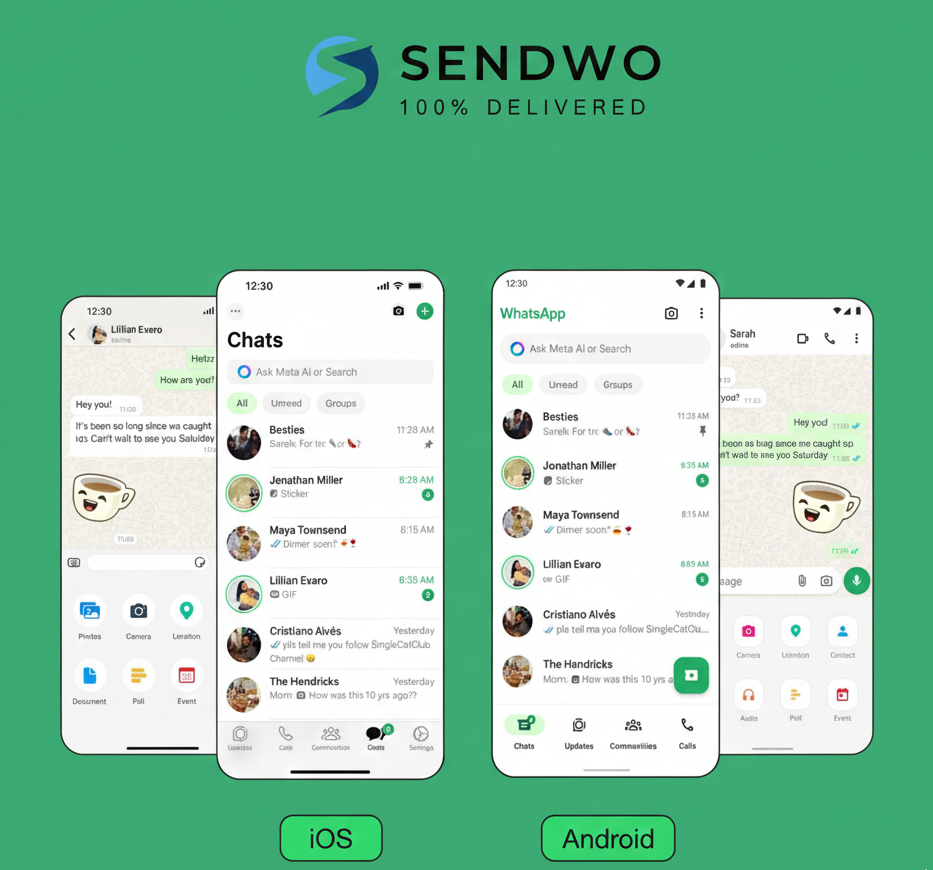
iOS: Blue to Green, plus Layout Tweaks: On iPhones, all the blue elements Why has my WhatsApp Turned Green – this includes chat bubbles for sent messages, header bars, icons for things like send button or attachments, and even link previews (hyperlinks that used to show as blue text are now green text in WhatsApp). In addition, WhatsApp gave iOS a slight layout refresh: some icons changed shape/style and there’s a bit more spacing between buttons and elements for a cleaner look. For instance, the Settings, Calls, and Chats icons at the bottom got a redesign (more rounded, outline-style icons) and extra padding was added to make tapping easier. Even the WhatsApp logo now appears at the top of the Chats tab on iOS, reinforcing the brand presence.
Android: Darker Dark Mode & Bottom Navigation: On Android, WhatsApp’s dark mode got even darker. Based on user feedback, the dark theme was tuned one notch deeper, improving contrast and legibility for nighttime use. The light mode on Android also gained more whitespace for a cleaner appearance. Another big change for Android is the introduction of a bottom navigation bar (finally catching up to iOS which had bottom tabs all along). The main tabs – Chats, Calls, Communities, Status (now called “Updates”) – moved from the top of the screen down to the bottom, making navigation more ergonomic for your thumb. This follows modern Android design guidelines and makes the app more consistent across platforms.
Refreshed Icons and Illustrations: WhatsApp updated many of its icons to a new style. Meta describes them as a rounded, outlined style now. If you look closely, icons for things like New Chat, Settings, or the various action buttons have a more minimalist line-based design. Along with that, the fun doodle illustrations (for example, the background pattern or the graphics you see when you have no chats) were also refreshed to match the new aesthetic, and some even have subtle animations to feel more lively.
New Attachment Tray on iOS: Another nice tweak for iPhone users – sending photos or files is smoother now. Previously, tapping the “+” or attachment icon on iOS brought up a full-screen menu. With the update, it open an expandable bottom tray instead. This means you can still see part of your chat while choosing a photo or document to send, making the process more intuitive.
Improved Chat Management (Filters): To help users manage conversations, WhatsApp introduced chat filters in the chat list. If you have a lot of chats, you can now filter them (e.g., unread messages, or view only group chats) with one tap using the new filter buttons at the top of the chat list. This feature, combined with the new navigation bar, makes it easier to quickly find specific chats without endless scrolling.
Performance and Accessibility: While not visually obvious, Meta indicated that many of these changes were aimed at improving usability and accessibility. The increased spacing, higher contrast text onWhy has my WhatsApp Turned Green background, and larger tap targets all help make WhatsApp easier to use for all, including people who may have visual impairments or use screen readers. The new color scheme was tested to ensure it’s readable in various conditions – for instance, the chosen green provides better visibility in direct sunlight and on different screens. In fact, tests showed that the new green improved visibility under bright light by ~19%, and it even consumes about 3% less power on OLED screens (since it’s slightly less saturated). Little improvements like these enhance the overall experience.
Bonus – New Formatting Features: Alongside the visual changes, WhatsApp also rolled out functional updates around the same time. One noteworthy addition was new text formatting options in chats. WhatsApp introduced the ability to create bulleted lists, numbered lists, block quotes, and code blocks in your message. This was a big deal for power users who wanted to add more style to their messages (imagine neatly sending a shopping list or emphasizing a quote in a chat). These features show that WhatsApp’s update wasn’t just about a pretty new color – it’s about making conversations more productive and fun too. So if you’re exploring the new green WhatsApp, try out typing “- ” at the start of a line to make a bullet list, or “```” to create a monospaced text block – it’s pretty handy!
In summary, Why has my WhatsApp Turned Green update is part of a broader refresh to keep the app modern. Yes, the color is the most noticeable change (and the one that got everyone talking), but as we can see, WhatsApp’s team used this opportunity to introduce many usability enhancements. It’s like giving the app a fresh coat of paint and renovating the rooms inside at the same time.
5. Why Did WhatsApp Make This Change? (The Bigger Picture)
Whenever a popular app makes a major design change, users inevitably ask “Why change something that wasn’t broken?” In the case Why has my WhatsApp Turned Green, there are a few key reasons behind the scenes:
Unified Branding: WhatsApp has always been associated with the color green – its logo, website, and marketing all use green heavily. However, the in-app experience on some platforms (like iOS) didn’t fully reflect that. By turning the interface green universally, Meta is strengthening WhatsApp’s brand identity. Now, the moment you open WhatsApp, the color scheme itself tells you what app you’re in. This kind of brand consistency can improve logo recall by around 7%, which is significant for a product used by billions. In fact, after the update, WhatsApp noticed a small uptick in usage of WhatsApp Business features, likely because the branding was more front-and-center.
Keeping the App Feeling “Fresh”: Apps, like any product, can start to feel stale if the design never changes over the years. Competing messaging apps and social media constantly update their look to appear modern and exciting. WhatsApp’s last major design tweak was quite a long time ago, so this green overhaul signals a “new era” for the app’s look. It grabs user attention and says “hey, WhatsApp has evolved.” This is a common strategy in tech – a visual refresh can rekindle user interest and make an old app feel new again. Indeed, WhatsApp likely hoped that a fresh design would get people talking (which it did) and re-engaging with the app.
User Experience Improvements: Beyond branding, WhatsApp’s designers had concrete UX (user experience) goals. The new color scheme was chosen not just to look good, but to be easier on the eyes. The bright blue on white (on iOS) could be stark; the new green is a bit softer in contrast. WhatsApp claims the green interface can reduce eye strain during long chats, especially in low-light conditions. And remember, they paired the color change with things like darker dark mode and better spacing – all aimed at making the app more comfortable to use for longer periods. There’s data to back this: internal tests reportedly showed the new design reduced visual fatigue by 23% in long usage sessions. So this isn’t change for the sake of change; it has usability rationale.
Strategic Consistency Across Meta Apps: Meta (Facebook’s parent company) has a history of aligning the design language of its family of apps (Facebook, Instagram, WhatsApp, etc.). By updating WhatsApp’s interface, Meta brings it closer in line with modern design practices seen in their other apps. It wouldn’t be surprising if some elements of this WhatsApp redesign (like the bottom nav bar on Android, or the rounded icon style) were influenced by user interface research that Meta conducted across all their products. Consistency in design can make it easier for Meta to introduce cross-app features down the line, and it also reinforces that WhatsApp is part of the Meta ecosystem without explicitly rebranding it.
Standing Out and Future-Proofing: WhatsApp faces competition from apps like Telegram, Signal, WeChat, and others. While WhatsApp has the advantage of a massive user base, it still needs to keep up with trends. A slick new design can appeal to younger users and markets where design trends change quickly. By adopting a clean, modern green aesthetic (some call it a more “Material” look on Android and a more “flat design” on iOS), WhatsApp ensures it doesn’t feel outdated. Meta’s design team likely also had an eye on future features – the refreshed interface can better accommodate new functions, such as integrating AI assistants or payment features, without looking cluttered. Think of the redesign as laying a groundwork that will serve for the next several years of updates.
To sum up, WhatsApp turned green for solid reasons: to unify its look, improve user comfort, refresh the brand image, and set the stage for future enhancements. It was a bold move (as evidenced by the initial outcry from some users), but one that Meta anticipated. They knew there would be some resistance – internal models predicted about 15–20% of users would initially dislike any major UI change, but that 90% would adapt within 45 days. And indeed, after the first few weeks of surprise (and even some 1-star app reviews by upset users), most people have settled into the new design. The initial spike of negative feedback subsided after about a month as users grew accustomed to the green. Now, it’s fair to say Why has my WhatsApp Turned Green and the majority of users have embraced it as the new normal.
6. How to Adapt to WhatsApp’s New Green Interface
Change can be hard, especially when it’s an app you use daily. If you’re still getting used to all the green in WhatsApp, here are a few practical tips to help you adapt (and even make the most of it):
Embrace Dark Mode if Bright Green Feels Harsh: If the light green background in chats is too bright for you, consider using Dark Mode on WhatsApp. In dark mode, the bubbles and accents turn a dark teal/green which some find more soothing on the eyes at night. On iPhone, WhatsApp will follow your system dark mode setting (or you can set WhatsApp to always use dark mode in its settings). This way, you still have the new design, but with a darker palette that might feel closer to the old colors. Many users who initially disliked Why has my WhatsApp Turned Green in light mode found the dark mode variant more acceptable.
Change Chat Wallpaper for Contrast: WhatsApp allows you to set custom wallpapers or background colors for your chat threads. If the new green bubbles aren’t to your liking, try changing the chat wallpaper to something that tones it down. For example, a darker or patterned wallpaper Why has my WhatsApp Turned Greentext bubbles pop less aggressively. While this doesn’t change the bubble color, it can affect the overall feel of the chat screen and make you more comfortable with the new look.
Understand There’s No Official Way to Go Back: It’s important to know that WhatsApp does not offer any toggle to revert the interface to the old blue or previous desig. The change is here to stay (Meta has called it irreversible and the “new norm” for all users). So, avoid searching for sketchy apps or “WhatsApp old version” APKs that promise to restore the old colors – installing those could risk your security or get your number banned. The safest course is to stick with the official app and get used to its updates.
Leverage New Features: Instead of just focusing on the color, explore the new features that came with the update. Try using the new list formatting, check out the attachment tray if you’re on iOS, or use the chat filters to organize your messages. By engaging with these features, you might start to appreciate the update as an improvement rather than just a cosmetic change. You’ll find that WhatsApp has become more functional and slick. For instance, creating a quick bullet list in WhatsApp (thanks to the new formatting options) can be oddly satisfying and useful for planning tasks with friends.
Adjust Phone Theme Settings (Android Only): If you’re on Android and you notice WhatsApp’s colors look even more different (for example, it doesn’t match screenshots of others’ WhatsApp), check your Android system theme settings. Newer Android versions (with Material You design) can auto-tint app colors based on your phone’s wallpaper or theme. It’s possible WhatsApp is adopting some custom colors due to this. To fix it, you can go into WhatsApp Settings > Chats > App Theme, and select Light or Dark instead of “System default.” Why has my WhatsApp Turned Green theme rather than any adaptive colors. Similarly, in your Android display settings, you can disable dynamic theming or change the accent color. This will ensure WhatsApp stays the pure WhatsApp green intended by the designers.
Give It Some Time: This might sound like generic advice, but it holds true. Often when a UI changes, our initial reaction is negative simply because it’s unfamiliar. Psychologists note that people have a change aversion bias – we’re inclined to dislike changes to things we’re used to, even if the change is objectively neutral or positive. If after a week or two you still really dislike Why has my WhatsApp Turned Green, then your feelings are valid. But chances are, after using WhatsApp for a while, you’ll stop noticing the color altogether and it will just feel normal. Remember when Facebook or Instagram last changed their look? Most of us complained for a week and then forgot about it. The same will likely happen with WhatsApp. Already, a large portion of users have adapted and moved on. Give yourself that adjustment period.
Communicate Feedback (if it matters to you): If you have strong feelings about Why has my WhatsApp Turned Green interface (good or bad), consider sending feedback to WhatsApp. There’s a “Contact Us” or “Send Feedback” option in WhatsApp settings. While you can’t change the design back yourself, user feedback is still valuable. If enough users express a particular grievance (e.g., “the green is too bright” or “please allowtheme choices”), WhatsApp might take that into account in future updates. They might not revert to blue, but they could, for example, add an option for users to pick an accent color, or further tweak the green’s tone. WhatsApp has listened to user feedback on features in the past, so it’s not out of the question.
Finally, keep in mind why this change happened – it was to improve the app and align with WhatsApp’s identity. The app isn’t fundamentally different: your chats, features, and how you use WhatsApp all remain the same. It’s very much like your favorite store renovating with new paint on the walls; the products and people are the same, it just looks a bit different. And just like a store makeover can eventually feel welcoming after the newness wears off, the hope is that WhatsApp’s interface will feel just as comfortable (or more so) as the old one with a bit of use.
Conclusion
Change is never easy, especially when it hits an app you use every day to stay in touch with friends, family, and colleagues. WhatsApp’s shift to a green-themed interface might have been jarring at first, but it comes from a place of improvement and brand unity. By understanding the reasons behind the update – from enhancing usability to unifying the app’s look – it’s easier to appreciate the thought that went into it.
The new green WhatsApp is here to stay, and in time it’s likely to feel just as familiar as the old design. In fact, many users are already reporting that after a few weeks, they barely remember what the old interface looked like. WhatsApp has successfully turned the page to a fresh chapter, all while continuing to introduce features that make messaging more engaging (like those new text formats and chat filters).
As users, the best we can do is adapt and take advantage of what the updated app offers. Instead of asking “why has my WhatsApp turned green?” in frustration, we can confidently answer: because WhatsApp is evolving for the better. So the next time you open the app and see that vibrant green header or chat bubble, know that it’s a small part of a bigger effort to keep your messaging experience secure, modern, and enjoyable.
Call to Action: If you found this deep-dive helpful, stay tuned for more updates and tips on getting the most out of WhatsApp. Here at SendWo, we keep a close watch on every WhatsApp change so we can help users and businesses adapt quickly. 🎉 Explore SendWo – our platform takes WhatsApp to the next level, whether you’re a business wanting to send out bulk messages or an enthusiast looking to leverage WhatsApp’s full potential. Don’t let changes slow you down – embrace them and turn them into opportunities! Check out our resources and consider signing up for a free account with SendWo to supercharge your WhatsApp communication today. Happy messaging! 🚀
FAQ
Q1: Why has my WhatsApp Turned Green?
It’s part of WhatsApp’s 2024 design update. Why has my WhatsApp Turned Green interface to match its brand color across all devices. It’s not a glitch.
Q2: Is this green update a bug or hack?
No. It’s an official update by WhatsApp, not a bug or hack. The color change is intentional and completely safe.
Q3: Can I change it back to blue?
No, you can’t. WhatsApp doesn’t allow reverting to the old blue theme. Only light and dark modes are available within the app.
Q4: Why do only iPhone users notice it?
iPhones had blue chats before, so the green change stands out more. Android already used green, so users there saw only minor tweaks.
Q5: When did WhatsApp turn green?
The update rolled out in late February 2024, with most users noticing between March and April. It was mentioned in app update notes and tech news.
In today's digital world, knowing how to introduce yourself on WhatsApp is a key skill for making a strong first impression. Whether you're reaching out to a new friend, joining a group link, or contacting a client, the way you say "hello" can shape the entire conversation. WhatsApp has over 3 billion users worldwide, who collectively send more than 100 billion messages every day. It’s not just for personal chats – 175 million people message a WhatsApp Business account every day. With such massive usage, a clear and friendly how to Introduce Yourself on WhatsApp can help you stand out and build instant rapport.
1. Why a Good WhatsApp Introduction Matters
Your WhatsApp introduction message is more than just a hello – it's your first impression in someone’s chat window. A thoughtful introduction can immediately convey who you are and why you’re messaging, making the other person feel comfortable engaging with you. Here are a few reasons a good introduction on how to Introduce Yourself on WhatsApp is so important:
Sets a Friendly Tone: A warm, polite opener makes you sound approachable. This can put the recipient at ease and make them more receptive to your message.
Establishes Identity and Context: Stating your name (and, if relevant, how you obtained their contact or where you met) prevents confusion. It answers the immediate question, "Who is this and why are they messaging me?"
Builds Trust and Credibility: Particularly in professional or business settings, how to Introduce Yourself on WhatsApp properly shows respect. It demonstrates that you value the other person's time and are transparent about your intentions. This can build trust from the very first message.
Encourages Response: An effective intro often ends with an invitation to talk (like a question or a prompt). By clearly showing interest in communicating, you make it easier for the other person to reply. This can kick-start meaningful conversations rather than being ignored.
Avoids Misunderstandings or Spam Vibe: On WhatsApp, messages from unknown numbers can easily be mistaken for spam or scams. By immediately introducing who you are and how you are connected, you reduce the chance of your message being ignored or reported. This is especially critical for businesses reaching out to new customers on WhatsApp.
In short, how to Introduce Yourself on WhatsApp functions as the foundation for your conversation. It’s your chance to make a positive impact in a crowded chat list and ensure the person on the other end actually reads and responds to what you have to say. With WhatsApp boasting an astonishing 98% open rate (versus about 20% for emails), there's a very high chance your introduction will be seen – so make it count!
2. What is an Introduction Message on WhatsApp?
An introduction message on WhatsApp is the first message you send when starting a new conversation or joining a new group. In simple terms, it's your personal introduction delivered via a WhatsApp chat. This message typically tells the recipient who you are and why you’re reaching out, all in a concise, friendly way, See how to Introduce Yourself on WhatsApp.
Key characteristics of how to Introduce Yourself on WhatsApp include:
Brief and Clear: It’s a short greeting that quickly provides your name (or company name) and any necessary context. You don't want to drop a wall of text as your first message. A sentence or two is often enough in personal chats, maybe a bit more in professional intros.
Context-Setting: A good intro message will often mention how you got the person's contact or why you are contacting them. For example, "Hi Mark, this is Sarah. Jane from the book club gave me your number." This immediately explains the connection.
Friendly Tone: Even if it's a formal or business context, the tone should be courteous and approachable. On WhatsApp, people expect a more conversational feel (compared to, say, email). For businesses, how to Introduce Yourself on WhatsApp might be slightly more structured but should still feel human and warm.
Relevant to the Setting: The style of your introduction may vary by context:
In a personal chat, your introduction might be very casual (e.g., "Hey, it's Alex – we met at John’s party last weekend!").
In a professional one-on-one chat, you'll likely be a bit more formal and to-the-point (e.g., "Hello, I'm Dr. Emily Stone. I got your contact from Professor Jacobs regarding the research project.").
In a group chat, especially if not everyone knows you, your intro might be to the whole group (e.g., "Hi everyone, I'm Priya. I just joined the team and I'm excited to work with you all!").
For business-customer conversations, an introduction message could be an automated greeting or template that introduces the business or agent (for example, a WhatsApp Business auto-reply: "Hello and thank you for contacting GreenLeaf Services. I'm Anna, here to assist you today.").
First-Step of Engagement: Think of it as knocking on someone's door politely before the conversation. It opens a channel for dialogue. Unlike a broadcast advertisement, an intro message invites a two-way conversation from the start.
In essence, the introduction message on WhatsApp functions as a bridge between two parties who are about to communicate on this platform. It respects the personal nature of WhatsApp by being direct and considerate. No one likes getting a random message with no explanation – a proper introduction prevents that awkwardness. It’s a small upfront effort that can pay off with smoother, more productive chats afterward.
3. How to Introduce Yourself on WhatsApp: Step-by-Step Guide
Now let's get into the step-by-step process of how to Introduce Yourself on WhatsApp. Whether you're messaging someone new or a group of people, these steps will help you craft a great introduction message:
Start with a Friendly Greeting: Open with a simple, warm greeting. A “Hi” or “Hello” is often sufficient. You can add time-specific greetings like “Good morning/afternoon/evening” if it’s relevant. Example: “Hello!” or “Hi everyone, good morning!” Starting on a friendly note sets a positive tone and makes your message feel welcoming.
State Your Name (and Possibly Your Role): Right after the greeting, how to Introduce Yourself on WhatsApp by name. This is crucial – if the recipient hasn’t saved your number, they need to know who is messaging. For personal chats, first name might be enough; in professional contexts or group intros, your full name and role/title can be appropriate. Example: “I’m Alice Brown, a friend of John’s.” or “My name is Kevin Lee, and I’m joining as a software engineer in the team.” Stating your name up front establishes your identity clearly.
Mention How You Got Their Contact or Why You're Connecting: Providing context is key to avoid any confusion or skepticism. Explain briefly how you obtained their number or what prompted you to message. This could be through a mutual friend, an event where you met, an online group, or a business context (like they filled a form on your website). For instance: “I got your contact from our mutual friend, Sam, who thought we should connect,” or “I saw your inquiry on our website.” If you’re joining a group, you might say something like, “Thanks for adding me – I heard about this group from Jane.” This step builds trust by showing the message is expected or at least relevant.
State Your Purpose for Messaging: In one sentence, explain why you are reaching out now. People appreciate knowing the reason right away. Keep it concise and relevant. For example: “I’m reaching out to discuss the project you mentioned,” or “I wanted tohow to Introduce Yourself on WhatsApp as I’ll be working with you on the new marketing campaign,” or for personal context, “Just wanted to say hi and connect after meeting at the conference.” If it's a business-to-customer message, it could be “Thank you for contacting [Your Business] – I’m here to help you with your inquiry about [Product].” Being upfront about your purpose helps avoid confusion and shows respect for the other person’s time.
Keep the Tone Polite and Appropriate: WhatsApp might feel informal, but it's important to match your tone to the context. If you're writing to a colleague or someone you don't know well, maintain professionalism: no slang, and use proper grammar. For friends or peers, a more relaxed, cheerful tone is fine. Always be courteous – phrases like "please" and "thank you" can go a long way in written messages. And be careful with humor or sarcasm, as it may not translate well without voice tone or emojis. It's usually safer to be straightforward and polite on a first introduction.
Add a Personal Touch (Optional): Depending on context, it can be nice to include a personal or relatable element to make your introduction more memorable. This could be a shared interest or a common connection. For example: “I also graduated from XYZ University, a couple of years after you,” or “I’m a big fan of the same author you mentioned in the group.” In a business context, a personal touch could be expressing genuine enthusiasm: “I’m excited to be connecting with you.” Be careful to keep it brief – the goal is just to humanize your message a bit, not to tell your life story.
Invite a Response (Call-to-Action for Conversation): End your introduction in a way that encourages the other person to respond or continue the conversation. A simple open-ended question or a positive statement can work. For example: “How are you doing today?”, “Let me know when you’d be free to chat more about this.”, or “Looking forward to your response!”. In a group, you might say, “Excited to be here and learn from you all – feel free to reach out!”. For a business intro to a customer, something like “Let me know how I can assist you.” invites them to ask questions. By prompting a reply, you make it easier for them to know what to say next, turning your introduction into a two-way interaction.
Sign Off Politely (if appropriate): In many cases, especially in one-on-one messages, you might not need a formal sign-off like an email. But it’s good to close with a polite sign-off or emoji that matches the tone. It could be your name again (if a formal context), or a simple "Thanks" at the end of your message if you, say, asked them a question. Even an emoji 😊 or 👍 can serve as a friendly closer in casual chats. The key is to close on a positive, courteous note. For example: “Looking forward to hearing from you soon. – Alice.”
Using these steps, a complete introduction message might look something like this:
"Hello, I’m Alice Brown. I got your number from John Doe at the networking event last week. I’m reaching out because I enjoyed our chat about renewable energy and would love to continue that discussion. How have you been? Looking forward to connecting more!" This example greets, gives a name, explains context, states purpose, and ends with a question to prompt a reply. Tailor your own WhatsApp intro using the same principles, and you'll come across as confident, polite, and engaging from the very first message.
4. How to Introduce Yourself in a WhatsApp Group
How to Introduce Yourself on WhatsApp group can feel a bit different than a one-on-one chat. In a group, you might have an audience of many people, and you want to make a brief entrance without overdoing it and first You can join group. Here are some tips to remember when writing an introduction message in a group chat:
Greet the Group as a Whole: Start with a general greeting to everyone. For example: “Hi everyone!” or “Hello group, hope you all are doing well.” This acknowledges all members collectively, since you likely don't know them individually yet. It’s a friendly way to get everyone’s attention.
State Your Name and (If Relevant) Your Role: Just as in a personal chat, give your name promptly. In a group, it’s often helpful to add a bit of context about who you are, especially if it’s a professional or interest-based group. For instance: “I’m Sophia Chen, the new marketing intern,” or “My name is Arjun, and I'm excited to join you all in this book club.” If the group is work-related, including your job title or department can help others place you immediately.
Acknowledge the Group’s Purpose or Topic: Show that you understand what the group is about – this demonstrates respect and that you’re on the same page. Example: “I joined this group to learn more about graphic design and share ideas,” or “Looking forward to collaborating on the XYZ project with everyone.” Aligning your intro with the group’s theme helps others see that you’re there for the right reasons.
Keep It Short and Relevant: In group chats, messages can pile up quickly. A brief intro is best so you don't derail the ongoing conversation or bore anyone. You might express enthusiasm to be part of the group, but save detailed stories or off-topic info for later one-on-one chats. One or two sentences about you and your connection to the group is usually enough.
Be Respectful and Positive: Group dynamics vary, but as a newcomer, it's safest to strike a polite tone. Avoid making jokes that could be misinterpreted or bringing up anything too personal or controversial in your intro. Something like “Excited to be here and get to know everyone!” is a simple, positive note to end on. It makes people more likely to give you a warm welcome.
Example of a WhatsApp Group Introduction:
“Hi everyone, I’m Carlos Vega. I just joined the team as a software developer, and I’m excited to work with you all on the new project. Thanks for inviting me to the group – looking forward to collaborating with you!”
In this example, Carlos greets everyone, states who he is and why he’s there, and expresses enthusiasm. It's concise and on-point. Once you've how to Introduce Yourself on WhatsApp, you can then follow the group's lead on further interactions (like maybe sharing a fun fact if others do, or just joining the regular chat).
Remember, the goal of a group introduction is to let others know who the new person is without being disruptive. After your intro, it’s a good idea to read recent group messages or any pinned messages to familiarize yourself with ongoing discussions or rules. Then, you can comfortably jump into conversations as they come up.
5. Examples of Great WhatsApp Introduction Messages
Sometimes it helps to see actual examples of introduction messages to understand how to craft your own. Below are a few sample of how to Introduce Yourself on WhatsApp for different scenarios. You can use these as templates or inspiration, adjusting the details to fit your situation:
Example 1: Introducing Yourself to a New Professional Contact (One-on-One)
“Hello Dr. Smith, my name is Kevin Patel – I'm a UX designer at CreativeX. I got your contact from Jane Davis, who suggested I reach out about the app design project. It was great hearing about your work, and I’d love to discuss how we might collaborate. Would you be open to a brief chat this week? Thank you!”
Why this works: It’s polite and professional. Kevin uses a formal greeting and title, states who he is and how he got Dr. Smith’s number, and clearly mentions why he’s texting (the app design project). He ends with a question to invite a response, and thanks them, which shows respect.
Example 2: Casual Introduction to Someone You Met Socially
“Hey Lily, it’s Marcus here – we met at Sam's barbecue last weekend. 🍔 I hope you don’t mind me messaging. I really enjoyed our conversation about hiking trails. I just found that blog about the Himalayas we talked about – can’t wait to share it with you. How are you doing today?”
Why this works: It’s friendly and personal. Marcus reminds Lily where they met (providing context), uses a casual tone and even an emoji to keep it light. He mentions a specific thing they talked about (hiking trails) to create a personal connection. Ending with a question encourages Lily to reply.
Example 3: Introduction in a New WhatsApp Group (Informal Setting)
“Hi everyone! I’m Nina, and I just joined this group. I’m friends with Alex and have heard great things about this chat. I love travel and photography, and I’m excited to be part of the conversation here. Looking forward to getting to know you all!”
Why this works: In a group context, Nina keeps it short yet personable. She greets all, shares her name and a couple of relevant personal interests (since this sounds like a casual/social group). She also mentions knowing an existing member (Alex), which helps others place her. The tone is upbeat and inclusive.
Example 4: WhatsApp Business Introduction to a Customer (Automated Greeting)
“Hello, and thank you for contacting BrightHome Services! 🙌 I’m Anna, your virtual assistant. We appreciate your interest. How can I help you today?”
Why this works: This message is likely an automated greeting from a business via WhatsApp Business API or app. It immediately thanks the customer for reaching out (politeness), how to Introduce Yourself on WhatsApp the business name and the representative’s name (even if it's a bot or agent), and invites the customer to state their need. The tone is friendly and helpful. Even though it might be automated, it feels personal and responsive, which is key in customer service.
Feel free to adapt these examples to your own style. The exact wording should fit your voice and the situation. The common thread in all effective introduction messages is clarity, friendliness, and context. You can mix in some enthusiasm or personal flavor as appropriate, but always make sure the core information (who you are and why you’re writing) is easy to grasp in one quick read.
5. Do’s and Don’ts of WhatsApp Introductions
To ensure your introduction messages are well-received, keep in mind these essential do’s and don’ts. Following these best practices will help you avoid common pitfalls and impress your contacts right from the first message:
Do: ✔️ Be Clear and Concise – How to Introduce Yourself on WhatsApp in a straightforward manner. A brief message with one or two sentences is usually ideal. People tend to skim long messages, so get to the point politely. For example, “Hi, I’m Aria from XYZ Company. Met you at the conference and would love to follow up on our chat.” is clear and concise.
Do: ✔️ Mention Context or Mutual Connection – Always explain how you got the person's contact or why you’re messaging them, especially if you’re an unfamiliar person popping up in their WhatsApp. This prevents your message from feeling out-of-the-blue. E.g., “Dr. Lee gave me your number and suggested I reach out regarding the job opening.” This way, the recipient immediately knows this isn’t spam and why they should care.
Do: ✔️ Use a Friendly, Appropriate Tone – Match your tone to the situation while staying courteous. If it's a work contact or senior person, lean towards polite and professional language (no text slang, use proper capitalization and punctuation). If it's a peer or friend, you can be more casual and cheerful. Either way, be respectful. Maybe include a polite wish like “Hope you’re doing well!” to start on a positive note.
Do: ✔️ Check Your Profile & Number Name – On WhatsApp, your profile photo, display name, and status are visible when someone taps your number. Make sure they align with the impression you want to give. A clear profile picture (it could be your face in a friendly, professional-looking photo) and an appropriate status message (or just a simple one) can support your introduction. If you’re contacting someone new, they might click your profile to see who you are, so ensure it doesn’t raise any red flags.
Do: ✔️ Proofread Before Sending – Take a second to read your introduction message before hitting send. Correct any typos or autocorrect mistakes, and ensure the names (like the recipient’s name or mutual friend’s name) are spelled correctly. A clean, error-free intro shows attention to detail. Also, double-check that you’re sending it to the right chat! You don’t want to introduce yourself to the wrong person or group by accident.
Don’t: ❌ Send a Blank “Hi” Message – One-word or bare-bones messages like just “Hi” or “Hello” with no additional info are a big no-no when how to Introduce Yourself on WhatsApp. Many people find this irritating because it forces them to respond with “Who is this?” or ignore the message. Always follow up your greeting with your name and reason for texting in that first message. For example, don’t just say “Hi.” and wait – that can come across as spammy or make you seem unsure. Instead, combine it as shown in the examples earlier.
Don’t: ❌ Overwhelm with Too Much Information – While it’s important to give context, avoid turning your intro into a full biography or a long pitch. Don’t write five paragraphs about your life story or a detailed history of your company in the first message. Too much text can be off-putting. Save the extended details for later in the conversation when appropriate. The introduction should be a bite-sized snippet about you, not the whole meal.
Don’t: ❌ Use Informal Language in Formal Contexts – Slang, excessive emojis, or very informal language can be a turn-off if you’re messaging someone in a professional or formal situation. For instance, starting a business intro with “Yo 🤘 what’s up” is obviously not suitable. Even things like “hey bro” to someone you just met for work might come across as unprofessional. When in doubt, err on the side of polite and slightly formal for the first message; you can always adjust the tone based on how they respond or the rapport you build later.
Don’t: ❌ Neglect Response Etiquette – An introduction is the first step; what comes next matters too. If the person replies, don’t keep them waiting for ages – respond in a timely manner to continue the conversation you initiated. Conversely, if you don’t get a response immediately, don’t spam them with multiple follow-ups like “???” or “Hello, why no response?”. Give it some time; people might be busy. A gentle follow-up after a reasonable period (like a day or two) is okay, but never pressure someone to reply. Also, avoid sending large attachments or links in your very first message unless they expect it – it can trigger suspicion or seem too pushy.
Don’t: ❌ Forget to Personalize Templates – If you use a template or example (like those we provided) for a WhatsApp introduction, always customize it for the person or group you’re messaging. A generic-sounding intro can feel spammy. For example, if you send “Dear customer, I am reaching out regarding your interest in our product…” to an individual, it feels impersonal. Instead, mention their name or something specific. Even businesses using WhatsApp should personalize how to Introduce Yourself on WhatsApp with the recipient's name or relevant details when possible. It shows that you’re treating them as a person, not just a number on a list.
By keeping these do’s and don’ts in mind, you’ll avoid the common mistakes and come across as polite, genuine, and professional (when needed). The bottom line is to think about how your message will be received on the other end: put yourself in the recipient’s shoes. Is your introduction helpful and polite, or would it confuse/annoy you if you received it? Adjust accordingly, and you’ll be on the right track.
Conclusion
Mastering how to introduce yourself on WhatsApp can significantly improve your communication in both personal and professional spheres. A great introduction message on WhatsApp helps you break the ice, build trust, and set the stage for meaningful conversation. Remember that whether you're texting a new friend or a potential client, people appreciate clarity and friendliness. By greeting warmly, stating who you are, providing context, and showing a bit of personality, you're more likely to get a positive response and forge a strong connection from day one.
As WhatsApp continues to be a powerhouse platform with billions of users and unbelievably high engagement (with message open rates around 98%), the introductions you make there are often the first step to lasting relationships – be it a friendship, a successful team project, or a loyal customer. So take the tips from this guide and put them into practice next time you find yourself typing "Hi" to someone new on WhatsApp. A little thoughtfulness in that first message can go a long way!
Call to Action: If you're a business or professional looking to take your WhatsApp communication to the next level, consider leveraging tools to streamline your outreach. SendWo – an all-in-one WhatsApp marketing automation platform – can help you send personalized introduction messages, manage bulk chats, and even set up automated greeting messages to welcome new contacts sendwo.com. With features like chatbots, broadcast lists, and analytics, SendWo enables you to build strong customer relationships from the very first “Hello.” Ready to how to Introduce Yourself on WhatsApp count? TrySendWo for free today and see how it can transform your messaging strategy. Start creating those powerful first impressions at scale, and watch your engagement soar!
(FAQs)
Q1: What is a good introduction message on WhatsApp?
A: Keep it concise, friendly, personalized with name/context/purpose. Example: “Hello Michael, Alicia from BrightMarketing here. Following up on our LinkedIn chat about SEO. Excited to connect!”
Q2: How to Introduce Yourself on WhatsApp group chat?
A: Greet the group, share your name/role/reason for joining briefly. Example: “Hi everyone! I’m Samir, final-year student prepping for exams. Looking forward to studying together.”
Q3: How do I introduce my business on WhatsApp to new customers?
A: Use warm greetings via Business app, state company/name, offer help. Example: “Hi! 👋 SparkClean Services here. I’m Maria—how can we assist today?” Add quick replies for consistency.
Q4: Is WhatsApp okay for professional introductions?
A: Yes, if consented and professional—it's fast with high open rates. Confirm opt-in, time respectfully, match their tone. Prefer email if unsure.
Imagine handing your phone to a friend to show a photo, and suddenly a private WhatsApp message pops up on your screen. Awkward, right? With over 2 billion users worldwide, WhatsApp is one of the most popular messaging apps. We share personal and professional conversations on it every day, so it’s natural to want a way to keep certain chats away from prying eyes. Fortunately, WhatsApp offers features to hide or lock your chats for added privacy. In this comprehensive guide, we’ll explore how to hide chat in WhatsApp using built-in options like Chat Archive and the newer Chat Lock feature (including the secret code option to completely conceal locked chats). We’ll also cover how to lock chats in WhatsApp with passwords or biometrics, and answer common questions about hiding conversations. By the end, you’ll know exactly how to secure your WhatsApp messages and keep nosy onlookers out of your business. Let’s dive in!. Here you can know how to hide chat in WhatsApp.
1. Why Would You Want to Hide WhatsApp Chats?
Hiding WhatsApp chats can be useful in many real-life scenarios. Maybe you’re planning a surprise birthday party and don’t want the secret chat to be seen. Or perhaps you share your phone with family and need to keep work conversations confidential. Here are some common reasons people look to how to Hide Chat in WhatsApp:
Protecting Privacy: Keep sensitive personal chats (like intimate conversations or financial details) out of sight from anyone who might glance at your WhatsApp. Shared Devices: If you occasionally hand your phone to someone (e.g. to make a call or show a picture), hiding certain chats ensures they won’t stumble upon private messages.
Preventing Snooping: In case your phone is unlocked or someone knows your phone passcode, locked chats add an extra layer of security beyond how to hide chat in WhatsApp app lock.
Organizing Chats: Archiving chats can simply declutter your main inbox. For example, you might how to Hide Chat in WhatsApp old conversations you don’t need to see every day but aren’t ready to delete.
No matter the reason, WhatsApp’s features can help keep your conversations hidden and secure. Next, we’ll look at the official methods of how to hide chat in WhatsApp step-by-step.
Method 1: Hide WhatsApp Chats by Archiving Them
One simple way to how to Hide Chat in WhatsApp (without deleting it) is to use the built-in Archive feature. Archiving a chat will remove it from your main chat list, tucking it away in an “Archived” folder. This is great for tidying up your chat screen or keeping certain conversations out of immediate view. Archived chats stay in the archive until you manually unarchive them, and you can still access them whenever needed.
Key Points about WhatsApp Chat Archive:
The Archive feature hides your chats from the main screen but does not delete them. You can unarchive at any time to bring the chat back.
By default, WhatsApp will keep chats archived even if new messages come in. This means your hidden chats won’t pop back up when the person messages you (as long as a certain setting is enabled).
Notifications: If you receive a new message in an archived chat, you will still get a notification (unless you muted the chat), but the chat stays in the Archived section by default. This helps maintain privacy while ensuring you don't miss messages.
2. How to Archive a WhatsApp Chat (Android & iPhone)
Archiving a chat is quick and works similarly on Android and iOS, with slight interface differences:
Open WhatsApp and go to Chats: On your phone, launch WhatsApp and make sure you’re viewing the list of chats (the “Chats” tab).
Select the chat to hide: Scroll and find the conversation (individual or group) that you want to hide.
On Android, long-press on the chat thread you want to archive.
On iPhone, swipe left on the chat thread, then tap Archive (or you can long-press on the chat and choose Archive from the menu).
Archive the chat: Tap the Archive icon (a box with a downward arrow) or select “Archive” from the menu. The chat will immediately disappear from your main chat list and move to the Archived Chats folder.
That’s it! The conversation is now hidden. You’ll find an “Archived” section at the top or bottom of your chat list (location may vary by app version). On newer versions, an Archived box appears at the top if you have archived chats; on some others it might be at the bottom of the list.
3. How to Unarchive (Restore) a Chat
If you need to bring a hidden chat back to your main list (for example, the conversation is active again or you archived it by mistake):
Scroll to the Archived Chats section in WhatsApp (pull down on the chat list to reveal the Archived folder at top, or scroll to bottom if it’s there). Tap on Archived Chats to open it.
Find the chat you want to unhide.
On Android, long-press the chat and tap the Unarchive (box with upward arrow) icon. On iPhone, swipe left on the chat and tap Unarchive.
The chat will reappear in your main chat list (typically in the same chronological position as its last message).
Note: Archiving is a quick “hide” solution but not a security feature. Anyone who knows how to check your WhatsApp archives can still open the chat. For added security (locking with a password or fingerprint), WhatsApp has another feature – Chat Lock – which we’ll cover next.
Method 2: Lock Chats in WhatsApp for Enhanced Privacy
For truly sensitive conversations, you may want more than just hiding the chat – you might want to lock it with a passcode or fingerprint. WhatsApp’s Chat Lock feature (introduced in 2023) does exactly that. It locks a specific chat thread behind your device’s authentication, and removes it from the regular chat list into a special Locked Chats folder. This means even if someone is looking at your WhatsApp, they won’t see the locked chat at all unless they have your fingerprint, Face ID, or secret code to access it.
When you lock a chat, WhatsApp also hides the content of that chat in notifications – notifications will just say “1 new message” without revealing sender or message preview. This way, your private conversation stays truly private.
4. How to Lock Chats in WhatsApp (Android & iOS)
Before you start, make sure you have the latest version of WhatsApp installed, because Chat Lock is a relatively recent feature. Also, you need to have device authentication (screen lock like PIN/fingerprint/Face ID) enabled for it to work. Here are the steps to lock an individual chat:
Open the chat you want to lock: Launch WhatsApp and go to the chat (individual or group) that you wish to secure. You can lock one-on-one chats or group chats in the same way.
Go to Contact Info / Chat Settings:
On Android: Long-press the chat from the list, tap the three-dot menu in the top-right, and select “Chat Lock” from the options. (Alternatively, open the chat, tap the contact name at the top to enter Contact Info, then scroll to Chat Lock).
On iPhone: Open the chat, tap the contact’s name at the top to open the Contact Info screen, then you’ll find the Chat Lock option there.
Enable Chat Lock: In the Chat Lock settings for that contact, tap “Lock this chat with fingerprint/Face ID” (the wording may vary based on your device). If it’s your first time, you might see a Continue button – tap it to proceed.
Confirm your authentication: WhatsApp will prompt you to confirm via fingerprint, Face ID, or phone passcode (depending on what lock method your phone uses). Complete the authentication to activate the lock on that chat.
Chat is now locked and hidden: Once enabled, WhatsApp will move that conversation to a Locked Chats folder. You should see a message like “This chat is locked” or an icon of a lock on the chat. The chat will no longer appear in your main chat list for others to see. Now your chat is locked! To verify, go back to the main Chats list – you won’t see that conversation listed anymore.
How to Access Locked Chats: To find your locked (hidden) chats, swipe down on the chat list screen. This reveals the Locked Chats folder (usually above the chat list). Tap Locked Chats, then authenticate with your fingerprint/Face ID or passcode to open it. Inside, you’ll see all chats you’ve locked. You can open the conversation, read and reply as normal (once unlocked), and it will stay locked after you exit.
How to Unlock (Remove Lock) from a Chat: If you decide to remove the lock and bring the chat back to normal list, simply go into that locked chat’s Contact Info again, find Chat Lock and turn off the “Lock this chat” option. After confirming your authentication, the chat will return to the main chat list.
If you don’t see the Chat Lock option, make sure WhatsApp is updated to the latest version. The feature rolled out globally around mid-2023, so older versions might not have it. Also, note that Chat Lock requires a device capable of biometric or passcode lock. If your phone doesn’t support fingerprint or Face ID and you haven’t set a passcode, the feature may not appear. In that case, setting up a device lock or updating the app should help.
5. How to Hide Chat in WhatsApp (Using a Secret Code)
WhatsApp took chat privacy a step further by introducing a “Secret Code” feature for Chat Lock in late 2023. This allows you to completely how to Hide Chat in WhatsApp folder itself from your chat list. In other words, if you enable a secret code, no one will even know you have locked chats on your WhatsApp – the locked folder won’t be visible at all unless the code is used.
Here’s how the Secret Code feature works:
Set a unique password or code for your Locked Chats. This can be an easy-to-remember word, phrase, or even an emoji combination. It’s separate from your phone’s passcode.
When a secret code is set, the “Locked Chats” folder disappears from the app’s main screen. The only way to access your locked chats is to search for that secret code in WhatsApp’s search bar.
Upon searching the code, WhatsApp will prompt you to authenticate (fingerprint/Face ID or the code itself), and then reveal the Locked Chats folder and its contents.
Steps to Hide Locked Chats with a Secret Code:
First, lock at least one chat using Chat Lock (as described above). The secret code option typically appears once you have something in Locked Chats. Here you can know how to hide chat in WhatsApp.
Go to Chat Lock settings: There are two ways:
If you have the Locked Chats folder visible, tap on it, authenticate, then tap the “Chat Lock settings” or gear icon within the Locked Chats screen. Or, open any locked chat’s Contact Info, go to Chat Lock, and you should see settings related to secret code.
Enable Secret Code: In Chat Lock settings, find the option for Secret Code. Choose a code or password that you'll remember. It can be any word or phrase (even with emoji) that isn’t obvious. Enter the code and confirm it. For example, you might set the code to an inside joke or an emoji sequence.
Locked Chats folder disappears: Once set, exit settings. You will notice that the Locked Chats entry is no longer shown in your chat list menu. It’s now hidden.
Access your hidden locked chats: To open your locked chats now, tap on the 🔍 Search icon in WhatsApp and type your secret code. When you search that code, WhatsApp recognizes it and will reveal the Locked Chats folder. You’ll then need to authenticate (fingerprint/FaceID or the code itself) to view the chats.
This secret code method makes your locked conversations truly covert – someone peeking at your WhatsApp wouldn’t even see a hint that certain chats exist. It’s perfect for ultra-private chats or scenarios where you share a phone. Just be sure not to forget your secret code! If you do, WhatsApp hasn’t provided a recovery method yet, so you’d need to remember it or possibly reinstall WhatsApp (which is a hassle). Choose a code that’s memorable to you but not obvious to others to how to hide chat in WhatsApp.
Bonus: Lock the Entire WhatsApp App (App Lock)
Aside from hiding individual chats, remember that WhatsApp also offers an App Lock feature (separate from Chat Lock). You can lock the entire WhatsApp application with your fingerprint or Face ID. This means anyone trying to open WhatsApp on your phone will need to pass that authentication first. It’s a good general privacy step, especially if you often leave your phone unattended.
On Android: Go to WhatsApp Settings > Privacy > Fingerprint Lock. Turn it on and register your fingerprint. You can set it to lock immediately or after a certain idle time.
On iPhone: Go to WhatsApp Settings > Privacy > Screen Lock and enable Face ID or Touch ID lock for the app.
App Lock is useful, but keep in mind it protects the app when someone tries to open WhatsApp. Once you’ve unlocked the app (with your fingerprint/FaceID), all chats are normally visible unless you use the above Chat Lock for specific conversations. So for maximum privacy, use both: App Lock to guard entry into WhatsApp, and how to Hide Chat in WhatsApp particular chats even if the app itself is open.
Method 3: Using Third-Party Apps or Mods (Caution)
Before WhatsApp introduced the official chat lock, some users turned to third-party apps or modified WhatsApp versions to how to hide chat in WhatsApp with a password. For instance, an app called GBWhatsApp (a popular modded WhatsApp) has a built-in feature to hide chats behind a pattern lock. While these methods did work to an extent, they come with significant caveats:
Security Risks: Third-party mods are not authorized by WhatsApp and could pose privacy/security risks. Your data might not be as secure, and using unofficial apps could even get your number banned by WhatsApp’s service.
Complex Setup: To use mods like GBWhatsApp, one must install an APK outside the Play Store (on Android) or even jailbreak an iPhone. This is technical and voids certain security measures.
Stability: Modded apps may not be as stable or up-to-date with the latest WhatsApp features (ironically, now that official WhatsApp has Chat Lock, the mods aren’t as necessary).
In short, we do not recommend relying on third-party apps to how to Hide Chat in WhatsApp now that WhatsApp provides official solutions. Stick to the official WhatsApp features (Archive and Chat Lock) for a safer and smoother experience. They achieve the same goals – hiding your chats or locking them with a passcode – without the extra risk. For example, WhatsApp’s own Chat Lock allows you to how to hide chat in WhatsApp without archive and protect them with fingerprint, eliminating the need for. Always prioritize your data privacy by using trusted methods.
6. Additional Tips for Keeping WhatsApp Chats Private
Beyond hiding and locking chats, here are a few more tips to maintain privacy on WhatsApp:
Use Disappearing Messages: For highly confidential conversations, consider using WhatsApp’s Disappearing Messages feature. When enabled, messages in a chat automatically delete after a set period (24 hours, 7 days, or 90 days) once seen. This way, there’s no long-term record of the chat on your phone . It’s not exactly “hiding” a chat, but it ensures sensitive messages don’t stick around.
Mute Notifications or Hide Previews: If you’re worried about people seeing your message previews, turn off message preview in your phone’s notification settings, or mute particularly sensitive chats. Muting a chat won’t hide it, but it stops notifications from drawing attention. Combined with archiving, this keeps a low profile for that chat.
Keep WhatsApp Updated: WhatsApp continues to add privacy features (for example, the Chat Lock and secret code rolled out in 2023). Stay updated to get the latest options for chat privacy. New updates might include things like locking chats on companion devices (e.g., WhatsApp Web) or setting custom passwords for chats, as hinted by WhatsApp.
Common Sense: Lastly, remember that the person on the other end of your chat can still see the messages – so hiding chats protects you from local snooping, but always trust the contacts you’re chatting with. If something is extremely sensitive, think twice before sending it digitally.
By combining these tips with the chat hiding/locking methods above, you can message confidently knowing your privacy is under your control.
Conclusion: Take Control of Your WhatsApp Privacy
In today’s world, privacy is power. We all love WhatsApp for its convenience, but that doesn’t mean we have to leave our private conversations exposed. Now you’ve learned how to hide chats in WhatsApp – from simply archiving chats to locking them with passwords or fingerprints, and even using a secret code for ultimate secrecy. These features give you granular control over who can see what on your WhatsApp.
It’s time to put this knowledge into action: Go ahead and try hiding or locking a chat that you want to keep confidential. Update your app to the latest version and use Chat Lock to secure those important conversations. You’ll gain peace of mind knowing your chats are safe from prying eyes.
Call to Action: Found this guide useful? Don’t keep it to yourself! Share it with friends or colleagues who might also benefit from enhanced WhatsApp privacy. And if you’re interested in more pro tips on messaging or using WhatsApp for business, be sure to check out SendWo’s blog and services for the latest insights. Protect your conversations today, and chat with confidence!
FAQ
Q1. How to Hide Chat in WhatsApp without deleting them?
Yes. You can archive chats to hide them from your main list or lock them for added privacy. Both options keep the chat intact.
Q2. What’s the difference between archiving and locking a chat?
Archive: Hides a chat in Archived Chats—no password needed.
Lock: Moves it to Locked Chats, protected by fingerprint, Face ID, or passcode, with hidden notifications.
Q3. How can I find hidden or locked chats?
Archived Chats: Open the Archived Chats folder (top or bottom of chat list).
Locked Chats: Swipe down on chats, authenticate, or search your secret code to reveal them.
Q4. Can I use a password instead of fingerprint to lock chats?
Yes. With Secret Code, you can set a custom password different from your phone’s passcode.
Q5. Is Chat Lock available on WhatsApp Web/Desktop?
Not yet. Locked chats stay hidden on linked devices and can only be managed from your phone.
Imagine this scenario: you have an important conversation on WhatsApp – maybe a surprise plan with a friend or sensitive work details – and you lock that chat for privacy. Later, you need to revisit that conversation but can’t find it at first glance. Don’t worry. WhatsApp’s Chat Lock feature keeps certain conversations in a hidden folder, and opening them is straightforward once you know how. This guide will walk you through every step to how to open locked chat in whatsApp, whether on Android, iPhone, or WhatsApp Web.
WhatsApp continues to grow in popularity, with over 2 billion users worldwide. Privacy is a top concern – in fact, 98% of all WhatsApp messages are end-to-end encrypted and about 65% of users employ chat lock features to protect their conversations. Understanding how to unlock those secured chats keeps your own data accessible and secure.
1. How to open locked chat in whatsApp on Your Phone
If a chat is locked, you won’t see it in the main list until you unlock it. Here’s how to open locked chat in whatsApp on Android or iPhone:
Swipe Down on Chats: Open WhatsApp and go to the Chats screen. Swipe down from the top of your chat list. This reveals a how to open locked chat in whatsApp section (it’s hidden when you first open the app).
Tap “Locked Chats”: A Locked Chats button or folder will appear at the top. Tap it to how to open locked chat in whatsApp list.
Figure: The Locked Chats folder (outlined in green) appears after swiping down on the Chats screen. Tapping it prompts a security unlock.
Authenticate: WhatsApp will prompt you to unlock via your chosen method (fingerprint, Face ID, or PIN). Use the same device password you set for chat lock. Once you authenticate, the Locked Chats folder opens.
Select and Open the Chat: Inside Locked Chats, you’ll see the conversations you previously locked. Tap any chat to open it normally; it will move back into your main chat list after unlocking.
On WhatsApp Web/Desktop, the Locked Chats option is visible by default (no swipe needed). Click Locked Chats and you will be prompted to enter your secret code (which you must have set up on your phone first). Once you enter the code, the locked chats appear and you can open them there as well.
2. Finding Hidden Locked Chats (Using a Secret Code)
WhatsApp also lets you hide the locked chats folder entirely using a secret code. In this mode, the Locked Chats tab won’t appear in your chat list. Instead, you reveal it by searching your secret code: Enter the Secret Code in Search: Tap the search icon at the top of WhatsApp’s Chats screen and type the secret code you set (for example, 12345).
Reveal Locked Chats: After entering the correct code, the Locked Chats folder appears in search results. Tap it and authenticate to how to open locked chat in whatsApp.
Figure: Typing a secret code (shown in the search bar) into WhatsApp reveals the hidden how to open locked chat in whatsApp folder.
This technique hides the fact that how to open locked chat in whatsApp at all, unless someone knows the code. As Tech Crunch explains, when hidden, your locked chats “can only be discovered by typing [the] secret code in the search bar”.
3. What to Do If You Forget Your Secret Code
Forgot your secret code? Don’t panic – you have options:
Use Biometric (Fingerprint/Face Unlock): If you enabled fingerprint or Face ID for Chat Lock, you can still unlock. For example, on Android add a new fingerprint in your phone’s security settings. Then open WhatsApp and swipe down to Locked Chats and use your fingerprint to unlock. Once inside, go to Settings > Privacy > Chat Lock and disable or reset the secret code.
Backup & Reset (Android/iOS): If biometrics fail, back up your chats first (WhatsApp Settings > Chats > Chat backup). Then go to Settings > Privacy > Chat Lock and choose “Unlock and clear locked chats.” This will clear the secret code and unlock all chats (note: it temporarily removes locked content from the folder). You can then restore your chat history from the backup.
Open via Contacts (Android): On Android, a handy trick is to open the locked chat from your Contacts app. Find the contact in your phone’s address book, tap “Message via WhatsApp,” and it will launch WhatsApp and prompt you to unlock that chat. This way you can access the chat and then remove the lock in its settings if needed.
Keep in mind: if you forget the code and didn’t back up, your locked chats cannot be recovered. WhatsApp warns that there’s “no direct way to recover locked chats unless you have a backup”. Regular backups ensure you won’t lose messages even if you reset Chat Lock.
FAQs
1. How do I unlock a locked chat on WhatsApp?
Swipe down on your Chats screen and tap Locked Chats to open the folder, then authenticate with your PIN/fingerprint/Face ID. The chat will then open normally.
2. How do I find hidden locked chats on WhatsApp?
If you hid locked chats with a secret code, tap the search icon and enter that code (e.g. “1234”). This reveals the Locked Chats folder.
3. Can I open locked chats on WhatsApp Web?
Yes. On WhatsApp Web/Desktop, click Locked Chats and then enter your secret code (set up on your mobile app) when prompted.
4. What if I forgot my WhatsApp chat lock password?
Use your device’s fingerprint or Face ID to unlock, or back up your chats and use Unlock and clear locked chats in Settings to reset the code. Without a backup, the locked chats may be lost.
5. Will anyone know if I lock or unlock a chat?
No – locking a chat only affects your device. The conversation appears normal to the other person, and they won’t receive any notification about your chat lock.
Conclusion
Opening a locked chat in WhatsApp is simple once you know the steps. Just swipe down on your Chats list, tap Locked Chats, and authenticate to reveal the folder. If your chats are hidden with a secret code, type that code in the search bar to bring them back. Now you can securely lock your private conversations without fear of losing access.
Ready to make the most of WhatsApp? Try SendWo’s free WhatsApp marketing platform to streamline your messaging and grow your business. For more WhatsApp tips and tutorials, visit the SendWo blog – your guide to smarter, safer communication!
WhatsApp is the world’s leading messaging app, with over 3 billion monthly active users worldwide. Every day, people send more than 100 billion messages on WhatsApp. To protect such a vast network of conversations, WhatsApp uses your phone number as your account ID. In other words, the only way to log in to WhatsApp is by verifying your mobile number. In this guide, we’ll walk through WhatsApp Login with Phone Number step by step. We’ll also cover WhatsApp Web/desktop logins, security best practices, troubleshooting tips, and answers to common questions. By the end, you’ll have a rock-solid understanding of WhatsApp Login with Phone Number process—and how to use it safely for personal or business chats.
1. Why WhatsApp Uses Your Phone Number
Unlike some apps that use usernames or email addresses, WhatsApp ties each account to a real phone number. This design has big advantages:
Security and Identity: Using your mobile number ensures that only someone who can receive an SMS or call to that number can activate the account. In effect,WhatsApp Login with Phone Number is your identity on WhatsApp.
Seamless Contacts: WhatsApp can automatically link you to all contacts who have each other’s numbers saved. When you log in with your number, your phonebook instantly populates your WhatsApp contact list. This makes it easy to stay connected without manual invitations or usernames.
Simplicity: There’s no separate “username” or email to remember. Your login process is simply: enter country code + phone number, then verify a code sent to that number. It’s straightforward and fast on any new device.
This phone-based login works the same for personal and business accounts. Even on the WhatsApp Business app or when using the WhatsApp Business API (as with SendWo), you still register and WhatsApp Login with Phone Number. In fact, as one source explains, “the WhatsApp app login has the same flow. You just need to add your number, get the 6-digit code, and you’re ready to go”.
Key Point: Whether it’s WhatsApp Messenger or WhatsApp Business, logging in always requires your phone number and the 6-digit code that WhatsApp sends to it
2. Step-by-Step: WhatsApp Login with Phone Number
Follow these steps to get started with WhatsApp on any device. We’ll cover both mobile and web/desktop logins. Make sure you have a working phone number (SIM card active) and an internet connection before you begin.
Figure: WhatsApp mobile login screens. First, install the WhatsApp app, agree to the terms, then enter your country code and phone number. You’ll receive a 6-digit verification code to complete login.
On Your Mobile (Android/iPhone)
Install and open the app. Go to the Google Play Store (Android) or App Store (iPhone) and download WhatsApp. Launch it and tap “Agree and Continue” to accept Meta’s terms.
Enter your country code and phone number. WhatsApp will show a country selector. Choose your country; this automatically inserts the correct dialing code (e.g. +1 for USA, +91 for India). Then type your full mobile number (no extra zeros or symbols). Double-check it carefully – even a small typo can prevent you from getting the code.
Verify with the 6-digit code. After entering your number, tap Next. WhatsApp will send a 6-digit verification code via SMS to that number (it may also offer a “Call me” option if the SMS is delayed). Enter that code into the app as soon as you receive it. This step proves you own the number. For example, as one expert notes: “You just open WhatsApp, pick your country, and type your phone number. WhatsApp sends you a 6-digit code. Enter that code to finish logging in. That’s it!”.
Set up your profile (optional). Once verified, you’ll be asked to create a profile: add your name and (optionally) a photo. This helps friends recognize you.
Enable two-step verification (highly recommended). Go to Settings > Account > Two-step verification and Turn On. Pick a 6-digit PIN and add a recovery email. This extra PIN protects your account even if someone somehow gets your SMS code. If you ever re-register WhatsApp, you’ll need this PIN in addition to the code.
By now, you should be WhatsApp Login with Phone Number. WhatsApp will automatically import your contacts (who are also on WhatsApp) and restore any local backup if you chose to.
Troubleshooting Tip: If the verification code doesn’t arrive, first check that you entered the correct number and country code. Ensure you have mobile reception and internet. Try the “Call me” option to get the code by voice. Wait a few minutes in case of network delays.
On WhatsApp Web or Desktop
WhatsApp also runs in web browsers and desktop apps. These let you chat on your computer by linking to your phone’s account. Traditionally, you link by scanning a QR code. However, WhatsApp now offers two methods: using the QR code or using your phone number with a code.
Option A: QR Code (most common)
On your computer, open a browser and go to web.whatsapp.com (or download the WhatsApp Desktop app).
On your phone, open WhatsApp and tap Menu (⋮) > Linked Devices (on iPhone, go to Settings > Linked Devices).
Tap Link a Device. This opens the camera.
Point your phone’s camera at the computer screen to scan the QR code shown on web.whatsapp.com.
Your WhatsApp chats will instantly appear on the browser.
Note: Your phone must remain on and connected to the internet for WhatsApp Web to work. If the phone loses connection, WhatsApp Web will disconnect. Always log out on public computers for security.
Option B: Phone Number (new feature)
If you can’t scan the QR code (e.g. a broken camera), you can log in by entering your phone number directly on the WhatsApp Web site. This is a recent feature that makes linking devices easier. Here’s how it works:
On your computer, open web.whatsapp.com. Click the link or button that says “Link with phone number” (some layouts may label it slightly differently).
A prompt will ask for your phone number. Enter your country and phone number (the same number you use on WhatsApp) and click Next. A unique code will appear on the screen.
On your phone’s WhatsApp app, go to Linked Devices > Link a Device, then choose “Phone number” (or simply tap Link a Device and then “WhatsApp Login with Phone Number”).
Your phone will ask for a one-time code. Type the code displayed on your computer into your phone. This links the accounts. Within seconds, your chats will load on the browser.
Figure: WhatsApp Login with Phone Number. Enter your country code and number on web.whatsapp.com, then verify the code on your phone.
After linking, you’ll stay logged in on that browser until you manually log out or clear cookies. This phone-number method was introduced in 2023, and WhatsApp explains: “You can WhatsApp Login with Phone Number on WhatsApp Web to receive a one-time code… which you can use on your phone to enable device linking.
Key Point: Even when using WhatsApp Web, your phone is required. You’ll always need to have your phone (on or online) to approve the login, whether by QR code or code. As one source warns: “No, you need your phone to scan the QR code or get the login code. Your phone must stay connected to the internet for WhatsApp Web to work.”
Once logged in on the web or desktop, you can chat just like on mobile. WhatsApp will sync messages in real-time. You can have up to four linked devices plus one phone. If your phone goes offline for a short time, web/desktop will keep working thanks to WhatsApp’s multi-device feature (as long as the connection was recently active).
3. Two-Step Verification and Security Best Practices
After logging in with your number, securing your account is crucial. Follow these best practices:
Never share your verification code. WhatsApp will never ask for your 6-digit SMS code in a chat or call. Treat it like a password. “Never share your code with anyone… Keep your code private to protect your account,” advises WhatsApp itself.
Enable Two-Step (2FA). Go to Settings > Account > Two-step verification and turn it on. Create a PIN and add an email for recovery. This adds a second layer – even if someone steals your SMS code, they’ll still need the PIN.
Use a Strong Voicemail PIN. Some attackers try to intercept SMS via voicemail. Set a strong PIN on your voicemail so they can’t simply call your number and retrieve the code.
Review Linked Devices. Periodically check Settings > Linked Devices on your phone and remove any device you don’t recognize. This logs out unknown sessions.
Keep the App Updated. Always update to the latest WhatsApp version on your phone and desktop. Updates patch security holes.
Be Mindful of Public Wi-Fi. When using WhatsApp Web on public networks, log out afterwards. Public Wi-Fi can sometimes allow others to hijack an open session.
By following these steps, you lock down your WhatsApp account. Cybersecurity experts note: “It is crucial to never share the six-digit registration code or your two-step verification PIN with anyone. Enabling two-step verification adds an extra layer of security…”. Think of your WhatsApp account like a bank vault: protect both the code and the PIN!
4. Troubleshooting Common Login Issues
Even with a smooth process, you might encounter hiccups. Here are some quick fixes:
No SMS code received: Check your number and country code carefully. Ensure your phone has signal and internet (Wi-Fi or mobile data) turned on. Try the “Call me” option – WhatsApp will dial your phone and speak the code aloud. Wait 5–10 minutes before retrying; network delays can happen.
Stuck on QR code (Web): Make sure the QR code is fully visible and not warped. Clean your phone camera lens and ensure good lighting. If it still won’t scan, try logging out of web.whatsapp.com and logging back in.
Account locked out: If someone else tried to log in with your number, you’ll get a message like “Try again in X hours.” Don’t panic. It’s a security feature. Just wait the specified time and ensure you enter the right code when you retry. In the meantime, enable two-step verification if you haven’t – it helps prevent locks.
WhatsApp blocked in your region: In rare cases, some countries temporarily block WhatsApp. If you can’t reach WhatsApp’s servers, try using a VPN or switch to a different network. For example, one source notes that WhatsApp login is “available almost everywhere. Some regions block it, in which case, a VPN can help”.
Phone number changed: If you change your SIM or phone number, WhatsApp provides a “Change Number” feature in Settings. This safely migrates your account to the new number. Without using that feature, you’ll have to register the new number and potentially lose some data.
Following these troubleshooting tips should resolve most login issues. For persistent problems, check the WhatsApp Help Center or contact WhatsApp support.
5. Logging into WhatsApp for Business
WhatsApp Business users follow the same login process. Whether you’re using the WhatsApp Business App (for small businesses) or the WhatsApp Business API (for bulk messaging), you register an active phone number in the same way. There’s no separate password – each business number is verified via the 6-digit code.
One common question is whether the login process differs for business accounts. The answer is no: “No, the WhatsApp app login has the same flow. You just need to add your number, get the 6-digit code, and you’re ready to go”.
After login, Business users can leverage extra features (catalogs, automated replies, message templates, etc.), but the initial verification is identical to personal WhatsApp. If you’re setting up a business solution, you’ll also connect your number to a business API provider (like SendWo) after verifying it. SendWo’s platform, for example, guides you to connect your verified number through a simple onboarding form, then you can start sending bulk or automated messages easily.
In short: Whether for personal chat or professional outreach, the WhatsApp Login with Phone Number is the same. The real difference is what you do after you log in – for businesses, that might include setting up chatbots, message templates, or integrating with CRM, which tools like SendWo can help with.
Frequently Asked Questions
Q: How do WhatsApp Login with Phone Number?
A: Open the WhatsApp app, select your country, and enter your phone number. WhatsApp will send a 6-digit verification code via SMS or call. Type in that code on the app to finish WhatsApp Login with Phone Number. It’s that simple.
Q: Can I use WhatsApp Web on my computer without my phone?
A: No. To log into WhatsApp Web (or desktop), you must use your phone. Either scan the QR code on web.whatsapp.com with your phone’s WhatsApp, or use the new phone-number link method (see above). In both cases, your phone needs to approve the login and remain connected to the interne.
Q: What if I don’t receive the verification code?
A: First, double-check your phone number and country code. Make sure your phone has network signal. Then, try the “Call me” option to get the code by a voice call. Wait a few minutes and try again. Often, a brief retry or switching from Wi-Fi to mobile data can solve it. If problems persist, verify that you haven’t blocked WhatsApp in your network or accidentally blacklisted the number.
Q: Is WhatsApp login different for Business accounts?
A: No. Both WhatsApp Messenger and WhatsApp Business (app or API) use the same login flow. You always add your phone number and verify it with the 6-digit code. The only difference is in the features available after login.
Q: Do I need a phone number to log in to WhatsApp?
A: Yes – absolutely. Every WhatsApp account is tied to a phone number. If you don’t have a mobile number to verify, you can’t create or log in to an account. As one source bluntly puts it, “Yes. No number means no account. That’s non-negotiable.”
Q: Can I use one WhatsApp account on two phones?
A: Thanks to WhatsApp’s companion mode, yes. Install WhatsApp on the second phone, then choose “Link as companion” from the menu. You’ll see a QR code or can opt to use your phone number to link. On your primary phone, go to Linked Devices > Link a Device and scan the code (or enter the code shown). This lets you keep one account active on two phones.Q: Is it safe to share my WhatsApp verification code?
Conclusion & Call to Action
WhatsApp Login with Phone Number is quick and secure – just enter your phone number and verify the code. Once you’re in, you can connect with over 3 billion users globally. For businesses and marketers, having that verified WhatsApp number is the first step toward reaching customers effectively.
Now that you know how WhatsApp login works, take the next step in scaling your outreach. With SendWo’s free WhatsApp marketing platform, you can turn that single verified number into a powerful communication tool. Send bulk notifications, set up auto-replies, build chatbots, and collect payments – all from your verified WhatsApp number.
Ready to elevate your WhatsApp game? Sign up for SendWo today and start broadcasting, automating, and selling on WhatsApp with confidence. It’s free to start and uses WhatsApp’s official Business API, so your account stays safe from bans.
WhatsApp is the world’s most popular messaging app, with over 3 billion active users worldwide and nearly 597 million users in India. Many people and businesses want to use WhatsApp without sharing their personal SIM-based number – for privacy, testing, or running multiple accounts. A virtual number (a cloud-based phone number) makes this possible. In this guide, we’ll explain what a WhatsApp virtual number is, why you might need one, and exactly how to get a free virtual number for WhatsApp – including tips for India. We’ll cover the latest trends and best tools (including SendWo’s platform) to help you set up WhatsApp easily and securely.
We provide Virtual numbers for WhatsApp
Starting from $20per month [ Cost varies from country to country ]
A virtual phone number works just like a regular number, except it isn’t tied to a physical SIM card or phone. Instead, it exists in the cloud. As one provider explains, “Virtual numbers are like regular phone numbers, but without a need for a SIM card or physical installations”. You can buy or rent these numbers online and use them to receive calls and SMS messages. When you use a virtual number with WhatsApp, you simply enter that number during signup or verification, and WhatsApp will send the confirmation code to the virtual number’s inbox. This lets you activate and run a WhatsApp account on any device without using a personal SIM.
Importantly, a virtual number can be local or international. For example, a virtual number service might offer phone numbers from 90+ countries. This means a business could establish a local WhatsApp presence globally: customers dial a local number and reach your WhatsApp, without you needing a local SIM. In short, a WhatsApp virtual number is just another phone line – it’s “like adding one more phone to your system” – but all handled online.
2. Why Use a Free Virtual Number for WhatsApp?
Using a Free Virtual Number for WhatsApp has several big benefits:
Privacy & Anonymity: You can register WhatsApp without exposing your personal phone number. For example, Grizzly SMS notes that a virtual number is the “best solution” to register on WhatsApp “without revealing your personal number”. This keeps your identity secure and your personal number private.
Multiple Accounts: If you need several WhatsApp accounts (e.g. separate personal and business accounts, or testing accounts), virtual numbers let you create extra profiles easily. You’re not limited by how many SIMs you own.
Spam Protection: Using a disposable or temporary number means you can ditch it if it starts getting spam. As Grizzly SMS puts it, a temporary WhatsApp number is perfect when you want to “avoid spam or need one-time access”.
Global Reach: Businesses can target customers in different countries. For example, you could buy a virtual Indian number to connect with WhatsApp users in India, or a US/UK number to appeal to those markets. This creates a local presence without physical offices. In fact, one provider recommends virtual WhatsApp numbers to “reach customers worldwide without the hassle of managing multiple local numbers”.
Flexible Communication: Virtual numbers often come with extra features (call forwarding, SMS forwarding, etc.). You can receive the WhatsApp verification code or even forward SMS/calls to your real phone. Many apps allow calling and messaging on these numbers like a normal phone.
OTP and Marketing: For marketers or developers, virtual numbers simplify automation. SendWo, for example, offers on-demand virtual numbers specifically for bulk WhatsApp marketing. You can create new WhatsApp accounts or handle OTP (one-time password) authentications using these numbers. This is invaluable for large campaigns or customer support where you need many lines.
In summary, a WhatsApp virtual number lets you maintain privacy, run multiple accounts, and scale communications globally. It’s a common trick for businesses, testers, and privacy-conscious users alike. As one case study noted, switching to a dedicated virtual WhatsApp number helped a growing online retailer streamline communication, maintain personal privacy, and expand reach internationally.
3. How to Get a Free Virtual Number for WhatsApp
Getting a free virtual number for WhatsApp usually means using certain apps or web services. Be aware that truly “free” options often have limitations (like ads, region locks, or expiration). But for simple uses (personal chat, testing), they can work great. Here’s how to do it:
We provide Virtual numbers for WhatsApp
Starting from $20per month [ Cost varies from country to country ]
Use free phone/VoIP apps: In the US and Canada, services like Google Voice, TextNow, and Talkatone let you claim a free phone number. For example, Google Voice provides free U.S. numbers (Free Virtual Number for WhatsApp, with voicemail and forwarding). TextNow also gives you a free U.S. or Canadian number (ad-supported, but no cost). Talkatone is another app where you can get a free U.S. phone number over Wi-Fi. To use these, simply install the app, pick a free number, and then enter that number in WhatsApp. WhatsApp will send a verification code via SMS or call, which you can read in the app or on the service’s website. (Tip: some free numbers work better with voice-call verification than SMS.) Once you enter the code in WhatsApp, your account is active with that Free Virtual Number for WhatsApp.
Try free virtual number apps: There are smartphone apps dedicated to providing temporary or virtual numbers. For instance, the Numero eSIM app offers a way to earn a US Free Virtual Number for WhatsApp by collecting in-app coins. They advertise you can “get your own free US number” to use for WhatsApp verification. Once obtained, you can make calls, send SMS, and receive the WhatsApp code on that number just like a normal phone. Another example is Hushed, which often has a free trial period (then paid).
Use online SMS services (trial/demo): Some websites let you use temporary numbers to receive SMS codes online. These are often used for verification. Free versions may have public lists of numbers (so codes might not be private), but they can work for one-time WhatsApp setup. (Be cautious: many of these are public, so not very secure.)
Limitations to remember: Free virtual numbers can be unreliable long-term. As Sobot notes, a free US number “may expire if inactive” and often isn’t stable for business use. If the number gets reused, you might lose WhatsApp access. Also, most free services only offer US/Canada numbers; Indian Free Virtual Number for WhatsApp are nearly impossible.
Setup Steps: Once you pick a provider and have a number, setting up WhatsApp is straightforward. Install WhatsApp on your phone or PC, enter the Free Virtual Number for WhatsApp with country code, then receive the code. If WhatsApp tries to SMS the code, you check your app or website for the incoming SMS; if it calls, answer through the app. One guide describes this process with Grizzly SMS: “enter the [virtual] phone. The system notifies you about sending SMS. To receive it, go to the website. A notification will appear in your account. Open and copy the confirmation code. Insert the code into WhatsApp.”. After entering the code, WhatsApp activates normally.
4. Virtual Number for WhatsApp in India
India is WhatsApp’s largest market, but getting a Free Virtual Number for WhatsApp there is tough. Due to new regulations, Indian messaging services now have strict rules. In late 2025, India’s Department of Telecommunications mandated that apps like WhatsApp can only work with an active SIM card. In other words, you generally must use a real Indian phone number to register or keep using WhatsApp in India. The DoT’s directions require messaging apps to ensure a SIM is present at all times and to force periodic logouts otherwise.
This means that most convenient Free Virtual Number for WhatsApp tricks (which often use foreign or cloud-based numbers) may not function for WhatsApp in India. If WhatsApp detects a number not tied to an active Indian SIM, it could block it or eventually deactivate the account.
What can you do? There aren’t any truly Free Virtual Number for WhatsApp compliant with these rules. If you absolutely need a number for WhatsApp India (business or personal), you might have to purchase a virtual or VoIP number from a service provider – or use official APIs. For example, some platforms sell verified Indian numbers for WhatsApp setup. Using such a number, you can register WhatsApp in India, use local business features, or access India-only promotions.
In short, if you’re in India: the government expects WhatsApp to be SIM-bound, so free anonymous WhatsApp numbers are effectively obsolete. For business applications, consider services like SendWo, which offers official WhatsApp integrations. SendWo can help you connect Indian customers properly, using approved methods (they even support WhatsApp Business accounts with verified numbers).
5. Top Free Virtual Number Services for WhatsApp
Many people ask “Which apps give Free Virtual Number for WhatsApp?”. Here are some popular options (mostly for U.S./Canada numbers):
We provide Virtual numbers for WhatsApp
Starting from $20per month [ Cost varies from country to country ]
Google Voice: Provides a free US phone number (you keep it long-term). Easy to use on PC or mobile. You may need a one-time existing number to sign up, but afterwards it’s free. Known to work with WhatsApp if you’re in the US.
TextNow: This app offers free U.S./Canadian numbers (ad-supported). It allows unlimited texting over Wi-Fi. Many users successfully verify WhatsApp with a TextNow number. Just keep the number active or risk losing it.
Talkatone: Another free voice/SMS app giving a US number. Also ad-supported. It works on Wi-Fi and can be used for WhatsApp setup.
Hushed (trial): Hushed provides disposable numbers from many countries. They often have a trial or low-cost plan for a number. Useful for short-term needs (e.g. testing).
Numero eSIM: As mentioned above, this app lets you earn a free U.S. number by collecting points. Once obtained, it acts like a regular phone line (for WhatsApp, calls, SMS).
Sobot (official API): Not free, but worth noting. If you need a business-grade solution, Sobot provides official WhatsApp Business API access and can supply numbers (with reliability and official certification) for enterprises.
Pros & Cons: Free numbers are great to start fast and cost nothing, but they have drawbacks. They may get reassigned if inactive, some may fail verification if heavily used, and many are limited to North America. For personal testing, they’re fine; but for long-term business use, consider paid or official options.
If a free US number isn’t available (or you’re outside US/Canada), you may need a paid virtual number provider. Services like Grizzly SMS, Twilio, or Plivo sell numbers from many countries, including India, UK, etc. These aren’t free, but they’re reliable and support WhatsApp verification. Often they offer “pay-as-you-go” pricing or packages. Some even sell in bulk for marketing.
6. Setting Up WhatsApp with a Virtual Number
Once you have a virtual number in hand, the WhatsApp setup is straightforward. Here’s the typical process:
Install WhatsApp: Download WhatsApp Messenger (or Business) on your device.
Enter Your Virtual Number: Open WhatsApp and when prompted for your number, choose the correct country and type in the virtual number. Double-check the country code!
Receive Verification Code: WhatsApp will attempt to send a 6-digit code via SMS or call. If it’s SMS, you need to check the virtual number’s SMS inbox (on the app or service website). If it’s a call, answer it through the service.
Retrieve the Code: Get the code from your virtual number provider’s app or portal. For example, Grizzly SMS instructs you to “go to the website… a notification will appear… Open and copy the confirmation code”.
Enter Code in WhatsApp: Type the code into WhatsApp. If correct, your WhatsApp account is now active on that number.
Complete Setup: Finish any profile details. If prompted for name or picture, enter as usual.
That’s it! You’re now using WhatsApp with a virtual number. Remember: if WhatsApp ever forces re-verification, you’ll need access to that number again to get a new code. For temporary numbers (some services expire them after one use), this means you might lose the account when the number deactivates.
Example: A Grizzly SMS guide walks through exactly this: first they buy a number, then “install the application or program… specify [the number]… the system notifies you about sending SMS… go to the website… the code appears… insert the code into WhatsApp.” It took only seconds. The same steps apply to almost any virtual number service.
7. SendWo: An Easy Solution for WhatsApp Numbers
If you need a hassle-Free Virtual Number for WhatsApp solution, especially for business campaigns, consider SendWo. SendWo is a complete WhatsApp marketing platform that already includes virtual numbers for verification and messaging. With SendWo you can create a free account and access bulk WhatsApp tools, and they even offer on-demand virtual numbers for account setup. As SendWo explains: “Sendwo provides on-demand virtual mobile numbers for bulk WhatsApp marketing that can be used to create WhatsApp accounts or to manage OTPs for authentication.”.
In practice, this means you don’t have to hunt down third-party apps or worry about expired free numbers. SendWo lets you add multiple WhatsApp numbers (even rotate them) to run campaigns, all through their cloud interface. If you want to test a WhatsApp number, verify an account, or launch large-scale messaging, SendWo has you covered with integrated virtual numbering, analytics, and compliance. (Tip: You can even start on SendWo’s Free Forever plan – no credit card – and upgrade only if you need more messages or numbers.)
Frequently Asked Questions
Q: Can I use a free virtual number for WhatsApp verification?
A: Yes, for US/Canada you can use free apps like Google Voice, TextNow, or TextPlus to get a number and receive the OTP, but these numbers can be region-limited, recycled, or expire; for serious or business use, a paid provider or a platform like Sendwo is more reliable.
Q: Is it legal to use a virtual phone number on WhatsApp?
A: Generally yes, as long as you respect WhatsApp’s Terms of Service and local telecom laws, and you don’t use the number for spam or illegal activity.
Q: How long do temporary WhatsApp numbers last?
A: Many “burner” numbers work only for 20–60 minutes (just long enough to get a code), while app-based numbers like TextNow can last longer but may be reclaimed if you stay inactive.
Q: Can I get an Indian free virtual number for WhatsApp?
A: Truly Indian Free Virtual Number for WhatsApp are extremely rare due to regulations; in most cases you’ll need a paid or enterprise solution, and tools like Sendwo can help with compliant WhatsApp Business numbers.
Q: Which is the best free app for a WhatsApp number?
A: For US/CA, Google Voice is strong if you qualify, while TextNow and Talkatone are easy to set up; outside these regions, you usually have to rely on trials or low-cost virtual number services rather than fully free options.
Q: How do I use multiple WhatsApp accounts?
A: Use a different (real or virtual) number for each account, then run them via clone apps or dual-app features on Android, separate devices/profiles on iPhone, or manage many numbers centrally with a platform like Sendwo.
Conclusion
Virtual numbers unlock new possibilities for WhatsApp – from safeguarding your personal number to enabling global marketing campaigns. We covered what virtual phone numbers are, why you might want one, and step-by-step how to get a free virtual number for WhatsApp. We also discussed India-specific rules, the pros and cons of free services, and even shared top providers.
Whether you’re testing WhatsApp bots, running side businesses, or engaging customers worldwide, virtual numbers can make it simpler. For a robust solution, consider SendWo, which bundles Free Virtual Number for WhatsApp with a full WhatsApp marketing suite. With SendWo’s free plan, you can start experimenting immediately, create new WhatsApp accounts on the fly, and send bulk messages without worrying about SIMs or numbers. After setting up your number, it’s important to understand message status indicators like what does double tick mean in WhatsApp to track communication effectively.
We provide Virtual numbers for WhatsApp
Starting from $20per month [ Cost varies from country to country ]
Imagine you're juggling multiple WhatsApp group chats – family, work, school, and maybe a hobby group – and important updates get lost in the noise. Now picture having one umbrella space that ties related groups together, making it easy to broadcast announcements and organize discussions by topic. That's exactly What is Communities in WhatsApp offers. Launched globally in late 2022, What is Communities in WhatsApp are a game-changing feature designed to streamline group conversations on WhatsApp. In this comprehensive guide, we'll explore what Communities in WhatsApp are, how they work, what is the use of community in WhatsApp, and how you can make the most of this feature. Let's dive in!
1. What is a WhatsApp Community?
What is Communities in WhatsApp “group of group chats” – a new feature that allows you to connect multiple related WhatsApp groups under one umbrella structure. This means What is Communities in WhatsApp can bring together separate group chat (for example, different class groups in a school or various teams in a company) into a single coordinated hub. Members can then easily switch between topic-specific sub-groups while also receiving broad announcements that go out to everyone in theWhat is Communities in WhatsApp.
2. How does it work?
When you create a Community, WhatsApp automatically creates an Announcement group for that community. This Announcement group is a one-way broadcast channel where only community admins can post messages to reach all members of the Community in one go. Meanwhile, the Community can contain multiple sub-groups for different topics or departments. For instance, a school Community might include separate groups for each classroom or grade, and a work Community might include groups for each project team. All these sub-groups live under the same Community banner, keeping related chats organized in one place
WhatsApp Communities were built with real-world group networks in mind. Think of a school principal using a Community to unite all the class group chats: parents and teachers can discuss in their respective class groups, while the principal posts school-wide announcements (like event dates or policy changes) in the Community Announcement group that reaches everyone. Similarly, neighborhood groups, volunteer organizations, sports clubs, or workplace teams can all benefit from a Community structure that keeps conversations focused yet interconnected.
Privacy and security are core to What is Communities in WhatsApp. Like all WhatsApp chats, Communities are end-to-end encrypted, so your messages and calls remain private – not even WhatsApp can read or listen to them. Additionally, your phone number is only visible to other members who share a group with you, not to every member of the Community at large. This means you can participate in a Community without exposing your number to people you don't interact with directly, a nice privacy upgrade over traditional large group chats
WhatsApp Communities let you connect related group chats in one place. A Community includes an admin-only Announcement group to broadcast updates to all members, and multiple sub-groups for different topics – members can easily switch between groups under the community umbrella.
3. How Do WhatsApp Communities Work? Key Features and Structure
Multiple Groups Under One Umbrella: A single WhatsApp Community can contain many group chats (sub-groups) centered around different topics or purposes. You can either create new groups or add existing group chats into a Community. For example, a company’s Community might include groups like “Marketing Team”, “Engineering Updates”, and “All-Staff Social”. All these sub-groups are listed within the Community, making it easy for members to find and join the conversations relevant to them.
Announcement Group: Every Community comes with a special Announcement group that all members are part of by default. This group is marked with a 📢 (speaker) icon and is used for one-to-many broadcasts. Only community admins can send messages in the Announcement group, which is perfect for important news, alerts, or updates that everyone in the Community. Regular members cannot chat back in this particular group, which keeps it uncluttered – think of it like a newsletter or bulletin board for the whole Community. (Recent update: WhatsApp now even allows members to reply to announcements in a structured thread format, so admins can get feedback without turning the announcement feed into a chaotic chat.)
Admin and Member Roles: In Communities, admins have enhanced powers to manage the space. Community admins can add or remove groups, invite or remove members, and send announcements to everyone. They also moderate content – for instance, they can delete inappropriate message across the Community groups if needed. A Community can have multiple admins (up to 20 admins can share management duties)eazybe.com, making it easier to handle large communities. Members, on the other hand, participate in the sub-group chats, can react to messages or vote in polls, but cannot post in the Announcement channel or make structural changes. Members are free to exit a Community silently (without notifying everyone) whenever they want, just as they could leave a regular group.
Capacity and Size Limits: What is Communities in WhatsApp are built for large-scale communication, but there are still limits to keep things manageable. As of the latest updates, a single Community can include up to 100 sub-groups and can have up to 2,000 members in total (i.e. the Announcement group can broadcast to 2,000 people at once). Each sub-group within the Community can host up to 1,024 members, which is the current limit for a normal WhatsApp group. These numbers are huge compared to old WhatsApp groups (which were once limited to 256 members). With Communities, you could theoretically organize and reach thousands of people across various sub-groups..) Also, community invites are private – Communities aren't publicly discoverable in-app, so you join via an invite link or being added by an admin, keeping membership controlled.
New Group Features: Alongside what is Communities in WhatsApp, WhatsApp rolled out several new features to enhance group interactions. These apply to groups (especially within Communities) to improve large discussions. Notable features include: Emoji reactions to messages (so you can quickly 👍 or ❤️ a message instead of typing a new reply), in-chat polls that let admins or members vote and gauge opinions in real time (great for deciding meeting times or making group decisions), large voice calls supporting up to 32 people on a single call (useful for community-wide meetings or hangouts), and file sharing up to 2 GB so large documents or media can be sent without hassle. These tools make managing a community easier and more interactive. In fact, in May 2024 WhatsApp introduced Event creation (letting you schedule events in a group and see RSVPs) specifically in Community groups, further helping organize real-life meetups or virtual events. All these improvements raise the bar for what you can do in WhatsApp group chats and Communities.
Privacy & Moderation: What is Communities in WhatsApp were designed with privacy in mind. All messages are end-to-end encrypted, ensuring only participants can read them. Additionally, phone number of members are not exposed to the entire Community – you only see the phone number of someone who is in a same sub-group as you or if you are both community admins. This prevents harvesting of member contact info and adds a layer of confidentiality in large communities. Admins also have moderation tools to keep the Community safe: they can remove problematic messages (for everyone), eject members who violate rules, and even downgrade other admins if necessary to maintain a healthy environment. Members can report abuse or block others just like in regular chats. Overall, Communities give admins control to ensure things stay spam-free and respectful, while members have control over their participation (they can leave quietly or mute the announcement notifications if needed).
4. WhatsApp Communities vs. Groups: What's the Difference?
You might be wondering how Communities differ from the regular WhatsApp group chats you're used to. Here’s a quick breakdown of WhatsApp Communities vs WhatsApp Groups and what sets them apart:
Structure: A Group is a single chat room for people to message each other. A Community, on the other hand, is like a folder of multiple group chats. It organizes several related groups under one umbrella with an Announcement channel tying them together. Think of a Community as the whole house and groups as the individual rooms inside it.
Communication Flow: In a standard group, every member can send messages and everyone sees them in one continuous chat thread. In a Community, most conversations happen in the various sub-group chats (where members interact freely), plus there's the Announcement group for one-way broadcasts to all members. This two-layer system means what is Communities in WhatsApp can support both broad announcements (without chatter interrupting them) and smaller focused discussions in parallel.
Member Capacity: WhatsApp Groups currently support up to 1,024 members in one chat. What is Communities in WhatsApp massively expand the reach: you can have several groups each up to 1,024 members, and up to 2,000 unique members in the overall Community network. In practical terms, a Community could connect a lot more people than a single group by splitting them into sub-groups. For example, a Community could include 10 groups of 200 members each, all under one umbrella, easily surpassing the old group size limits while keeping discussions segmented by topic.
Admin Control and Roles: Group admins manage one chat; Community admins oversee an entire ecosystem of groups. Communities allow multiple admins (up to 20) and give them tools to manage all included groups centrally (adding/removing groups, controlling membership, posting announcements). Regular groups have admins too, but their scope is limited to that single group. Also, members in Communities can leave without alerting everyone – in a normal group, WhatsApp posts a system message when someone leaves, but exits from a Community are silent, avoiding any awkwardness.
Discovery & Joining: Many WhatsApp groups can be joined via shareable links and some are even semi-public. Communities are more private – they are not searchable within WhatsApp and you can only join via an invite from a Community admin or by being added. This keeps What is Communities in WhatsAppmore closed and controlled, which is ideal for organizations or schools that don't want random people stumbling in. It also means if you're looking to market or broadcast to unknown audiences, Communities might not be the tool (a broadcast list or WhatsApp Channel might suit that use-case better).
Information Overload: In large group chats, it’s easy to feel overwhelmed by hundreds of messages on all sorts of topics. What is Communities in WhatsApp tackle this by organizing conversations into sub-groups. Members can choose which sub-groups to join based on their interest or role, rather than being flooded by everything. The Announcement group ensures important info stands out by keeping it separate from chatter. This structure reduces information overload significantly – for example, a community member can pay attention to just the announcements and the few sub-groups they care about, instead of muting a busy all-purpose group or sifting through off-topic messages.
In summary, WhatsApp Groups are great for small-scale collaboration and casual chats, but Communities are built for managing larger networks of people with multiple discussion threads, all while keeping those discussions organized and everybody in the loop on key announcements. If you find your group chats outgrowing themselves or branching into different topics, it might be time to create a Community.
5. What Is the Use of Community in WhatsApp? (Benefits and Use Cases)
Why did WhatsApp introduce Communities, and who are they for? created to help people stay organized and connected when they have lots of related conversations. Here are some of the key uses and benefits of WhatsApp Communities:
Organized Communication: The primary use of a Community is to organize group conversations by topic or category. This is hugely beneficial for schools, clubs, and organizations. For example, a school can have one Community for all parents and teachers, subdivided into classes, extracurricular groups, etc. No more giant all-school chats where important messages get buried; instead, each class has its own group, and school-wide notices go in the announcement channel where everyone sees them . It's easier to find information because it's sorted by context.
Broadcast Important Updates Efficiently: Communities shine when you need to send announcements to a large audience. Community admins can post in the Announcement group and instantly notify everyone in all the sub-groups. This is great for urgent alerts (think: a weather cancellation for all sports team groups in a league, or a CEO’s message to all departments in a company). Unlike normal groups, the message won't get lost in chatter – it's right there in the announcements feed. As a bonus, recent updates now allow members to reply to these announcements in an organized thread, so admins can get feedback or answer questions without derailing the main news feed.
Focused Group Discussions: Community members can join only the sub-groups that matter to them, which keeps their chats relevant. In a neighborhood Community, for instance, you might have separate groups for general discussions, local events, and security alerts. Residents who only care about security can stick to that group and check announcements, rather than being spammed by every neighborhood chat. Communities help prevent information overload by segmenting topics, yet still linking everyone together when needed.
Enhanced Collaboration Tools: Communities come with all the new WhatsApp features that aid collaboration – polls for gathering opinions, large voice/video calls for meetings, and file sharing for documents. This makes WhatsApp a more powerful platform for teamwork or group coordination. A volunteer group Community could run a poll to choose a charity event date, share PDFs of plans, and hop on a 20-person call – all within WhatsApp, all within their Community.
Use Cases for Businesses: Businesses and brands are also exploring Communities to engage with their audience in a structured way. For example, a small business could create a Community for VIP customers: sub-groups for product discussion, feedback, and support, with an announcements channel for new product drops or exclusive offers. This creates a brand community where loyal customers feel a sense of belonging and get insider updates. (Since Communities are invite-only, a brand could invite select customers to join for an exclusive feel.) For internal use, companies can use Communities to organize teams and departments – it’s like a mini intranet on WhatsApp. In fact, WhatsApp designed Communities with organizations in mind, so that teams, clubs, and workplaces could coordinate better while keeping conversations secure.
Better Moderation and Safety: From a use-case perspective, Communities are useful for those who need to manage large groups with control and safety. Community admins can ensure rules are followed across all sub-groups – they can broadcast community guidelines in the Announcement group, quickly remove any harmful content, and oversee the tone of discussions. This is ideal for youth groups, advocacy networks, or any community where maintaining a respectful environment is important. Everyone in a Community knows there's an admin presence across all chats, which can deter spam or misconduct. And if someone does act out, they can be removed from the entire Community in one step, rather than hunting through each group.
Examples in Action: To make it more concrete, let's look at a couple of scenarios:
Neighborhood Watch: A neighborhood forms a WhatsApp Community to improve communication. They have one Announcement group for community-wide alerts (like "Suspicious activity reported on Elm Street"), and sub-groups for General Chat, Pet Owners, Local Events, and Emergency Response. Neighbors join the ones relevant to them. When a storm hits, the admins post updates and safety tips in Announcements (reaching everyone), while the General Chat buzzes with folks checking on each other. The Emergency Response group organizes help for anyone in trouble. This Community keeps the neighborhood tightly informed and connected, far better than a single chaotic group chat or dozens of disjointed ones.
Company Internal Communications: A mid-sized company adopts What is Communities in WhatsApp to replace some email chains. They create a Community for all employees. Within it are groups like HR & Announcements (an Announcement group for HR notices and company news), Team Discussions (each department like Marketing, Sales, Engineering has its own group), and Social & Fun (an optional group for off-topic chat and bonding). Now, when the CEO or HR needs to announce a policy update or an all-hands meeting, it goes in the Announcement channel – employees see it without HR having to send mass individual messages. Teams coordinate in their own chats, but if someone has a question about the announcement, they can reply to it (thanks to the new reply-to-announcement feature) or ask in their team group. The result: communication is streamlined, and employees don't miss important info in an overflowing all-company chat.
In essence, the use of What is Communities in WhatsAppis to create a more organized, scalable, and engaging way to connect people who share a common affiliation or interest. Whether you're a community leader trying to rally members, a business aiming to engage customers, or just someone tired of managing dozens of separate group chats, Communities provide a centralized solution. They combine the intimacy of group messaging with the reach of broadcasting, all while keeping things tidy and secure.
6. How to Create a WhatsApp Community (Step by Step)
Setting up a WhatsApp Community is straightforward and can be done from your mobile app (Android or iOS) or even WhatsApp Web/Desktop. If you've used WhatsApp groups, you'll find this pretty easy. Here's how to get started:
Open WhatsApp and Go to the Communities tab: On Android, tap the new Communities icon at the top of your Chats screen. On iPhone, the Communities tab appears at the bottom of the app. Click that to enter the Communities section.
Start a New Community: Tap “New Community” (it might also show as Start Your Community). WhatsApp will prompt you to set up your community. Enter a Community name, add a description that explains the purpose of your community, and set a profile photo or icon that represents it. (Tip: Choose a clear name and image, since all members will see these and it sets the tone.)
Create or Add Groups: After the basic info, WhatsApp will ask you to add groups to your Community. You have two choices:
Create New Groups: You can make a brand-new subgroup on the spot (for example, "Project A Team" or "Grade 10 Parents"). You'll be asked to name the group and add members to it just like creating a normal WhatsApp group.
Add Existing Groups: Alternatively, you can pull in some of your existing group chats (perhaps you already have a few related groups that you want to unite). Note: You must be an admin of an existing group to add it to a Community; you can't add groups where you're just a member and not admin. You can add up to 100 groups into one Community (more than enough for most uses!). You can also skip adding groups for now and do it later – but a Community isn't very useful until it has at least one subgroup for people to chat in.
Finalize and Launch: Once you've added one or more groups (new or existing), tap the checkmark or Create button. WhatsApp will create your Community and automatically generate the Announcement group for it. By default, anyone who was in the groups you added will receive an invitation to join the new Community. When they accept, they'll be part of the Community and in the Announcement channel.
Invite Members: You can invite more people to the Community by using the Invite link or QR code that WhatsApp provides for your Community. This link will invite people to join the Community (and typically you might assign them to relevant sub-groups once they're in). Remember, people have to join the Community first to see its sub-groups and announcements. You can share this invite link privately – since communities are invite-only, you might post it in an email to your organization or send directly to contacts.
Manage Your Community: As the Community admin, you can now manage it through the Community settings. You can add or remove sub-groups, appoint other admins, and moderate content. It’s a good idea to set some community guidelines and share them in the Announcement group (for example, no spamming, respect others, etc.). All community admins can post in Announcements and manage the Community info. Regular group admins (of sub-groups) can continue to manage their individual groups, but they won't automatically have rights to manage the whole Community unless you promote them to Community admin.
Engage and Enjoy: Now that your Community is live, encourage members to explore the sub-groups that interest them. They can tap the Community name and see a list of all groups under it, and join those groups if they want. As an admin, you can send out a welcome message in the Announcement group to introduce the Community's purpose and maybe highlight which sub-groups are available. Going forward, post announcements for key updates, and keep an eye on group chats to ensure everything runs smoothly. Communities can grow large, so having a few co-admins (for different time zones or areas of responsibility) can be helpful.
Managing and Moderation Tips: Running a big Community might seem daunting, but WhatsApp gives you tools to simplify it. For example, all Community members will see an Announcement group message, so you don't need to repeat info in each group – a single announcement does the job. If a subgroup chat gets too noisy or off-topic, consider creating another subgroup for that topic or reminding members of the community rules. Members can always mute busy groups or just leave ones that aren't relevant to them, so encourage people to customize their notifications to avoid overwhelm. As an admin, you can also remove any group from the Community if it's no longer needed or merge groups if appropriate. Keep the Community purpose clear and the structure well-organized, and you'll find it's much easier to handle than dozens of unconnected groups.
7. Conclusion of What is Communities in WhatsApp
What is Communities in WhatsApp are transforming the way we connect in groups by making large-scale communication more organized, efficient, and engaging. This feature takes the best parts of group chat – real-time discussion, personal connection – and scales it up with structure and admin tools to keep everything coherent. If you frequently coordinate information among a big group of people (be it a business, community organization, classroom, or fan club), WhatsApp Communities could be a game-changer for you. It's like having your own private social network within WhatsApp, tailored to your group's needs and interests.
The best part is how easy and user-friendly What is Communities in WhatsApp are. They live right inside the WhatsApp app everyone already knows, lowering the barrier for members to join and participate. No new app to download, no complex setup – it’s an extension of WhatsApp's familiar interface. This means your Community members will likely adapt quickly and appreciate having a central hub for all related chats.
So, what are you waiting for? Now that you know What is Communities in WhatsApp are and how to use them, you can start one for your group and take your communication to the next level. Whether you're uniting your customers, organizing a local initiative, or just tired of managing disjointed group chats, give Communities a try. Start by creating your own WhatsApp Community today and invite your core groups to join. It's free, secure, and could save you a lot of headaches in managing conversations.
(Call to Action) 👉 Ready to supercharge your WhatsApp communication? If you're a business or community leader looking to get the most out of WhatsApp, consider using tools like SendWo alongside What is Communities in WhatsApp. SendWo offers powerful WhatsApp marketing and automation features that complement What is Communities in WhatsApp – helping you broadcast messages, set up chatbots, and manage customer interactions at scale. Combine the structure of WhatsApp Communities with SendWo’s capabilities to create an unbeatable engagement strategy. Get started now and watch your community thrive on WhatsApp!
(FAQ)
Q: What is a WhatsApp Community?
A: A WhatsApp Community links multiple related groups under one umbrella with an Announcement group for all members and sub-groups for specific topics.
Q: How is it different from a regular group?
A: Communities have up to 2,000 members across many groups, an Announcement channel for admins, segmented conversations, and enhanced privacy with invite-only access.
Q: Who can create a Community?
A: Anyone with the updated regular WhatsApp app can create one; Business app users cannot. Groups added must be admin-controlled.
Q: How many can join?
A: Up to 2,000 members total. Sub-groups can hold 1,024 members each, with multiple groups under one Community.
Q: Are Communities safe?
A: Yes, all chats are end-to-end encrypted, phone numbers are limited to subgroup members, and admins can moderate content.
Q: Can members reply to announcements?
A: Yes, replies are organized separately so discussion doesn’t clutter announcements, with muted notifications by default.
Q: What if someone leaves?
A: Leaving the Announcement group means leaving the whole Community quietly, removing access to its groups; only admins know who left.
In today’s fast-paced world, timing is everything in communication. Imagine sending birthday wishes at midnight or launching a marketing campaign exactly at 9 AM without being awake. WhatsApp – with over 3 billion active users globally and an astounding ~98% open rate is a powerful channel for personal and business messaging. Yet, WhatsApp does not natively let you schedule messages. Fortunately, there are workarounds and tools that make scheduling possible, saving you time and boosting engagement. In this guide, we’ll explain why scheduling WhatsApp messages matters, cover How to Schedule Messages on WhatsApp on various platforms, and show how businesses can use official tools like SendWo to plan broadcasts. Read on to automate your outreach and stay organized.
1. Why Schedule WhatsApp Messages?
How to Schedule Messages on WhatsApp offers big benefits for both individuals and businesses:
Save time: Automated messaging frees up hours. Companies that use scheduling and automation recover about 20–30% of employee work time. Rather than manually sending the same update hundreds of times, you can set it once.
Higher engagement: Sending messages at optimal times boosts response rates. For example, messages sent in the evening (8 PM–midnight) have about 20% higher engagement than midday posts. Timed messages meet customers when they are most attentive.
Meet customer expectations: Studies show 85% of consumers prefer proactive WhatsApp updates from brands, and 75% expect 24/7 responsiveness. How to Schedule Messages on WhatsApp (like auto-replies or follow-ups) help maintain constant communication and customer satisfaction.
Better conversions: One report found businesses using scheduled WhatsApp campaigns saw about 32% more conversions than those sending messages manually. Reaching people at the right moment can directly impact sales and leads.
Global reach and consistency: How to Schedule Messages on WhatsApp lets you send messages in customers’ local time zones, ensuring a global audience is covered. It also ensures brand messaging is consistent and timely, regardless of staff availability
High open rates: WhatsApp messages see roughly 98% open rate – far above email’s ~21%. This means your scheduled WhatsApp alerts or offers are very likely to be seen.
By planning ahead, you can engage contacts efficiently and free your team to focus on high-value tasks. In short, automated, well-timed WhatsApp messages boost productivity and keep customers happy.
2. Can You Schedule WhatsApp Messages Natively?
Short answer: No built-in scheduler in WhatsApp. Neither the regular WhatsApp app nor the WhatsApp Business app has a “send later” button for arbitrary messages. However, that doesn’t mean scheduling is impossible. Users have devised two main workarounds
Personal use (manual solutions): Individuals can use third-party tools or smartphone features. For example, Android apps like SKEDit or Wasender can automate sending texts at a set time. iOS users can use Apple’s Shortcuts app to build an automation that sends a WhatsApp message at a scheduled time.
Business use (official tools): Businesses and professionals can use the WhatsApp Business App and the WhatsApp Business API for automation. The Business app has an “Away message” scheduler (to auto-reply outside office hours). More powerfully, the Business API (through a service like SendWo) lets you schedule broadcasts and reminders in advance So while WhatsApp doesn’t offer native scheduling, how to Schedule Messages on WhatsApp texts with assistance – either via your phone’s apps or by using official marketing tools. In the next sections, we’ll explore each method in detail.
3. How to Schedule Messages on WhatsApp (Away Messages)
If you use the WhatsApp Business app, how to Schedule Messages on WhatsApp are limited auto-replies using the “Away message” feature. This is primarily intended for letting customers know you’re offline (for example, outside business hours). Here’s how it works:
Install and set up WhatsApp Business: Download WhatsApp Business from the Google Play Store (Android) or App Store (iOS). Register your number and complete your profile.
Access Business Tools: In the app, tap the three-dot menu (Android) or settings (iOS), then choose Business tools.
Enable Away Message: Select “Away message”, then turn on the toggle to send away messages automatically.
Schedule the Away Message: Tap the schedule option. You can set it to send outside business hours, or define a custom schedule. Write your message (for example: “Thank you for contacting us! We’ll get back to you soon.”) and save.
Add Recipients (Optional): You can choose to send the away message to all customers or only a custom list. Once configured, WhatsApp Business will automatically send your “away” text during your chosen hours. This is not the same as sending a one-off promotional message, but it is useful for scheduling generic replies.
Key point: The Business app’s scheduling is limited to these automated replies. You cannot schedule a one-time marketing message or chat reply at a future date in the app. For that, you need other methods (see below).
4. Third-Party Apps to Schedule WhatsApp Messages
For personal and small-business users, third-party apps can fill the gap. These apps run on your phone and simulate sending at the scheduled time with how to Schedule Messages on WhatsApp.
Be aware: using such apps usually requires granting special permissions (accessibility) and can have privacy or battery implications. Use them carefully.
Android Apps (e.g. SKEDit)
On Android, popular schedulers include SKEDit and Wasender. For example, SKEDit lets you automate WhatsApp (as well as SMS, emails, calls). Here’s a quick overview of using SKEDit
Download SKEDit: Install SKEDit – Schedule WhatsApp, SMS & Call from Google Play
Set up permissions: Open SKEDit and sign up. Grant Accessibility permission to SKED it so it can trigger WhatsApp for you.
Create a Schedule: In SKEDit, tap the plus icon and choose WhatsApp. Select the contact you want to message. Type your message and set the date/time to send. You can also enable “Ask me before sending” if you want a reminder just before it goes out.
Save the schedule: SKEDit will then automatically open WhatsApp and send the message at the right time. (Note: if you disable the “ask me” alert, SKEDit may require turning off your phone’s lock screen and power-saving features, which raises privacy/security concerns.). Other Android scheduling apps work similarly. They queue your message and launch WhatsApp when the time comes.
iPhone (iOS) with Shortcuts
Apple’s Shortcuts app can automate messages on a schedule. While not officially a “WhatsApp feature,” here’s a general approach:
Install Shortcuts: Ensure Apple’s Shortcuts app is on your iPhone (free on the App Store)
Create Automation: In Shortcuts, go to the Automation tab and tap “Create Personal Automation.” Choose Time of Day and set when you want the message sent (e.g. 9:00 AM tomorrow). Add WhatsApp Action: Tap Add Action, search for “Send Message via WhatsApp”. If needed, first create a Text action and enter your message text. Then add “Send Message through WhatsApp”, select the recipient(s).
Save and Run: Finish the automation and save. At the scheduled time, Shortcuts will run and open WhatsApp with the message ready. (Note: You’ll usually have to tap “Send” manually or confirm, due to iOS restrictions.). This method doesn’t fully auto-send without any touch (Apple locks down the last step). But it does queue a WhatsApp message at your chosen time.
Caveats: These phone-based solutions can be finicky. They may break if your device restarts, or if permissions change. And because they often require disabling locks or battery optimizations (see SKEDit), they are best for one-off needs, not large campaigns.
5. Scheduling via WhatsApp Business API and Tools
For serious business use, the most reliable way is to use the WhatsApp Business API through a platform like SendWo. These official tools are designed for bulk messaging and include scheduling, templates, analytics, and compliance safeguards. Here’s how the process typically works:
Connect Your WhatsApp Business API number: Sign up on a WhatsApp API platform (e.g. SendWo) and complete verification. You’ll link your business number via the API (official onboarding forms make this easy)
Create and Submit Templates: WhatsApp requires pre-approved message templates for outbound communications. In SendWo, you can draft a message (with buttons, media links, etc.) and submit it for Meta’s approval
Import Contacts: Upload your contact list (CSV file or via integration) into SendWo, segmenting as needed. Ensure all recipients have opted in to receive your messages.
Schedule Your Broadcast: In the SendWo dashboard, choose your approved template and contact list, then pick “Schedule.” Set the date/time for sending. You can also send immediately or save it for later.
Send & Analyze: At the scheduled time, SendWo will automatically dispatch the messages via the WhatsApp API. Afterward, check SendWo’s analytics dashboard for delivery and engagement stats.
Using SendWo (or similar tools) has big advantages: compliance and scale. Because SendWo is built on WhatsApp’s Business API, it won’t get your number banned as long as you follow rules. You can schedule large campaigns (thousands of messages) days in advance and track every send. In fact, SendWo explicitly lets you “schedule WhatsApp campaigns in advance” so your messages go out without you needing to be online
Steps at a Glance: To recap, here’s a simplified setup using SendWo
Schedule your message and let SendWo broadcast it for you.
This approach is ideal for businesses running marketing blasts, order updates, event reminders, etc. It frees you from timing issues and ensures every customer gets their message exactly when planned.
6. Best Practices for Scheduled WhatsApp Messages
To make your scheduling strategy effective and customer-friendly, follow these best practices:
Respect local time zones: How to Schedule Messages on WhatsApp in your recipients’ local time. Avoid middle-of-the-night sends (typically stick between 8 AM and 9 PM local time)
Personalize content: Use dynamic fields (names, order details, etc.) in your templates. Personalized messages have up to 41% higher engagement. Tailoring content shows you value each recipient.
Segment your audience: Don’t blast everyone the same message. Schedule different broadcasts for different groups (new customers, loyal clients, etc.) at the most relevant times for each.
Test and iterate: A/B test send times. Try sending some messages on weekday mornings and others on evenings to see what yields better open/reply rates. Use SendWo’s analytics to learn and refine your schedule.
Avoid over-messaging: Even if you can send 24/7, don’t spam. Maintain a reasonable frequency. Quality and relevance trump quantity. As Gallabox points out, scheduling is powerful only if messages stay helpful and desired
Compliance first: Only message people who have opted in. Follow WhatsApp’s policies closely. Authorized API tools like SendWo ensure you use approved templates and honor consent, keeping you compliant
Set up fallbacks: Combine scheduling with auto-responders. For example, if someone replies to a scheduled message, an autoresponder or chatbot flow can handle common replies immediately, improving customer experience
By following these guidelines, your scheduled outreach will feel timely and professional, rather than robotic or intrusive.
(FAQs)
Q: Can I schedule WhatsApp messages on my phone?
A: WhatsApp has no built‑in scheduler. On Android you can use apps like SKEDit, and on iPhone you can use Apple Shortcuts to trigger messages at a set time.
Q: How to Schedule Messages on WhatsApp Business app?
A: You can only schedule “Away messages” during non‑business hours from Business tools → Away message. For real scheduling and broadcasts, you need an external tool or WhatsApp Business API.
Q: Which Android apps can schedule WhatsApp messages?
A: Popular options are SKEDit, Wasender, and Do It Later; they let you draft a message, pick contacts, set date/time, and send automatically, but need special permissions like Accessibility.
Q: Can I schedule WhatsApp messages on iPhone?
A: Yes, using the Shortcuts app with a time‑based automation that prepares a WhatsApp message; often you must confirm or tap Send at the scheduled time.
Q: What is the best tool to schedule WhatsApp messages?
A: For business use, an official WhatsApp API platform like SendWo is best, as it supports scheduled campaigns, contact management, and chatbots with compliant messaging and transparent WhatsApp fees.
Finding your WhatsApp Unban Request Message unexpectedly can be alarming. Millions of people rely on WhatsApp daily, and being locked out disrupts everything. With WhatsApp cracking down hard on misuse (for example, 92.3 million Indian accounts were banned in 2024 for policy abuse, and 6.8 million scam-linked accounts globally were removed in the first half of 2025), it’s important to understand why bans happen and how to appeal them. This guide explains the ban process, how to draft an effective WhatsApp Unban Request Message, and steps to take so you regain access. We’ll also share tips to avoid bans in the future (especially for businesses using SendWo’s WhatsApp API).
1. Why Your WhatsApp Account Might Be Banned
WhatsApp uses automated systems and user reports to enforce its rules. Common causes of bans include sending spam or unsolicited marketing messages, using unofficial modified apps, or violating the Terms of Service. Here are the top reasons accounts get locked:
Sending Spam or Bulk Messages: Blasting unsolicited offers or mass marketing to random number triggers spam filters
Using Third-Party/Modified Apps: Apps like GBWhatsApp or bots often violate WhatsApp’s security, so their use leads to bans
Automated Messaging or Scraping: Sending repetitive auto-messages or scraping group/contact data is detected as abuse
Too Many Groups or Messages: Inviting lots of unknown people to groups or sending extremely high volumes in a short time looks suspicious
Breaking Terms of Service: Any violation of the official rules – like hate speech, illegal content, or data misuse – can get your account suspended
Impersonation or Malicious Content: Posing as someone else, sharing malware or scams, or links to harmful sites will trigger a ban
High Number of Reports/Blocks: If many users block or report your account in a short period, WhatsApp may flag you as a nuisance
These systems are strict. For example, an average of 250,000 Indian accounts were banned every day in 2024. If even a few recipients report or block you, it can snowball into a ban. Always follow WhatsApp’s policies to avoid getting flagged.
2. What Happens When You’re Banned
If WhatsApp bans your number, you’ll see an in-app message like “This account is not allowed to use WhatsApp”or “This account is temporarily banned.” The app will usually not let you send or receive any messages until the ban is lifted. Bans come in two types:
Temporary Ban: Lasts a few hours to a couple of days. Often issued for moderate violations (e.g. minor spam or using an unofficial app briefly). A countdown timer may even appear. Once time is up, the account typically unlocks automatically.
Permanent Ban: Result of serious or repeated violations (like confirmed scams or repeat policy abuse). These bans are harder to reverse. WhatsApp states that permanent bans usually cannot be reversed if the violation is severe.
When banned, WhatsApp expects you to request an appeal if you think it was a mistake. The fastest way is via the app itself. On the ban screen, tap “Request Review” or “Contact Us”, and write an appeal. WhatsApp will ask you to provide details. Alternatively, you can email or submit a form on their website (see steps below). Keep in mind: approval is not guaranteed. In fact, only a tiny fraction of appeals succeed. One report found that in January 2025 only 111 out of 4,212 ban appeals were accepted (about 1 successful appeal per 37). But a well-crafted WhatsApp Unban Request Message is your best shot.
Above: WhatsApp’s ban screen and review flow. Initially you see “This account is not allowed to use WhatsApp.” Tapping “WhatsApp Unban Request Message Review” lets you submit an appeal. If granted, you’ll eventually see “Your account has been restored.”
3. Steps to Take Immediately After a Ban
If you’re banned, follow these official steps:
Review the Ban Notice: When the banned message appears, read any details. It might hint at why you were flagged (e.g. spam, third-party app). This can guide your response.
Switch to the Official App: If you were using an unofficial client or modded app, uninstall it and reinstall the official WhatsApp from Google Play or App Store. This ensures you can use “WhatsApp Unban Request Message Review” or re-register if needed.
Submit In-App Review: On the ban screen, tap “WhatsApp Unban Request Message Review” (or “Support/Contact Us”). In the message box, write a clear appeal explaining your situation (more on wording below).
Contact WhatsApp Support: If the in-app option isn’t visible or you prefer email, write to support@whatsapp.com (for Android) or iphone-support@whatsapp.com (for iPhone) from the email tied to your number. You can also use WhatsApp’s online contact form.
Wait Patiently for a Reply: WhatsApp advises waiting at least 24–72 hours for a response. Don’t flood them with repeated messages – multiple appeals can slow things down. Check your email (including spam folder) and WhatsApp for updates.
4. Crafting Your WhatsApp Unban Request Message
Writing a polite, clear unban message is crucial. Support agents review thousands of WhatsApp Unban Request Message, so stand out by being respectful and concise. Follow these best practices
Be Respectful and Professional:Open courteously (e.g. “Dear WhatsApp Support Team,”). Avoid any blame or anger, even if you’re frustrated. A polite tone can greatly improve your chances.
Identify Your Account: Include your full phone number (with country code) and account name if relevant. For example: “My number is +1 234-567-8901.” This helps them immediately find your profile.
Explain Briefly: Clearly state what happened or what you think caused the ban. If it was a mistake, say so (e.g. “I was wrongly flagged”). If you did violate a rule, admit it and promise it won’t happen again. Honesty and responsibility go a long way.
Keep It Concise: Support staff are busy. Write a short message (a few sentences or a short paragraph) that gets to the point. Long, complicated letters may be skimmed or ignored.
Use Official Language: Mention that you will abide by the rules. For example: “I will only use the official app and comply with all WhatsApp policies going forward.” This shows willingness to follow guidelines.
Proofread: Check for clarity and spelling. A well-written message reflects your seriousness.
Submit Through Official Channels: Only send your appeal via WhatsApp’s in-app “WhatsApp Unban Request MessageReview” or the official support email/form. Avoid any third-party appeal services – they are scams.
Example Message:
Dear WhatsApp Support Team,
My WhatsApp number +1 234-567-8901 was recently banned. I believe this may be a mistake, as I always use the official app and did not send spam. I rely on WhatsApp for work and personal messages. Please review my account and let me know how I can restore access. I will make sure to follow all guidelines going forward.
Thank you for your time and help.
This sample is polite, includes the number, and promises compliance. Tailor your own message similarly to your situation.
After Your WhatsApp Unban Request Message: What to Expect
Once you’ve sent the appeal, wait for WhatsApp’s response. Typically they reply via an in-app notification or email within a few days. If they need more information, they may ask, so check carefully. If your appeal is approved, you’ll see a confirmation (often “Your account has been restored”)and regain access. If denied, WhatsApp usually won’t say exactly why. In that case, you may consider trying again politely after some time. If it was a temporary ban (timer), often just waiting it out also works.
Important: Don’t keep uninstalling and reinstalling or repeatedly writing appeals; that can appear as abuse. Also, don’t lose hope – sometimes a temporary ban lifts on its own after the cooldown period
5. Tips to Avoid Future Bans (Stay Safe on WhatsApp)
Prevention is the best cure. Here are key tips to keep your account in good standing:
Use Official Tools: If you send bulk messages for business, use WhatsApp’s approved solutions. The WhatsApp Business API (through a platform like SendWo) is built for high-volume messaging. WhatsApp explicitly states that they will not ban your number for large volumes if you follow opt-in rules. With SendWo, you use official channels and templates, which dramatically lowers ban risk.
Only Message Opted-In Contacts: Never blast random numbers. Only message users who have given clear permission (e.g. they signed up to receive your messages). This respects user consent and WhatsApp policy.
Warm Up Your Number: Don’t flood messages all at once, especially from a new number. Start slow (few dozens of messages per day) and gradually increase. This signals to WhatsApp that your behavior is normal.
Personalize and Add Value: Make your messages relevant and friendly. Personalized content is less likely to be marked as spam. For example, use the recipient’s name or reference a recent interaction.
Watch Frequency and Timing: Avoid sending mass messages in one burst. Spread them out (e.g. 100 messages per hour instead of 1,000 at once). Also send during reasonable hours for your audience. Receiving spam at 3AM is a quick way to get reported.
Respect Opt-Outs: If anyone asks to stop or replies with “STOP,” remove them immediately. Include a clear unsubscribe option. This protects your reputation.
Follow WhatsApp’s Rules: Familiarize yourself with WhatsApp’s Business and Commerce policies. Don’t send prohibited content (political calls without disclaimer, adult content, unauthorized financial services, etc.). Regularly review policy updates.
Train Your Team: If others manage your account, ensure everyone knows best practices. Consistency prevents accidental abuses.
Monitor Quality Rating: If using the Business API, watch your quality dashboard (High/Medium/Low). A Low rating (too many blocks/reports) will throttle your account. Improve content or pause campaigns if quality dips.
By following these best practices – many of which are built into SendWo’s platform – you can minimize the chance of bans. In fact, SendWo’s official blog notes that using the API properly keeps your number safe even with thousands of messages. When you run campaigns responsibly, most businesses send daily updates to large groups without issues.
6. Conclusion and Call to Action
Getting banned on WhatsApp is a headache, but with the right approach you can often recover quickly. Remember to act calmly: use WhatsApp’s official appeal channels, write a respectful and concise WhatsApp Unban Request Message, and wait for the team’s response. Use our templates and tips above to make your message clear. After you’re back in, take steps to prevent another ban by sticking to WhatsApp’s rules.
For businesses, the smartest move is to use a dedicated WhatsApp API provider like SendWo. SendWo’s platform ensures you send messages only to consenting contacts, uses approved templates, and monitors performance – all of which keep your account in good standing. Our users can send bulk notifications, customer updates, and marketing alerts at scale without risking bans
Ready to safeguard your WhatsApp communications? Get started with SendWo today and enjoy compliant, hassle-free messaging. Try our official WhatsApp API solution for free, or contact our support team to learn more. Keep your messages flowing – safely and securely!
FAQ
Q1. How long does a WhatsApp ban last?
A. Temporary bans usually last from a few hours up to about 48 hours. Permanent bans last indefinitely unless WhatsApp support decides to lift them.
Q2. How can I appeal my WhatsApp ban?
A. Use “WhatsApp Unban Request MessageReview” on the ban screen inside WhatsApp, and/or contact support via the official email for your platform and the online contact form. Share your phone number with country code, basic account details, and a brief explanation.
Q3. What should I write in my WhatsApp Unban Request Message?
A. Keep it short and polite: state your number, say your account was banned, explain why you think it’s a mistake, and confirm you use the official app and will follow the rules. Add any relevant context like device changes.
SendWo is Meta's official business solution Provider. Broadcast Bulk WhatsApp messages and automate using AI Chatbots.