
Why WhatsApp Template Creative Gets Rejected and What an AI Ad Generator Fixes
Discover why WhatsApp templates get rejected and how an AI Ad Generator helps create compliant headers, carousel creatives, and better marketing campaigns.
 By Snehil Prakash
Published: October 29, 2026
9 min read
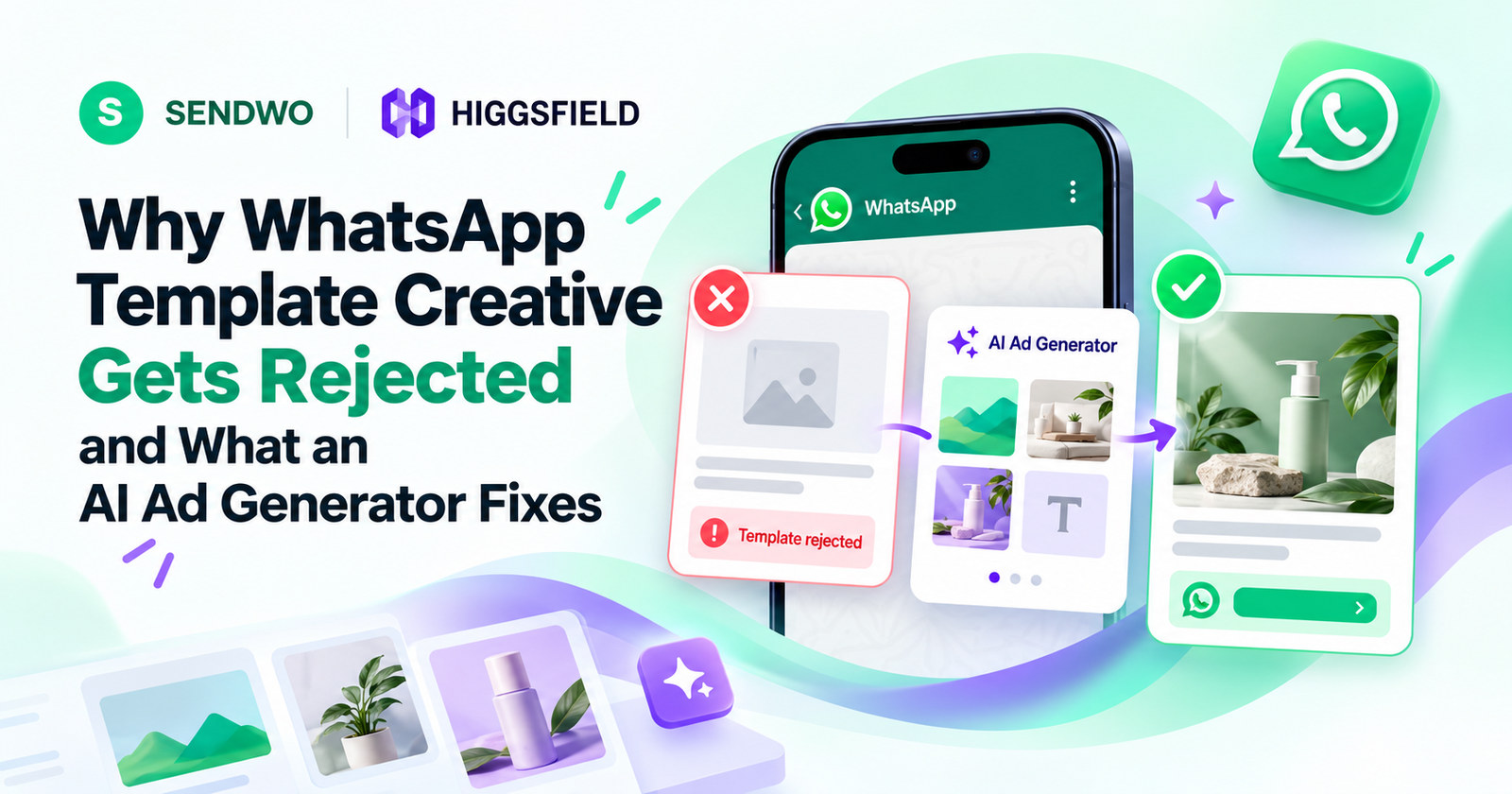
Discover why WhatsApp templates get rejected and how an AI Ad Generator helps create compliant headers, carousel creatives, and better marketing campaigns.
A campaign is ready, the template goes in for review, and it comes back rejected. The copy was fine. The offer was real. The image looked good. And somewhere in the submission there was a category selection, a variable placement or a header file that did not meet a requirement nobody mentioned.
Template rejection is the most common operational obstacle in WhatsApp marketing and the least discussed, because the reasons are mechanical rather than creative and the feedback is frequently terse.
Most of them are also avoidable, once you know what is being checked and in what order.
An AI Ad Generator handles the creative side of that, including format requirements and the variant production that makes a proper campaign possible. Higgsfield gives marketers more flexibility when preparing campaign assets. The category and copy side is a separate discipline, and this article covers both because a rejection does not tell you which one failed.
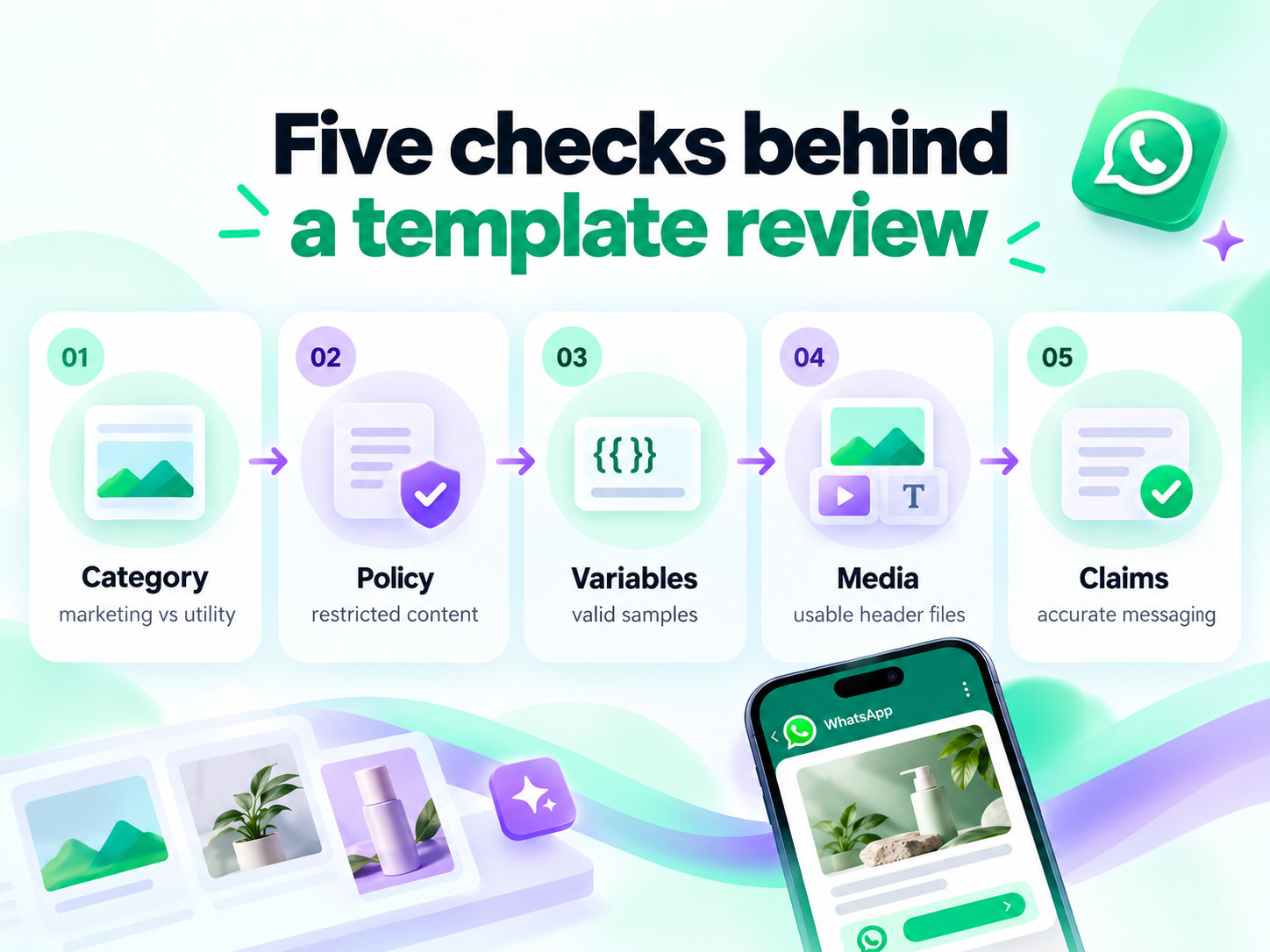
What is actually being reviewed?
Several separate things, and a rejection rarely tells you which one failed.
The category you selected, which has its own section below because it is the largest cause.
The content against the platform's commerce and messaging policies, which prohibit several industries entirely.
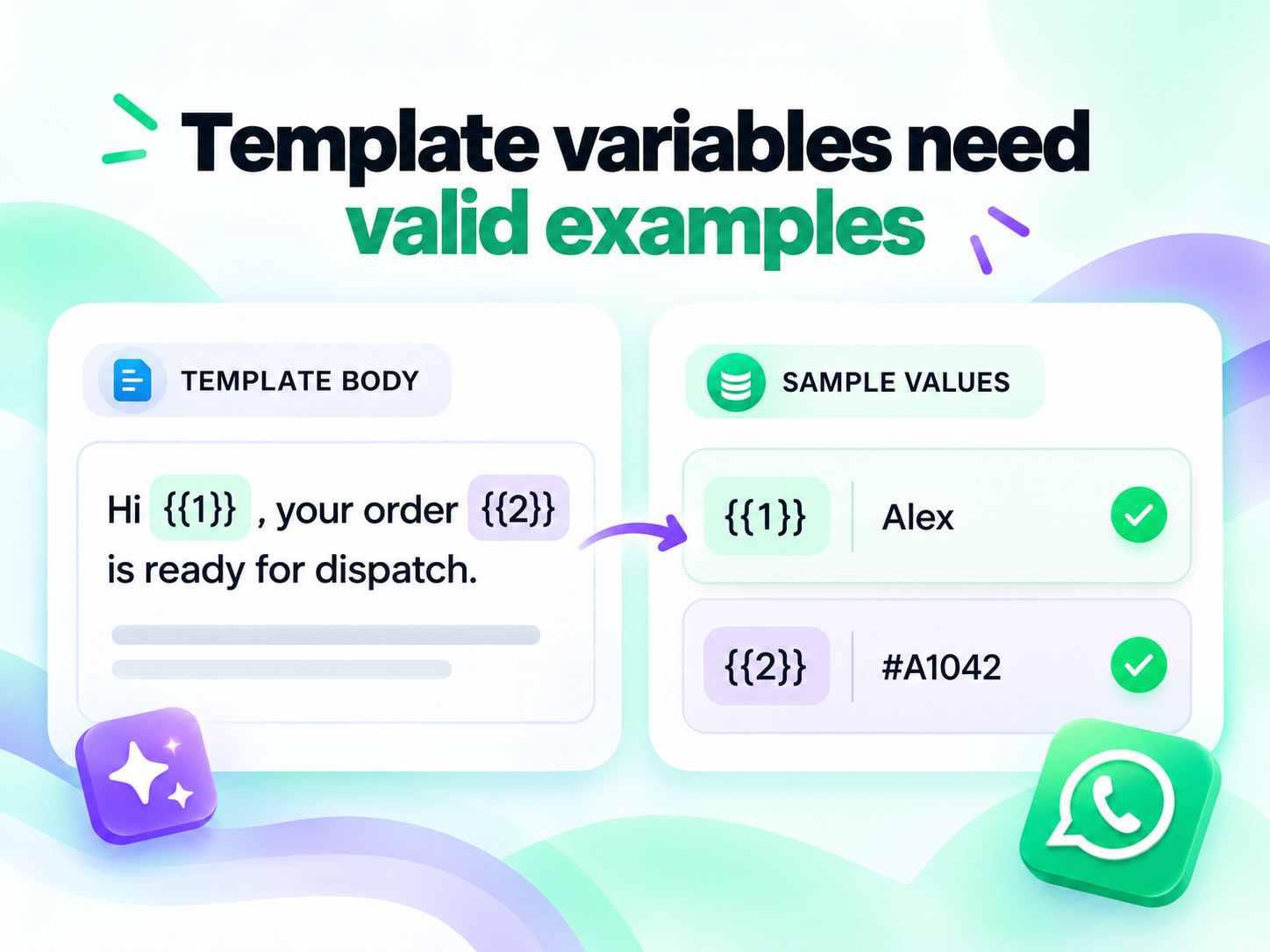
The variables, meaning the placeholders you inserted and the sample values you supplied for them. Placement rules apply and mismatched samples cause failures.
The media in the header, against format, size and dimension requirements.
And whether the template could mislead a recipient, which is a judgement rather than a check and the hardest to predict.
Review is partly automated and partly human depending on the submission, which is why identical templates occasionally get different outcomes.
Check the current policy documentation rather than working from a guide, because these requirements are revised and a rule from last year may no longer hold.
Why does the category cause so many rejections?
Because the categories carry different pricing and different permissions, so the platform polices the boundary carefully.
Marketing templates are for promotional content. Utility templates are for transactional messages relating to something the customer did. Authentication templates are for codes.
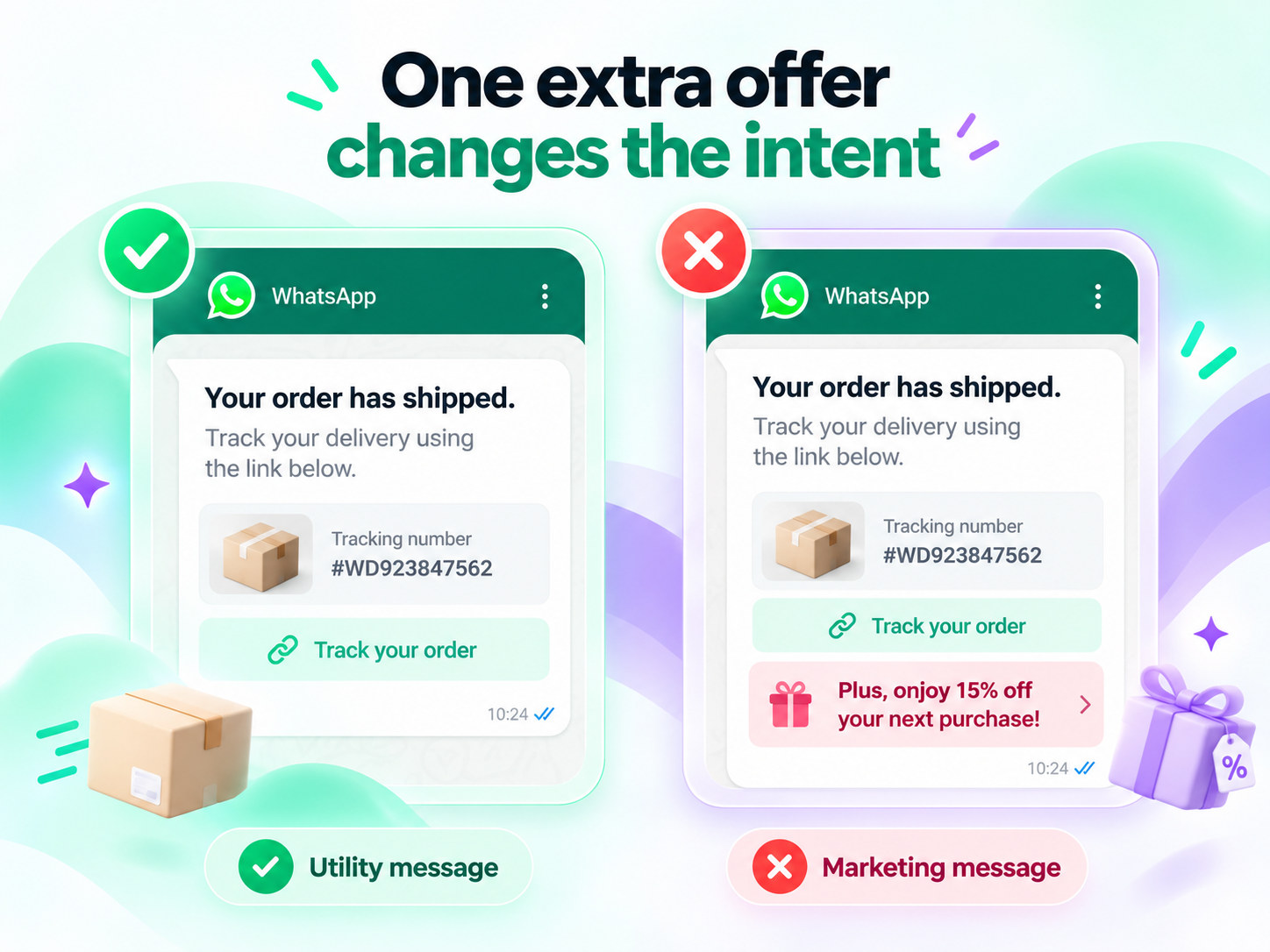
Businesses routinely submit promotional content as utility, sometimes deliberately and frequently by accident, because the distinction is less obvious than it sounds. An order update with an offer attached is a marketing template, not a utility one.
The platform recategorises as well as rejecting, which means a template can be approved and then cost more than expected.
The practical rule is that if the message contains anything the customer did not specifically trigger, it is marketing. A delivery notification is useful. A delivery notification mentioning a discount is not.
Get this right at submission and a substantial proportion of rejections disappear.
What are the media header requirements?
Specific, and they differ by media type.
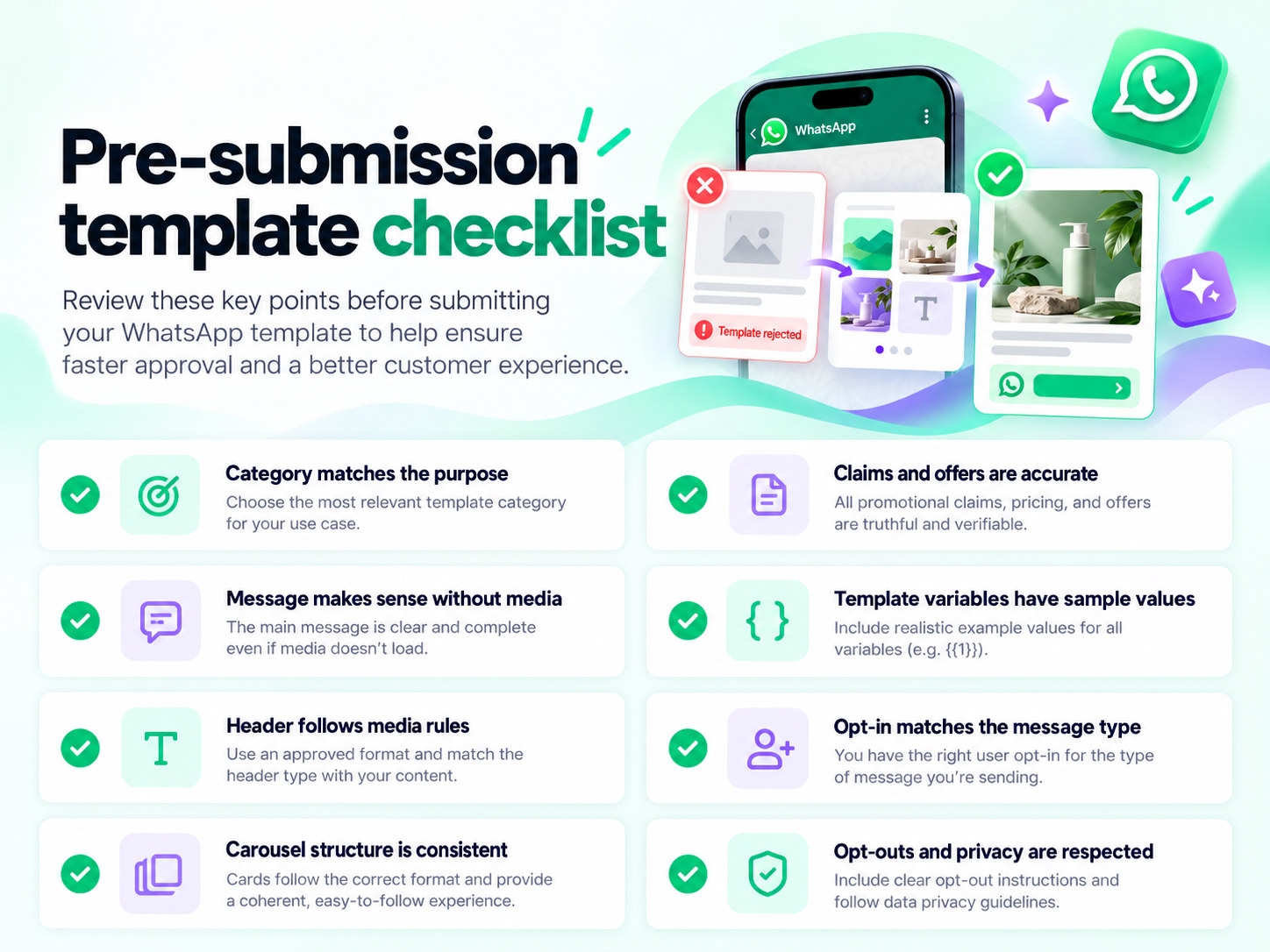
A template header can carry an image, a video, a document or text, and each has its own format and size constraints.
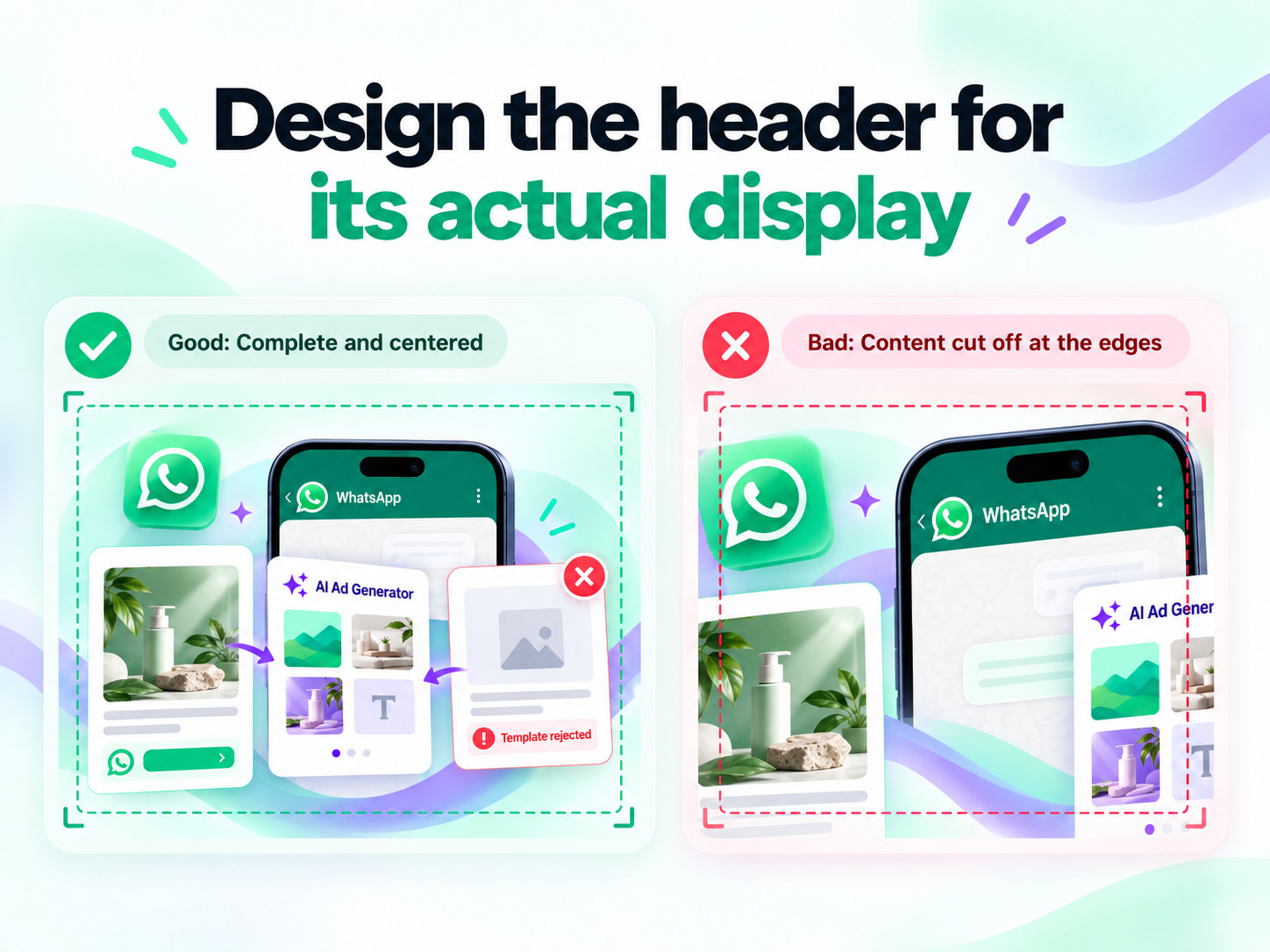
Aspect ratio matters for how the header displays, and material produced at the wrong proportion gets cropped in ways that cut off exactly what you wanted shown.
File size limits apply and are lower than people expect, particularly for video.
Supported formats are a defined list rather than anything the platform can open.
And the header is a single element, which means a header image carrying several messages competes with itself in a small space.
Produce to the specification in an AI Ad Generator rather than producing something attractive and resizing it afterwards, because the crop is applied automatically and without regard for your composition.
Do carousel templates have their own rules?
They do, and the consistency requirement catches people out.
A carousel template contains several cards, each with its own media and buttons, which makes it genuinely useful for product ranges, menus and multi-offer campaigns.
The constraint is that all cards must use the same media type. A carousel cannot mix images and video, and attempting it fails.
Button structure must be consistent across cards as well, which means planning the whole carousel before producing any of it.
That consistency requirement is precisely where creative production becomes the bottleneck, because a carousel is several pieces that must match rather than one piece.
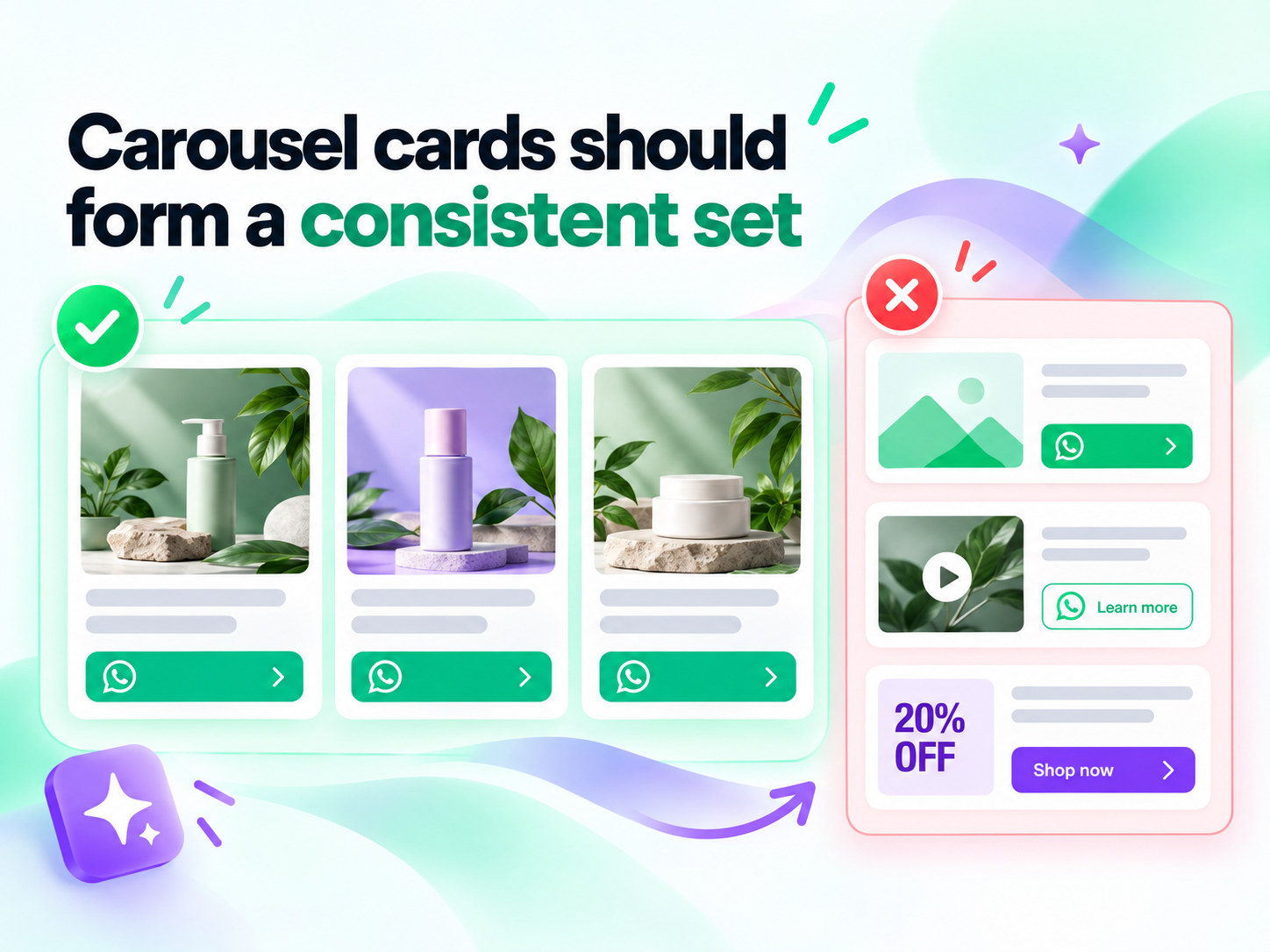
An AI Ad Generator makes that practical, since producing a matched set is the same work as producing one.
Where does an AI Ad Generator fit?
In the production that makes compliant campaigns achievable at any volume.
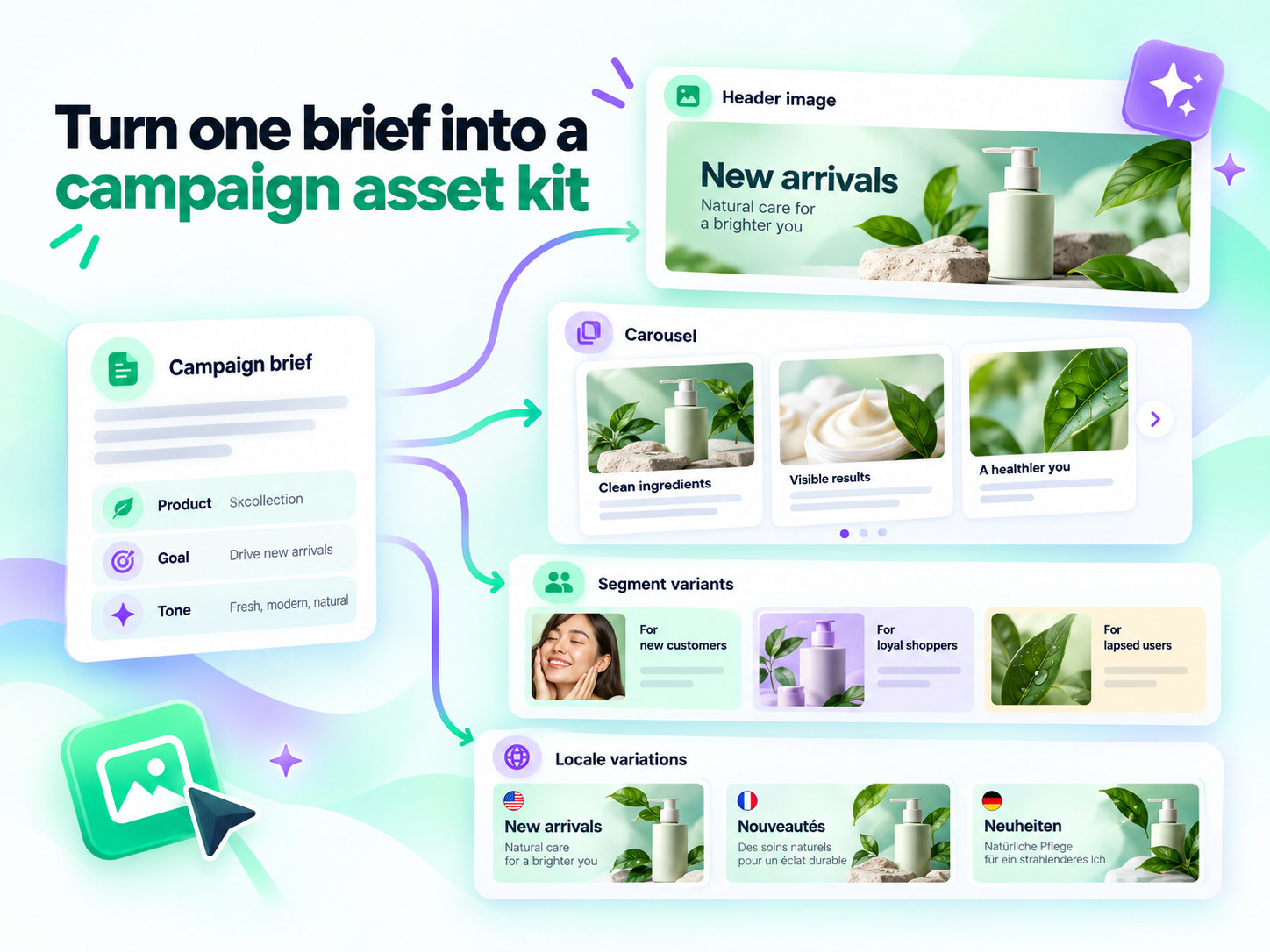
AI Ad Generator header images produced to the required proportions rather than cropped into them, which removes the most common visual failure.
AI Ad Generator carousel sets, matched across cards, which is otherwise several hours for a single campaign.
AI Ad Generator variants by segment, so a campaign addressing different customer groups has creative appropriate to each rather than one asset sent to everybody.
Seasonal AI Ad Generator variants, produced in a batch rather than individually under deadline.
And localised AI Ad Generator versions for businesses messaging across languages, where the layout has to accommodate different text lengths.
Higgsfield runs an AI Ad Generator in the browser as part of an AI creative suite, which matters for the person assembling a campaign the afternoon before it goes out.
The template copy, the category and the policy compliance remain the sender's responsibility, as they always were.
Turn this learning into your next WhatsApp campaign.
Start with Sendwo’s free plan, explore WhatsApp broadcasts, automation, AI chatbot flows, and upgrade only when your business needs more power.
Should the whole message be in the image?
No, and this is the mistake with the largest practical cost.
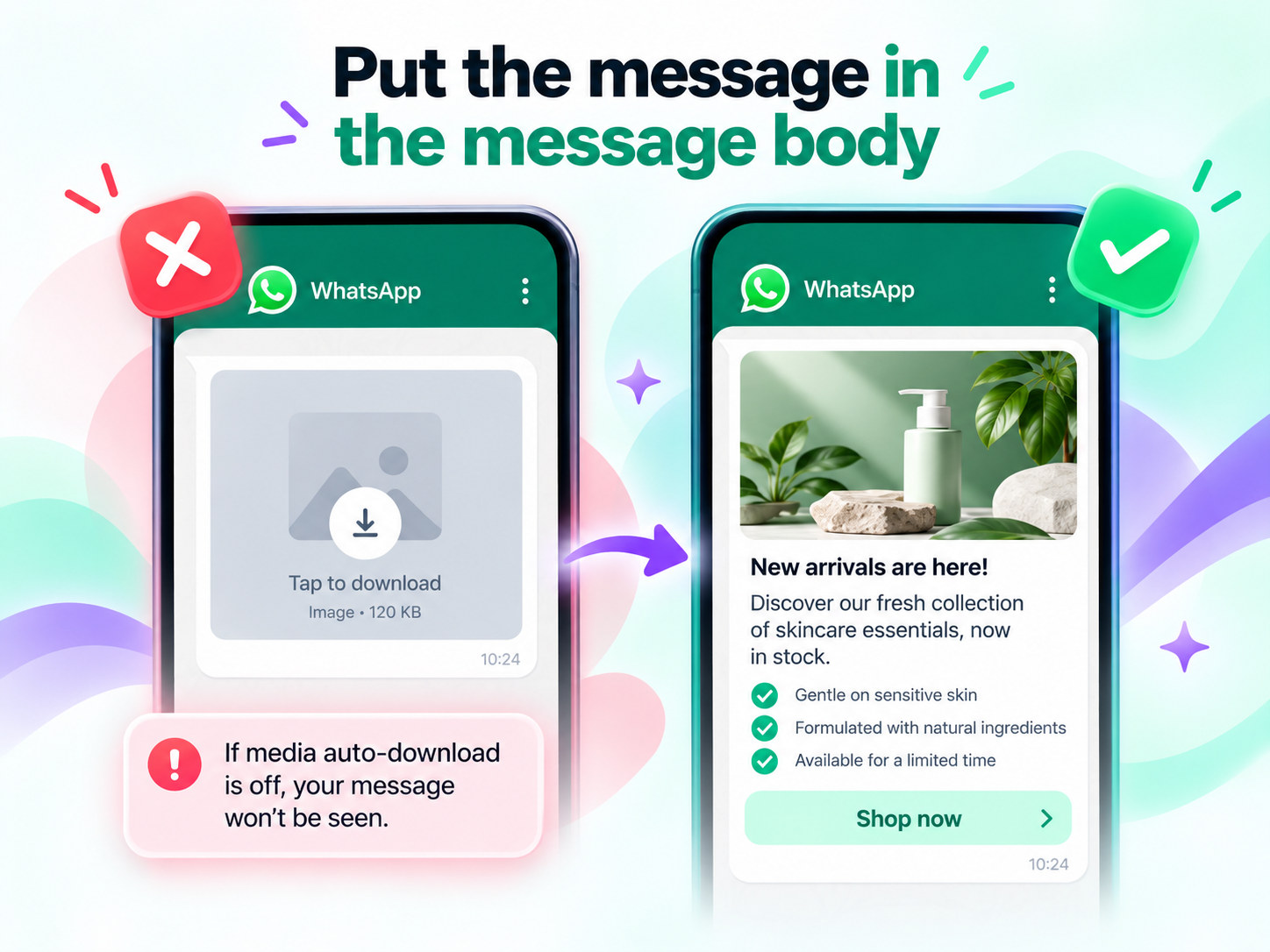
A substantial number of recipients have media auto-download disabled, particularly on limited data plans and in markets where that setting is common. For those people, an image-only message arrives as an attachment they have to choose to open.
If the offer, the deadline and the instruction were all in that image, the message communicated nothing.
The text body of the template must carry the message. The header image supports it.
Accessibility runs the same direction. Text inside an image is unavailable to anybody using a screen reader, which is a meaningful audience on a messaging platform.
And legibility on a phone is worse than it looks on a desktop. Text sized for a design review becomes unreadable in a chat window.
Put the offer in the text. Use the image for recognition.
Does the creative need to change by industry?
Considerably, and the platforms most businesses come from do not prepare them for it.
WhatsApp is a personal messaging app. A message arrives in the same list as somebody's family, which is a fundamentally different context from a feed or an inbox, and creative that works elsewhere frequently reads as intrusive here.
That affects tone before it affects design. Messages that would be unremarkable in email read as pushy in a chat thread, and the threshold is lower than most marketers expect.
It also varies by sector. A restaurant confirming an order and a clinic confirming an appointment are both utility messages with completely different registers, and the clinic has obligations about what appears in a notification that might be read by somebody else holding the phone.
For anything healthcare-related, keep clinical detail out of the message entirely and out of the header image absolutely. A notification preview is visible on a lock screen.
An AI Ad Generator makes producing sector-appropriate variants practical, which matters for agencies running campaigns across several client industries from one account.
And test on an actual phone, in an actual chat list, rather than in a preview pane. The context changes how everything reads.
What does quality rating actually measure?
Recipient reaction, which is a different thing from delivery and matters more.
The platform tracks signals including blocks and reports, and assigns a quality rating that affects how many messages a number can send.
A sustained poor rating reduces messaging limits, which means a business can lose capacity it had built up, and the recovery takes time.
The causes are predictable. Sending to people who did not expect it, sending too frequently, sending content that does not match what the opt-in promised, and sending at inconvenient hours.
Creative affects this indirectly. A message that clearly comes from a brand somebody recognises gets blocked less than one that arrives looking like spam.
Which makes consistent, recognisable AI Ad Generator creative a deliverability consideration rather than only an aesthetic one.
Does opt-in change what you can send?
Fundamentally, and it is a platform requirement rather than a suggestion.
Businesses must obtain opt-in before sending template messages, through a channel where the person clearly agreed to receive messages from that business on WhatsApp.
The opt-in should also indicate what sort of messages will arrive. Somebody who agreed to order updates did not agree to weekly promotions, and the gap between those two is where blocks come from.
This interacts with local law as well. Several jurisdictions have their own consent requirements for commercial messaging, and they apply in addition to the platform's rules.
Keep a record of when and how each contact opted in, because that record is what you need when something is queried.
And honour opt-outs immediately, which is both a requirement and the single clearest driver of quality rating.
What must never appear in a template?
Several categories, and the prohibited industry list is longer than most people check.
The platform's commerce policy prohibits a range of sectors outright, and attempting to message in those categories fails regardless of how the template is constructed.
Beyond that, never misstate an offer, a price or a deadline. The template is a commercial communication and consumer protection law applies to it exactly as it applies to any advertisement.
Never produce AI Ad Generator creative showing a product that differs from what is sold.
Never generate people and present them as customers or staff.
Never imply an endorsement that does not exist.
And never put something in a template image that you would not put in the text, since the image is not a way around the content rules.
An AI Ad Generator produces the layout and the treatment. What the message claims is the business's responsibility.
What would one campaign set take?
An afternoon, for a campaign with several segments and formats.
Decide the category first, honestly, before opening Higgsfield. That one decision prevents most rejections.
Write the template copy so the message works without the image.
Produce the header creative in an AI Ad Generator at the required proportions, not cropped into them.
If using a carousel, plan all cards in Higgsfield before producing any, since the media type and button structure must match.
Check the current media specification against what Higgsfield produced.
Submit, and if rejected, check the category before assuming the Higgsfield creative failed.
FAQ's
What causes most template rejections?
Category selection. Promotional content submitted as utility is the single largest cause, and the distinction is narrower than it sounds.
Can the offer go in the header image?
It should not. Many recipients have media auto-download off, so an image-only message arrives as nothing. The text body carries the message.
Do carousel cards have to match?
Yes. All cards must use the same media type and a consistent button structure, which is why planning the whole set first matters.
Does creativity affect deliverability?
Indirectly. Recognizable creative from a brand somebody knows gets blocked less, and blocks drive the quality rating that governs your sending limits.
Is opt-in really required?
Yes, as a platform requirement, and several jurisdictions impose their own consent rules on top of it.
Snehil Prakash
Snehil Prakash is an expert WhatsApp consultant with SendWo. He has expertise in implementing WhatsApp API for enterprise businesses and built automation, chatbot and AI powered solution.


