WhatsApp Forms: Simplify Data Collection - Easy Guide
WhatsApp Forms: Simplify Data Collection – Start capturing leads, feedback, and orders directly inside WhatsApp with easy‑to‑build, no‑code forms.
 By Aditi Kamini
Published: May 13, 2026
11 min read
By Aditi Kamini
Published: May 13, 2026
11 min read
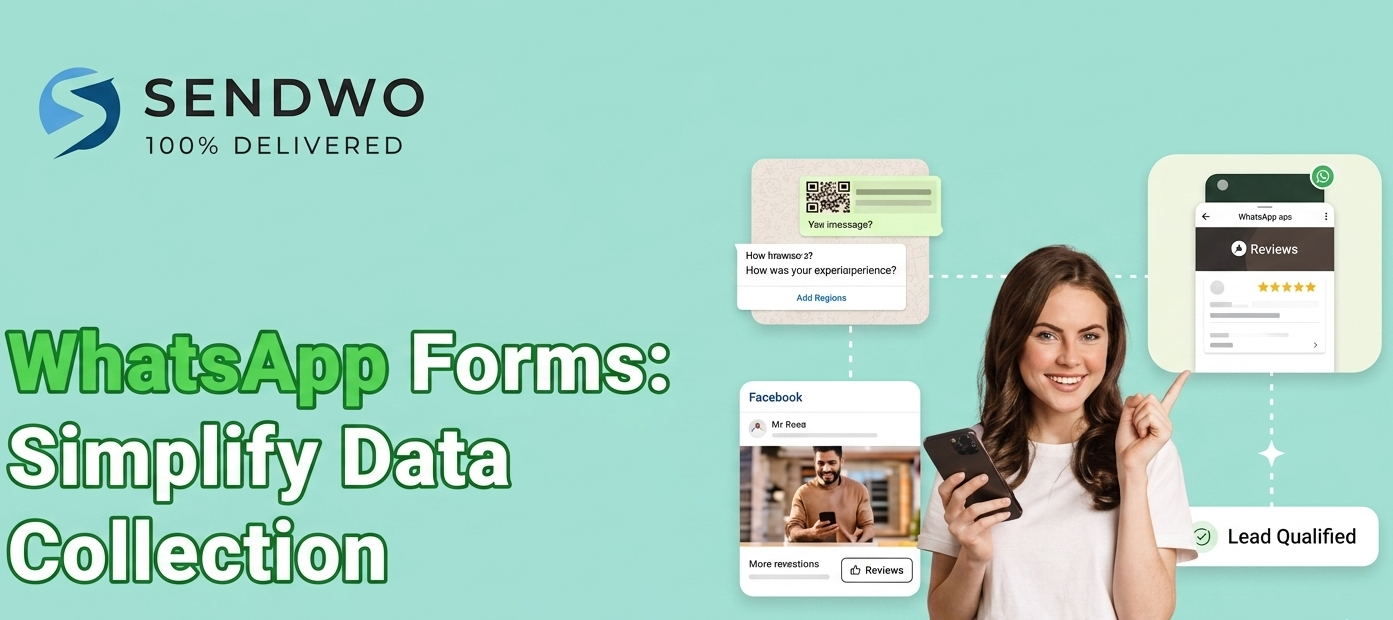
WhatsApp Forms: Simplify Data Collection – Start capturing leads, feedback, and orders directly inside WhatsApp with easy‑to‑build, no‑code forms.
Most online forms lose people at the worst possible moment: right after interest is highest. A prospect clicks an ad, lands on a page, waits for it to load, pinches and scrolls through fields, then disappears. Research from shows that 18% of shoppers have abandoned a purchase because checkout felt too long or too complicated.That is exactly why WhatsApp Forms have become such a powerful way to simplify data collection. Instead of sending people to external pages, businesses can collect leads, bookings, feedback, preferences, and support details right inside chat.
1. Why WhatsApp Forms matter
- The biggest reason WhatsApp Forms matter is simple: people are already there. As of September 2025, Meta said more than 3 billion people in over 180 countries use WhatsApp. In April 2025, Meta also said over 2 billion people use it every day, and millions already message businesses for actions like booking transport, checking deliveries, and paying bills. In April 2026, Meta expanded that “do it inside chat” model even further by introducing prepaid mobile recharges directly in WhatsApp in India.
- That trend matters for marketers, support teams, and sales teams because it changes customer expectations. People increasingly want to ask, decide, and submit without switching apps. When you keep data collection inside chat, you reduce context switching, preserve intent, and make it easier to continue the conversation once the form is completed. That conclusion is also consistent with Baymard’s finding that fewer fields and less complexity improve the user experience in mobile-heavy flows.
In plain English, WhatsApp Forms help businesses do three things better:
- Reduce friction by keeping users inside the conversation instead of sending them to separate pages.
- Collect cleaner data through guided, structured inputs instead of messy back-and-forth messages.
- Follow up instantly with confirmations, next steps, offers, or human handoff.
If traditional forms feel like paperwork, WhatsApp Forms feel like a conversation. That difference is what drives completions.
2. What WhatsApp Forms are and how they work
- In practice, WhatsApp Forms usually refers to form-like conversational experiences built with WhatsApp Flows. Meta describes WhatsApp Flows as a way to build structured interactions for business messaging, and its official documentation and tutorials specifically highlight use cases such as lead generation, surveys, appointment booking, product browsing, and feedback collection.
- The experience is straightforward. A person taps into a flow from a message, completes guided steps inside WhatsApp, submits their response, and receives a follow-up. Meta’s documentation notes that businesses can send a business-initiated message template with a Flow attached, which makes WhatsApp Forms useful not only for inbound chats but also for outbound campaigns and re-engagement.
- From a user’s point of view, that means less friction. From a business point of view, it means structured data instead of scattered messages. On SendWo, the platform’s WhatsApp Flows page highlights collecting customer information directly in WhatsApp, a drag-and-drop form builder, automated replies after submissions, analytics, and use cases like bookings and feedback.
- That is what makes WhatsApp Forms so compelling: they merge form capture, chat automation, and follow-up into one customer journey.
3. How WhatsApp Forms simplify data collection
They keep users inside the conversation
- A normal web form often creates a break in momentum. A WhatsApp Form keeps the interaction in the same place where the customer is already asking questions and waiting for answers. Meta’s business messaging updates make it clear that the company sees WhatsApp as a channel for everyday tasks, not just messaging. The less your user has to switch tabs, re-enter context, or wait for another page, the easier it is to get the submission.
- Imagine a local clinic running a click-to-chat campaign. Instead of forcing people to visit a long booking page, the clinic can ask for a name, preferred service, location, and ideal time slot inside chat. That feels faster, more personal, and more natural than filling out a cold web form. It is also the kind of use case Meta explicitly associates with appointment booking and lead generation inside WhatsApp Flows.
They turn messy conversations into structured data
- One of the hardest parts of chat-based lead capture is that free-text messages are inconsistent. People skip information. They send partial answers. They mix several details into one reply. Structured form steps help solve that. SendWo’s documentation shows that businesses can create User Input Flows, define custom fields, review reports, edit flows, and export collected data as CSV.
- That matters because cleaner inputs lead to better segmentation, better follow-ups, and better reporting. If you capture the same fields in the same format every time, your team does not need to manually interpret chats before acting on them. That is especially useful for lead routing, support categorization, and campaign-level analytics.
They automate what usually slows teams down
- WhatsApp Forms are not just about collecting data. They are also about what happens next. SendWo highlights automated replies after form submissions, real-time analytics, spreadsheet syncing, and external API connectivity for its WhatsApp automation workflows. Its tutorials also show that user input data can be recorded into in real time, while external API integrations can pass data into CRMs, e-commerce tools, or custom systems.
- This is where WhatsApp Forms become operationally valuable. Instead of copying lead data from chats into a spreadsheet, a sales rep can receive it pre-structured. Instead of waiting hours to respond to a booking request, a business can send an instant acknowledgment and trigger the next step automatically.
They support more relevant personalization
- The better the data, the better the follow-up. Research from found that consumers spend an average of 54% more on brands that personalize experiences, and 64% of consumers would leave a brand if the experience is not personalized. That does not mean every WhatsApp Form automatically increases revenue, but it does underline why structured customer data is so valuable. You cannot personalize well if you never capture the right inputs in the first place.
- A WhatsApp Form can capture intent, urgency, budget range, product interest, preferred branch, or support category. That gives the next message real context. Instead of “Thanks, we’ll get back to you,” you can send “Thanks, Sarah — our Mumbai team will contact you about your premium plan request.” That kind of relevance feels helpful rather than generic. The same SendWo tutorial that walks through chatbot creation also recommends short, human messages, buttons instead of long menus, variables for personalization, and integrations for lead management.
4. Best business use cases for WhatsApp Forms
Lead generation and qualification
- Lead capture is one of the clearest use cases for WhatsApp Forms. Meta’s documentation explicitly mentions sales leads and lead generation among Flow use cases, and click-to-WhatsApp ads are designed to move people directly from an ad into a WhatsApp chat with a business.
- That makes WhatsApp lead forms ideal for businesses that want to qualify interest quickly. Instead of asking a sales rep to manually collect every detail, the form can request name, company size, budget range, service interest, and preferred callback time. If needed, SendWo can then pass that information to a spreadsheet, CRM, or external workflow.
Appointment booking and registrations
- Meta has official tutorials focused on booking appointments with WhatsApp Flows, and SendWo’s WhatsApp Flows page also calls out bookings as a core use case. That makes WhatsApp Forms especially strong for clinics, salons, real estate teams, consultants, educators, and service businesses.
- The beauty of appointment-based forms is that the conversation does not end when the form ends. A business can confirm the request, request a missing detail, hand the conversation to a human agent, or start a reminder sequence. SendWo’s docs also show agent assignment and human handoff options, which can be critical when bookings require confirmation or rescheduling.
Surveys, feedback, and post-purchase follow-up
- Meta’s tutorials include creating surveys with WhatsApp Flows, and SendWo explicitly lists feedback among its recommended uses for WhatsApp Flows. This is a smart application because feedback requests often perform better when they feel conversational instead of formal.
- A post-purchase flow might ask a customer to rate their experience, select what they liked most, flag an issue, or choose whether they would like a callback. Because the response is collected in chat, the business can immediately follow up with a support message, a thank-you note, or a review request. That is much faster than sending a generic survey link and hoping the customer completes it later.
Website form to WhatsApp automation
- Some businesses already use forms on their sites and do not want to replace everything overnight. In that case, WhatsApp Forms can still help. SendWo’s integration pages show webhook-based automation that sends WhatsApp messages after website form submissions, captures and maps customer data, personalizes messaging with submitted fields, and simplifies setup for non-technical teams.
- This is a practical bridge strategy. You can keep your website traffic sources, but move the actual follow-up and qualification into WhatsApp, where the response loop is faster and more conversational.
5. How to build a high-converting WhatsApp Form workflow with SendWo
Start with one conversion goal
- The best WhatsApp Forms are focused. Do not try to collect everything in one flow. Start with one clear outcome: qualify a lead, book a demo, request feedback, capture an inquiry, or route support. Baymard’s research is a useful reminder here: complexity kills completion. Even though its data specifically references checkout, the lesson applies broadly to any mobile data capture experience. A good rule is simple: ask only what you need to take the next action.
Build the flow inside the dashboard
- SendWo’s official tutorial shows the setup path clearly: log in, open Chatbot Manager, go to WhatsApp Chatbot, click Bot Reply, create a new flow, and begin designing from Start Bot Flow. From there, you can add trigger keywords, set welcome text, insert user input fields, attach Google Sheets integration, add webhook URLs, and build the flow using drag-and-drop components.
That means a typical WhatsApp Form workflow can look like this:
- Greeting message
- Short explanation of what the user will submit
- Guided fields for the needed information
- Confirmation message
- Follow-up action such as routing, tagging, or agent assignment.
Map data where your team can use it
- Collecting data is only useful if your team can act on it. SendWo’s tutorials show two practical routes: save responses to Google Sheets in real time or push them into external platforms with HTTP APIs and webhooks. That is useful for CRMs, internal dashboards, order systems, and custom business logic.
- If your form collects sales inquiries, route it to sales. If it captures support issues, create a queue for support. If it gathers event registrations, feed the list into your event workflow. The more immediate the handoff, the more valuable the form becomes.
Choose the right entry point
A great WhatsApp Form still needs a smart entry path. Meta’s documentation says that businesses can send a business-initiated message template with a Flow attached, which is useful for reminders, campaigns, or follow-up outreach. Meta also documents click-to-WhatsApp ads, which are ideal for ad traffic. And SendWo supports webhook-based website-to-WhatsApp automation for existing web forms.
That gives you several strong options:
Turn this learning into your next WhatsApp campaign.
Start with Sendwo’s free plan, explore WhatsApp broadcasts, automation, AI chatbot flows, and upgrade only when your business needs more power.
- Ads to WhatsApp for lead generation.
- Template-led re-engagement for campaigns and reminders.
- Website form follow-up for businesses that already have web traffic but want faster qualification.
Follow the best practices that increase completion
SendWo’s chatbot tutorial recommends short, friendly copy, buttons instead of long text menus, personalization with variables, and continuous testing. Meta also requires businesses to get opt-in before messaging users and notes that templates are the only message type allowed outside the customer service window. WhatsApp itself emphasizes user control over business messaging preferences.
The strongest WhatsApp Form workflows usually follow these rules:
- Keep the copy conversational. Write like a helpful person, not like a legal document.
- Reduce the field count. Every extra question should earn its place.
- Use buttons, lists, and guided choices where possible. They reduce ambiguity and speed up completion.
- Confirm the next step immediately after submission. Users should know what happens next.
- Offer a human fallback. Some conversations should move to a person, not stay in automation.
- Respect consent and privacy. Be clear about what the user is opting into and why the data is being collected.
FAQ
1. What are WhatsApp Forms?
WhatsApp Forms are structured, guided data collection experiences inside WhatsApp. On the official WhatsApp Business Platform, businesses often build these experiences using WhatsApp Flows for use cases like lead generation, surveys, appointment booking, feedback, and product exploration.
2. Can you create a form directly in WhatsApp?
Yes. Meta’s documentation says businesses can use WhatsApp Flows to create structured interactions inside chat, and business-initiated message templates can include an attached Flow. In other words, users can open, complete, and submit the experience without leaving WhatsApp.
3. What kind of data can businesses collect with WhatsApp Forms?
Businesses can collect lead details, appointment preferences, service interests, survey answers, feedback, and other custom inputs. SendWo’s official docs show support for user input fields, custom fields, reports, CSV export, spreadsheet sync, and external API-based data handling.
4. Are WhatsApp Forms better than traditional web forms?
For many mobile-first use cases, yes. They reduce friction by keeping the user inside chat, and they make follow-up faster because the response and the conversation live in the same place. Traditional web forms can still be useful for longer applications or more complex workflows, but for lead capture, bookings, surveys, and conversational qualification, WhatsApp Forms offer a much smoother path. Baymard’s research on form complexity also supports the broader point that simpler experiences improve completion.
5. Are WhatsApp Forms secure?
Security depends on both the channel and the business implementation. WhatsApp says personal messages and calls are protected by end-to-end encryption by default, but businesses still need to collect only necessary data, explain how they use it, protect connected systems, and follow opt-in and policy requirements. Twilio’s consumer research also shows that transparency about data use is important for trust.
Aditi Kamini
Aditi, a content marketer at SendWo, is a passionate writer and marketing enthusiast. She excels in driving revenue campaigns, building client relationships, and mastering content creation, SEO, customer service, and project management.