Imagine a customer fills up their online shopping cart with your products, only to leave your site without checking out. It’s like watching a shopper walk out of a physical store and disappear, leaving a full basket behind. This scenario, known as shopping cart abandonment, happens roughly 7 out of 10 times in e-commerce. In fact, the value of products abandoned in carts globally reaches an estimated $4 trillion each year, representing a massive chunk of lost revenue. The good news? With savvy strategies, up to 60% of those abandoned sales can be recovered. One of the most powerful ways to win back those customers is through WhatsApp – a messaging platform your shoppers already know and love.
In this comprehensive guide, we’ll explore WhatsApp for e-commerce and how you can leverage it to recover abandoned carts organically (with a spotlight on how tools like SendWo help automate the process). We’ll cover why WhatsApp is a game-changer, how to set up an abandoned cart recovery campaign step by step, best practices for crafting messages, real-world success stories, and a handy FAQ. By the end, you’ll be equipped to turn those ghosted carts into conversions. Let’s dive in!
First, let’s understand the problem. Cart abandonment occurs when a shopper adds items to their online cart but leaves without completing the purchase. This happens for many reasons – maybe they got distracted, experienced sticker shock at shipping fees, or wanted to compare prices elsewhere. Regardless of why, the impact is huge. The average cart abandonment rate is ~70% across e-commerce. That means for every 10 potential sales, only 3 actually go through – the rest slip away. Researchers estimate that these abandoned carts account for around $4 trillion in lost sales annually.
For online retailers, that’s a massive revenue leak. Recovering even a fraction of those carts can significantly boost your bottom line. In fact, experts suggest that with the right follow-up tactics (like timely messages and incentives), roughly 63% of that lost revenue is recoverable. That’s why abandoned cart recovery is so crucial – it’s essentially low-hanging fruit. You’ve already done the hard work of getting customers to add products to their cart; a well-timed nudge can often convince them to finish the purchase. It’s far more cost-effective to recover an almost-sale than to find a brand new customer.
You might already be using email reminders or retargeting ads to chase down abandoned carts. Those can work, but WhatsApp brings some unique advantages that make it a powerful cart recovery channel. Here’s why leveraging WhatsApp for e-commerce can dramatically improve your results:
In short, WhatsApp offers an unparalleled combination of reach, immediacy, and effectiveness for abandoned cart recovery. It lets you communicate with shoppers in the same way they chat with friends and family, which is a powerful opportunity to nudge them back to your store.
Ready to start recovering those lost sales? Setting up WhatsApp cart recovery might sound technical, but it’s quite straightforward with the right tools. Here’s a step-by-step game plan to implement WhatsApp abandoned cart recovery for your e-commerce store:
By following these steps, you’ll set up a robust WhatsApp abandoned cart recovery system that runs largely on autopilot, reaching out to customers at just the right moments with the right messages. It’s a blend of automation and personalization that can dramatically boost your sales by turning missed opportunities into completed orders.
You might be wondering, how exactly does a tool like SendWo fit into this process? Let’s take a closer look at Sendwo as an example of implementing WhatsApp cart recovery in an organic, non-intrusive way.
SendWo is an official WhatsApp Business Solution Provider (Meta BSP) that offers a platform for WhatsApp marketing and customer communication. In practical terms, SendWo serves as the bridge between your online store and WhatsApp.
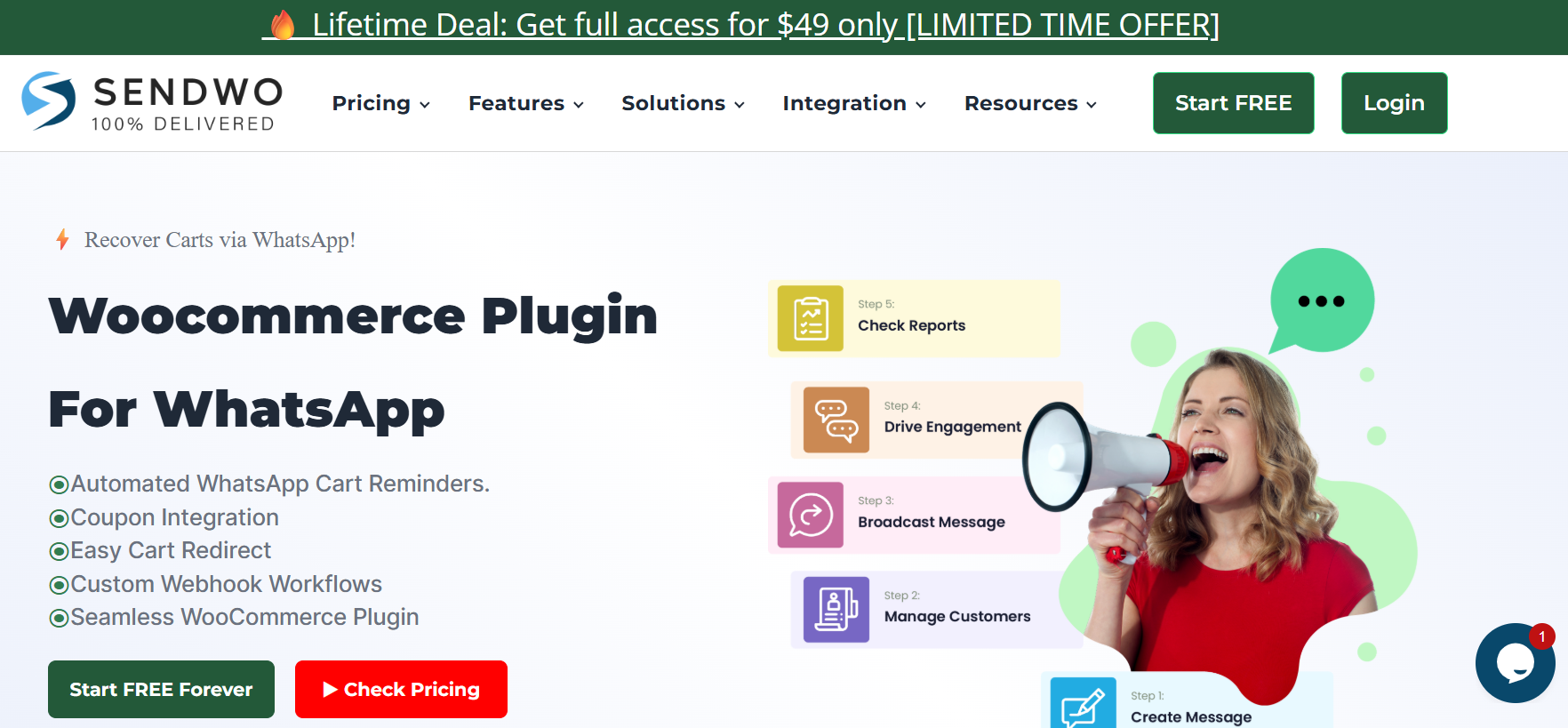
Here are some of the ways SendWo streamlines abandoned cart recovery (organically, without coming off as “salesy”):
Crucially, everything described above can be done without making it feel like a hard sell. The key is that SendWo allows you to automate helpful, personalized reminders rather than generic promotions. The platform stays mostly behind the scenes – to your customers, it simply feels like your brand reached out on WhatsApp in a thoughtful way. For instance, a SendWo-powered message might read: “Hi Sarah, we noticed you left a few items in your cart. We’ve set them aside for you ? [View Cart]. Need help or have questions? Just reply to this chat – we’re here to help! ?*”. This kind of message comes across as customer service. If Sarah doesn’t respond or purchase, perhaps a day later she gets: “Hi Sarah, just a friendly reminder – your cart items are almost gone. Complete your purchase in the next 24h and use code SAVE10 for 10% off. Don’t miss out!”. Again, the tone is encouraging, not pushy, and it offers value. SendWo’s tools make it easy to execute this sequence at scale.
In summary, SendWo acts as the hero behind the curtain: it equips you with the tech and templates to recover carts via WhatsApp seamlessly, while your customers simply experience timely, organic messages from your brand. The result is more recovered revenue for you and a smoother shopping journey for them – a win-win.
By now, you might be curious what kind of real-world impact businesses see from using WhatsApp for abandoned cart recovery. The answer: significant improvements. Here are a few success stories and stats that highlight the effectiveness of this approach:
These examples span from small niche sellers to large retailers, and the takeaway is consistent: WhatsApp works for abandoned cart recovery. While results will vary depending on your industry, audience, and execution, it’s not uncommon to reclaim a substantial portion of lost carts once you start using WhatsApp strategically. Many businesses report double-digit percentage improvements in recovery rates and a higher overall customer lifetime value because the personal touch of WhatsApp fosters loyalty.
The bottom line is that implementing WhatsApp for cart recovery can give you a competitive edge and incremental revenue that significantly boosts your annual sales. Whether you’re looking at a 15% bump or a 50% bump, these are gains you can’t ignore in a tight e-commerce market. Plus, you’re likely to outperform competitors still relying solely on email or ads to retarget abandoners.
In the ever-evolving world of e-commerce, abandoned carts don’t have to be a lost cause. As we’ve explored, a simple WhatsApp message – sent at the right time with the right tone – can be all it takes to bring a customer back and close the sale. By integrating WhatsApp into your cart recovery strategy, you’re meeting customers where they already spend their time and providing service on their terms. It’s a more human, conversational approach to marketing that today’s shoppers appreciate.
If you haven’t started with WhatsApp for your business yet, now is the time. Setting it up is easier than you might think, and the potential ROI is impressive. Don’t leave money on the table by letting abandoned carts remain abandoned. You can take action today: for example, set up a free account with a WhatsApp BSP like SendWo (they even offer a free-forever plan to get you started) and connect it to your store. In just a short time, you could have automated WhatsApp reminders running and customers coming back.
Remember to keep your messages friendly, helpful, and on-brand. Think of them as an extension of your customer service. Test out different offers and timings to see what resonates best with your audience. And once those orders start rolling in from recovered carts, consider expanding your WhatsApp use for post-purchase follow-ups, reviews, and more, building an ongoing relationship with your customers.
In summary, WhatsApp for e-commerce is not just a buzz term – it’s a practical tool to boost your sales and enhance customer experience. Abandoned cart recovery is one of the most impactful ways to use it. So, go ahead and turn those chats into conversions! Your customers will love the personal touch, and your business will love the extra revenue.
Ready to reclaim lost sales? Start leveraging WhatsApp for your cart recovery now – those abandoned carts are waiting to be turned into happy customers. ???
WhatsApp abandoned cart recovery involves sending a WhatsApp message to customers who left items in their online cart without purchasing. Once a customer has opted in to receive WhatsApp updates from your business, your system (via the WhatsApp Business API) can automatically send a personalized reminder to them about the items they left behind. Typically, an integration between your e-commerce platform and a WhatsApp service (like SendWo) will detect the cart abandonment and trigger a WhatsApp template message to that customer. The message usually includes details of the cart (maybe listing the product name or image) and a direct link or button to resume checkout. The goal is to gently remind the shopper and provide an easy one-click path back to their cart. Often, businesses send a series of WhatsApp reminders (for example, one message after 1 hour, another after 24 hours, etc.) and may include a discount or incentive in a follow-up message to encourage completion. All of this is done through automated workflows – once you set it up, the process runs in the background for each abandoned cart event.
WhatsApp) that provides tools for businesses to communicate with customers on WhatsApp. In the context of cart recovery, SendWo makes it easy to automate WhatsApp abandoned cart messages. It offers integrations (like a WooCommerce plugin and API/webhooks for other platforms) that connect your store to WhatsApp. When a cart is abandoned, SendWo’s system detects it and can automatically send out your pre-approved WhatsApp template message to that customer, complete with details like their cart items and a checkout link. Essentially, SendWo handles the heavy lifting – ensuring the message goes through the official WhatsApp API (so it’s delivered reliably), personalizing the content with the customer’s info, and logging any responses. SendWo also provides a dashboard where you can design message templates, schedule follow-ups, and view analytics on open rates and conversions. Beyond cart recovery, SendWo supports bulk messaging, chatbots, customer support chat, and more, all via WhatsApp. Because SendWo is an official provider and uses the WhatsApp Business API, it adheres to WhatsApp’s guidelines and best practices. In short, SendWo is a platform that enables you to use WhatsApp as a marketing and customer engagement channel, with abandoned cart recovery as one of its key use cases. (Bonus: SendWo has a free forever plan, so it’s easy to test out its features without upfront cost, making it a popular choice for small and medium businesses looking to boost their WhatsApp marketing.)
Ever wondered if you could turn a simple WhatsApp chat into your next big sale? In 2025, this popular messaging app isn’t just for texting friends – it’s a lead generation goldmine for businesses. With nearly 3 billion active users across 50+ countries, WhatsApp has become a key channel for finding prospects and boosting conversions. Businesses worldwide are embracing WhatsApp to connect with customers in a more personal, immediate way – and seeing amazing results. In fact, WhatsApp messages boast open rates around 98% (versus ~20% for email), meaning your marketing messages actually get seen. Some companies even saw a 138% increase in lead generation after introducing WhatsApp chatbots into their strategy.
WhatsApp’s unique advantages make it a powerhouse for marketing in 2025. It offers one-on-one, personalized communication that builds trust, sky-high engagement rates, and real-time chat for instant responses. You can share rich media (images, videos, PDFs) to showcase products dynamically, and even let customers browse catalogs or complete purchases without leaving the app. Plus, WhatsApp is cost-effective and feels more conversational (not spammy) compared to traditional channels. All these factors combine to deliver higher conversion rates – making WhatsApp an essential part of any modern lead gen strategy.
In this comprehensive guide, we’ll explore 10 powerful WhatsApp lead generation tactics that leverage the latest features and trends of 2025. From chatbots and QR codes to broadcast lists and status updates, each tactic is packed with practical tips, examples, and best practices. Let’s dive in and see how you can start turning WhatsApp conversations into conversions!

A WhatsApp chatbot interacts with a new lead, automating responses to FAQs and collecting user info.
A WhatsApp chatbot is a powerful tool to automate customer interactions and capture leads even while you sleep. By integrating an AI or rule-based chatbot via WhatsApp Business, you can provide instant answers to inquiries, qualify prospects, and collect essential details (like name, email, or preferences) without any human intervention. This means potential customers get immediate attention anytime – a huge plus, since fast responses keep leads from losing interest.
For example, a fitness studio’s chatbot might greet new prospects, ask about their fitness goals and schedule, then offer a tailored membership plan based on the answers. Similarly, a study abroad agency’s bot can let users choose a language and inquiry type, answer FAQs, or seamlessly hand off to a human agent for complex questions. The key is to design your chatbot script to be engaging and helpful: start with a friendly welcome message and use quick-reply buttons or menus to guide the conversation. You can even program the bot to share your product catalog, schedule appointments, or send personalized offers automatically.
Beyond saving time, chatbots significantly boost lead generation. They ensure no inquiry falls through the cracks and can nurture multiple prospects simultaneously. It’s no surprise that businesses leveraging WhatsApp chatbots have reported dramatic gains – one brand saw a 138% jump in leads after deploying a chatbot to engage customers. To maximize success, keep refining your bot’s responses based on real conversations and integrate AI features (like voice message handling) to make interactions smoother. A well-crafted WhatsApp chatbot can become your hardest-working sales rep, converting curious visitors into qualified leads around the clock.
Read More: Ready to Create Your WhatsApp Chatbot with Sendwo
A WhatsApp chat widget on a website (bottom-right) offers visitors instant help, turning web traffic into WhatsApp leads.
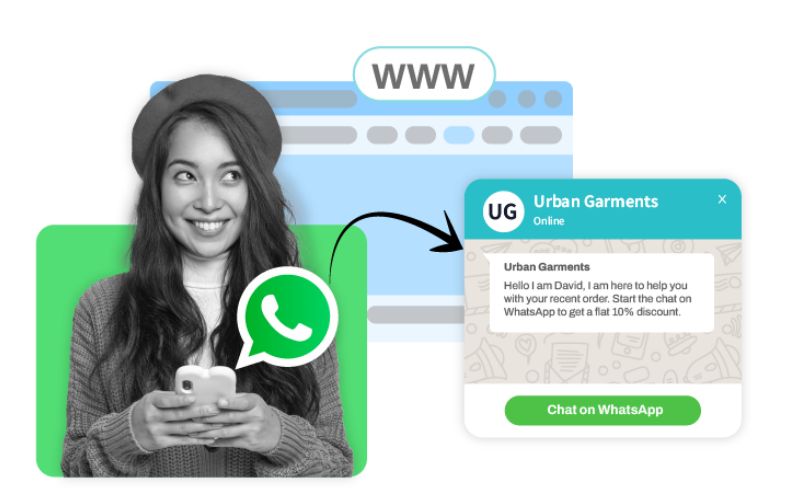
Don’t make interested prospects hunt for ways to contact you – bring WhatsApp to them. By embedding a WhatsApp chat widget or using click-to-chat WhatsApp links on your website and landing pages, you give visitors a one-click path to start a conversation. This strategy drives high-intent leads directly into chat with minimal friction. For instance, you can add a WhatsApp “Chat with us” button that pops up a conversation window, allowing users to ask questions or request a quote in real time.
A WhatsApp widget can be customized with a friendly welcome message or call-to-action to encourage engagement (“Hi! ? Questions? Chat with our team now.”). When a visitor taps it, they’re instantly connected to your business on WhatsApp – no forms or emails needed. This personal, immediate touch often converts curious web visitors into warm leads. An online clothing store, for example, used a chat widget on its product pages so shoppers could inquire about sizing and stock; the team responded with style advice and even exclusive discount codes, successfully turning browsers into buyers.
Besides your website, deploy WhatsApp click-to-chat links across multiple channels. You can place a short WhatsApp link (wa.me/yournumber) in your social media profiles, email signatures, blog posts, or digital ads. When clicked, it opens a chat with a preset message like “Hi, I’d like to learn more about [Your Business]!” – prompting the user to hit send. Personalizing these links with a pre-filled greeting or question makes it even easier for prospects to reach out. Whether someone discovers you on LinkedIn or from a marketing email, a handy WhatsApp link lets you capture the lead in a chat at the peak of their interest. Make sure any chat links or widgets are prominently displayed (especially on mobile) and include a compelling text like “Chat Now for an Instant Quote” to draw clicks. By meeting customers where they are and inviting them to talk, you’ll see more inbound leads sliding right into your WhatsApp inbox.
Starbucks India shared a WhatsApp QR code on Instagram, inviting followers to join its Rewards program via chatbot.
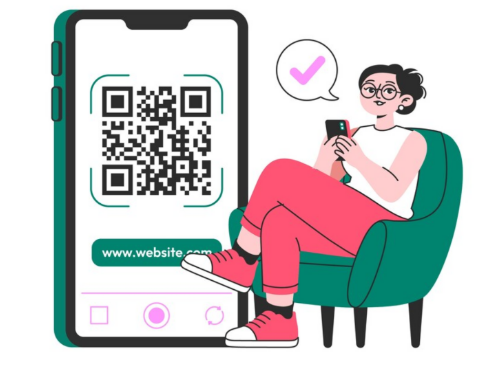
Bridging your offline and online marketing is seamless with WhatsApp QR codes. These scannable codes instantly open a chat with your business, making it effortless for someone to connect with you from any medium. Companies are using WhatsApp QR codes on printed materials (business cards, flyers, brochures, storefront posters) and digital channels to capture leads everywhere. For example, if you run a booth at an event, a poster with your WhatsApp QR code can encourage visitors to scan and message you for a free demo or coupon – converting foot traffic into online leads on the spot.
When scanned using a phone camera or WhatsApp, the QR code can include a pre-written intro message, such as “Hello, I’d like to know more about your services.” This saves the user time and lowers the barrier to reaching out. Get creative with placement: add your WhatsApp QR in product manuals, ads, or even on product packaging so customers can easily ask questions or reorder. Starbucks India demonstrated a clever use of this tactic on social media – they posted a QR code on Instagram inviting people to join their WhatsApp-based loyalty program. Scanning the code launched a chat with Starbucks’ chatbot, which then guided users through joining the rewards program and getting personalized offers.
To make the most of QR codes, give people a compelling reason to scan. For instance, “Scan to get 10% off your first order!” or “Scan to chat with our expert now” can entice action. Place the code somewhere highly visible and explain the benefit (in a caption or small text) so users know what they’ll get. Because it’s so quick and convenient, WhatsApp QR codes are a great way to capture leads anywhere – merging real-world interest with an instant messaging conversation. By meeting potential customers in seconds through a scan, you convert casual interest into direct engagement with your business.
An Instagram ad with a Click-to-WhatsApp CTA leads users into an instant chat and even auto-subscribes them to a campaign.
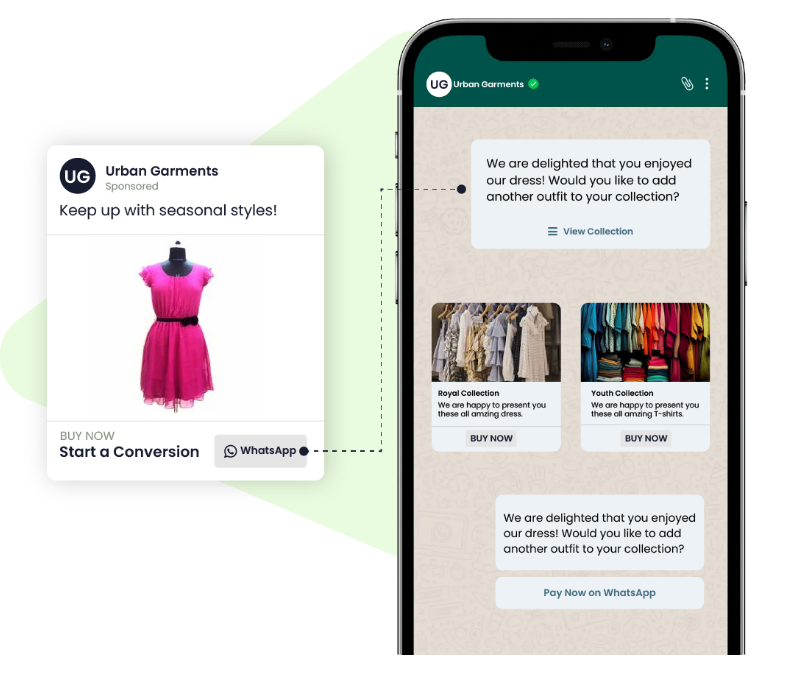
Why make customers fill out forms when you can start a conversation with one tap? Click-to-WhatsApp ads allow you to do exactly that. These are ads on Facebook, Instagram, or other Meta platforms with a special “Send Message on WhatsApp” button. When someone clicks the ad, it immediately opens a WhatsApp chat with your business – no phone number typing needed. This smooth transition from ad to chat drastically shortens the lead capture process.
Click-to-WhatsApp ads are highly effective because they target users where they already scroll and invite them into a personal dialogue. You can refine your ad targeting by location, age, interests, etc., to reach your ideal prospects at specific stages of the buyer journey. For example, a travel agency might run a Facebook ad showcasing a holiday package with the CTA “Message us on WhatsApp for exclusive deals.” When interested users tap the ad, they’re taken to WhatsApp where an agent (or bot) is ready with trip details and an easy booking process. This real-time engagement helps convert ad clicks into qualified inquiries instantly.
To get the best results, optimize your ad content and chat experience together. Make sure your WhatsApp Business profile is fully set up with a friendly greeting and business info (so users trust they’re chatting with a legit company). It’s smart to set up an automated welcome message or chatbot for these ad-sourced chats. For instance, upon clicking an ad, a user could receive: “Hi there! ? Thanks for your interest. Let us know what questions you have, or type a number to see options.” This ensures no one is left waiting and helps gather initial info before a human steps in. One real example is a kitchen design brand that ran an Instagram giveaway ad – to enter, users had to subscribe to the brand’s WhatsApp newsletter, facilitated through the ad’s click-to-chat CTA (as shown above). The campaign not only grew their contact list but also sparked one-on-one conversations with each entrant, i.e., new leads!
The numbers speak for themselves: 175 million+ people message businesses on WhatsApp every day, and click-to-chat ads make it easier than ever to join that crowd. By using click-to-WhatsApp ads, you combine the broad reach of social platforms with the high conversion potential of direct messaging. It’s a fast-track to fill your pipeline – turning passive ad impressions into active WhatsApp conversations with prospective customers.
While one-on-one chats are great, don’t overlook the power of WhatsApp Groups (and the new Communities feature) for lead generation. A WhatsApp group lets you gather up to 256 interested people in a single chat, creating a mini-community around your brand or topic. By creating and managing targeted groups (for example, a group for real estate investment tips or a VIP customer group for new product sneak peeks), you can share valuable insights, spark discussions, and nurture members into leads. The key is to make the group highly relevant to your audience so they’re eager to join and engage.
For instance, a marketing consultant could run a free 5-day challenge or workshop via a WhatsApp group – participants join to get daily tips, ask questions, and ultimately learn about the consultant’s paid programs. Throughout the week, the consultant builds trust and demonstrates expertise, converting many active group members into clients by the end. WhatsApp Communities, introduced recently, take this further by allowing you to organize multiple related groups under one umbrella (like sub-groups for different subtopics or local chapters). This can expand your reach while keeping conversations more focused for each subset of users.
To leverage groups effectively, set clear rules and provide consistent value. People will stay (and convert) if your group isn’t just a sales pitch. Encourage member introductions, moderate spam, and regularly post useful content – be it tips, industry news, or answers to popular questions. Position yourself as a helpful facilitator of the community. Over time, as members find value, they’ll naturally trust your offerings. You can occasionally share a call-to-action: e.g., “We’re launching a new course next week – group members get early access, message me if interested!” This creates opportunities to take the conversation to a private chat or landing page for conversion.
Keep in mind that blasting promos in a group can turn people off, so use groups primarily for engagement and education. Think of it as fostering relationships at scale. Even though group chats aren’t private, they feel more intimate than public social media. Participants see you interacting directly and see others’ enthusiasm, which builds social proof. Over time, a well-run WhatsApp group can become a pipeline of warm leads who are already familiar with and fond of your brand. By building a community, you’re not just generating leads – you’re cultivating brand advocates.
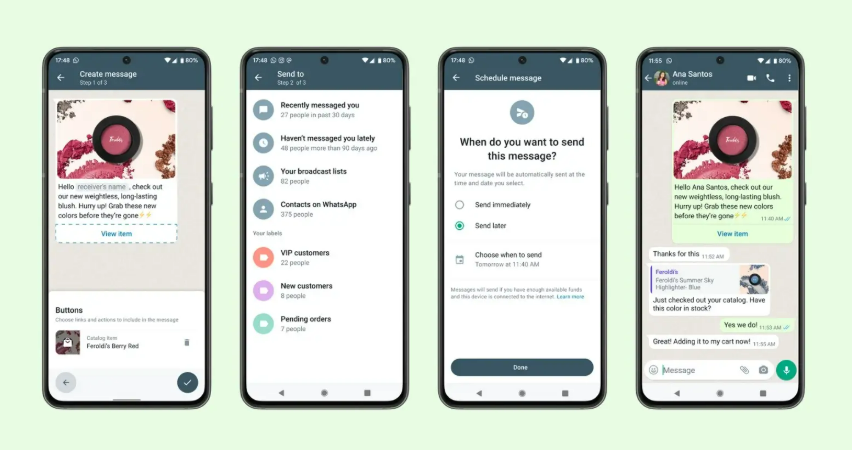
Not ready for managing group chats? WhatsApp’s Broadcast Lists offer a powerful alternative to reach many people personally and at scale. A broadcast list lets you send the same message to multiple contacts at once, without them seeing each other. To the recipient, it appears as a one-on-one message in their chat with you, maintaining that personal touch. This feature is fantastic for sending out newsletters, announcements, or promotions to a large number of leads who have opted in. In fact, WhatsApp broadcasts can achieve open rates 5× higher than email campaigns, making them an efficient way to stay top-of-mind.
Using broadcast lists, you can create segmented groups of contacts (e.g., by interest, location, or lead source) and tailor your messages accordingly. For example, a retail brand might maintain a “New Arrivals” broadcast list for fashion-savvy leads. When new products drop, they send a personalized update like: “Hi [Name], we just got a new summer dress collection ?. Here’s a sneak peek [link] – check it out before it sells out!” Because it’s a broadcast, hundreds of subscribers receive it in one go, yet each person feels like you messaged them individually. This combination of scale and personalization is gold for lead nurturing.
To do broadcasts right, follow best practices: Only message users who have given consent (to comply with WhatsApp policies and avoid being spammy). Always provide value in your broadcasts – useful info, exclusive discounts, early access, etc. – so people are happy to be on your list. Use their first name and any relevant details you know to make the content feel tailored. Also, keep messages concise and include a clear CTA (e.g., “Tap to shop now,” “Reply to book a spot”). Since broadcasts are one-way (recipients can reply to you privately, but they don’t see each other’s replies), you maintain a direct line of communication like email, but with much higher engagement.
One huge benefit: broadcasts are private and spam-free (users won’t get notifications of others replying or leaving, as happens in groups). This means leads are more likely to stay subscribed if your content is good. Monitor responses and follow up individually when someone shows interest (e.g., clicks a link or asks a question). In summary, WhatsApp broadcasts let you scale your outreach while feeling one-on-one, helping you convert warm leads into customers en masse without losing that personal touch.

WhatsApp Status isn’t just for personal updates – it’s a hidden gem for marketers. The Status feature (similar to Instagram/Facebook Stories) allows you to post images, short videos, text, or links that disappear in 24 hours. How does this help with lead generation? High visibility and engagement. Only users who saved your number can see your Status, meaning this audience is already interested in your brand. As a result, WhatsApp Status posts often get much higher engagement since you’re not competing with a noisy news feed. In fact, WhatsApp’s content feed is less saturated with ads and random posts, so your updates stand out more.
Use Status to nurture leads and drive action in a casual, authentic way. Because Status feels informal (it’s where people share daily moments), your content can have a more personal tone. Some effective ideas for businesses:
The beauty is that viewers can reply directly to your Status update, instantly opening a chat with you. This is where the magic happens: a passive viewer becomes an active lead by initiating conversation. For instance, a follower might reply “Interested!” to your limited-time offer Status – giving you the chance to engage and close the sale right in WhatsApp. It’s essentially another funnel entry point.
To maximize reach, post Status updates consistently (but don’t overdo it – quality over quantity). Use eye-catching visuals, add captions or stickers to grab attention, and always include a simple call-to-action in your Status (like “Message us now to learn more!”). Since Status posts vanish after a day, they create urgency and FOMO, which can spur leads to act quickly (“I better message them now before the deal is gone!”). By leveraging WhatsApp Status as part of your lead gen mix, you engage your audience in a channel they check frequently, in a format that feels fun and organic – all while subtly guiding viewers toward becoming customers.
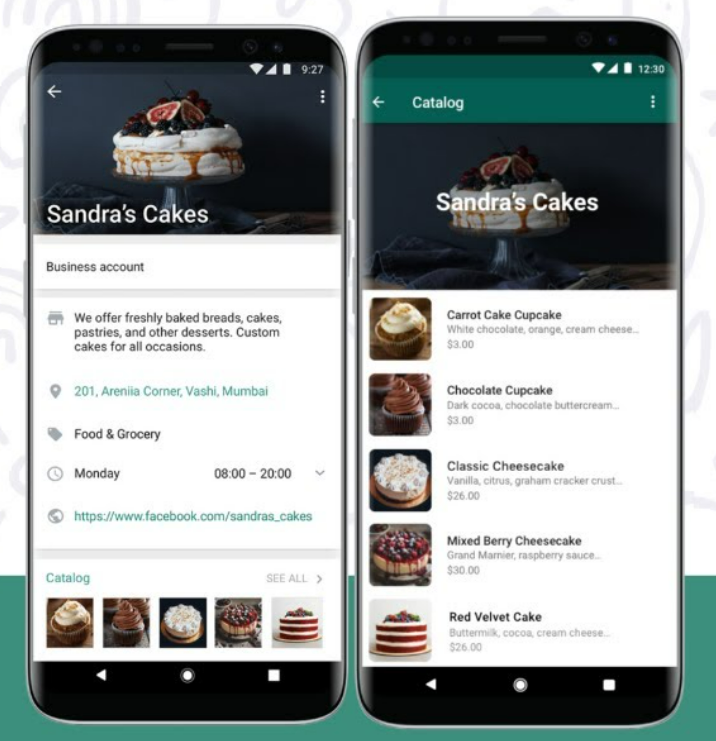
If you’re selling products (or even service packages), make use of the WhatsApp Business Catalog feature to generate and convert leads. The catalog functions like a mini storefront inside WhatsApp – you can display product images, descriptions, and prices, and users can browse and inquire about items they’re interested in. This streamlines the buying process by keeping everything within the chat app. Leads don’t have to click out to a website to see what you offer; fewer steps mean less drop-off and a smoother path to purchase.
Setting up a WhatsApp catalog is easy through the Business app: add your items with images (high-quality photos are a must), add details, and organize them into categories if needed. Now, when chatting with a potential customer, you can quickly send them an item from your catalog. For example, if someone messages a home bakery asking about cakes, you can reply with, “Sure! Here are some of our popular cake options,” and share 3-4 catalog listings (each appears with a thumbnail, price, and title). The customer can tap any item to see the full description and then message you, “I want this one!” This makes the experience interactive and visual, almost like they’re shopping on an e-commerce site, but with the convenience of chat.
WhatsApp catalogs also shine in broadcasts and group contexts. You could broadcast a “New Arrivals” message with direct catalog links to products, allowing interested leads to browse on their own. In groups, if someone asks “Do you have X product?”, you can drop the catalog entry that answers their question and shows off the product instantly.
The result of using catalogs? Higher conversion rates and more impulse purchases, because you remove friction. Customers can see and decide quickly, and even check out within WhatsApp using integrated payment links (available in some regions). As Zoko (a WhatsApp solution provider) notes, an in-app catalog improves product visibility and keeps the experience within WhatsApp, which significantly reduces drop-offs in the sales funnel. It caters to today’s impatience – people want info now, and a catalog delivers that without any waiting or extra browsing.
To get the most lead gen value, keep your catalog updated (nothing worse than a lead asking about an out-of-stock item), and highlight your best-sellers or lead magnets in the first few items. Treat it like a showcase window for your business. It not only helps convert active chats into sales, but also impresses new leads who see you have a professional, convenient setup on WhatsApp. It signals that contacting you on WhatsApp will be easy and productive, which encourages more prospects to reach out in the first place.
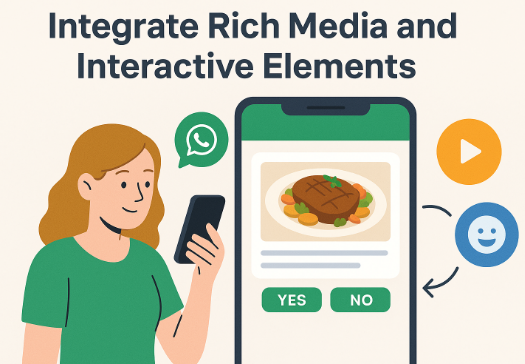
In the digital age, speed matters. When a new lead messages you on WhatsApp, responding quickly can make the difference between a hot lead and a lost opportunity. That’s where automated greetings and quick reply templates come in. WhatsApp Business allows you to set an instant greeting message that’s automatically sent to anyone who texts you for the first time or after a long silence. It’s a simple step that makes leads feel seen and attended to right away. For example, your greeting might be: “Hi there! Thanks for contacting [Your Business]. We’ll reply shortly. In the meantime, can you let us know what you’re looking for?” This kind of prompt, friendly hello establishes a professional tone and reassures the prospect that their message went through and that you care. It helps reduce drop-offs – instead of waiting in silence, the user gets an immediate touchpoint and often will respond with more info.
Quick Replies take speedy service to another level. These are saved response templates for FAQs or common queries (set up in WhatsApp Business settings with a shortcut like “/price” or “/hours”). With quick replies, you can address routine questions in a snap, ensuring consistency in your answers. Say a lead asks, “What are your consulting rates?” – you could type “/rate” and WhatsApp will paste your pre-saved answer: “Our rates depend on the package. For example, 5 hours of consulting is $500. Let me know if you’d like the full pricing sheet. ?”. The lead gets info immediately rather than waiting hours for someone to manually type it out. This boosts efficiency and keeps leads engaged in real time. You can still personalize a quick reply on the fly (e.g., add their name or tweak details), but having the base ready is a huge time-saver.
Combined, auto-greetings and quick replies ensure that no WhatsApp lead falls through the cracks. Every new contact gets a warm hello, and every frequently asked question gets a prompt, polished answer. This is crucial in maintaining momentum – a fast response dramatically increases your chances of converting a lead, because it capitalizes on their peak interest. Conversely, if a lead is left waiting a day for an answer, they may lose interest or contact a competitor.
By setting up these features:
Keep your quick reply templates up to date (revise them if you notice new common questions, or if details change). And even though auto-messages are used, monitor chats and jump in with a human touch as soon as possible for high-priority leads. Ultimately, speedy, helpful communication wins leads, and WhatsApp’s automation features let you deliver that at scale.

One clever way to generate leads is by making WhatsApp not just a communication channel, but a privileged space where people get something special. This means using exclusive content, lead magnets, or contests delivered through WhatsApp to attract and capture prospects. The idea is simple: if folks have a reason to message you or opt into your WhatsApp updates (beyond just “contact us”), you’ll pull in more leads. Here are a few approaches:
The unifying theme here is providing value upfront. When you give prospects a good reason to initiate a WhatsApp conversation (valuable info, chance to win, special treatment), you’re not just chasing them – they’re coming to you. It flips the dynamic and usually results in higher-quality leads, since they genuinely want what you’re offering. Just be sure to deliver on the promise (send that PDF quickly, run a fair contest, continue to share good content) so you build trust. With their permission, you can then continue the conversation, gradually educating them about your offerings and moving toward a sale. In essence, turn WhatsApp into a lead magnet hub: a place where leads happily engage because they get something out of it, and where you get to convert them in a friendly, interactive way.
By now, it’s clear that WhatsApp isn’t just a messaging app – it’s a powerful marketing platform where conversations lead to conversions. We’ve covered 10 actionable tactics – from chatbots and click-to-chat ads to broadcast lists and beyond – that you can start implementing today. The common thread among all these strategies is building genuine, timely, and valuable interactions with your prospects. When you meet customers on a channel they love (and trust) like WhatsApp, you remove barriers and make it easy for them to engage with your business.
Now it’s your turn. How will you apply these tactics? You might begin by adding a WhatsApp widget to your homepage or setting up a friendly auto-reply so no lead goes unattended. Perhaps you’ll launch a small WhatsApp campaign – say, a broadcast to recent inquiries with a helpful tip or an exclusive discount – and see the responses pour in. The key is to start somewhere and be consistent. Monitor what works, gather feedback, and refine your approach as you go. Even implementing a few of these WhatsApp lead generation strategies can dramatically increase your engagement and lead flow.
Remember, success on WhatsApp (as with any marketing) comes from putting the customer first. Be responsive, be personal, and above all, deliver value in every chat. Do this, and you’ll not only generate more leads – you’ll cultivate loyal customers who appreciate the human touch of your outreach. So don’t wait: turn those WhatsApp chats into your competitive advantage. Start today by embracing WhatsApp’s tools to capture new leads, nurture them with care, and watch as casual conversations grow into lasting customer relationships. Happy connecting, and here’s to your lead generation success on WhatsApp!
Ready to supercharge your lead generation? Open WhatsApp and engage your next potential customer – your first message could be the start of your next big deal.
Yes. WhatsApp is highly effective for lead generation because it enables direct, personal communication with potential customers. You can use WhatsApp to capture new leads (for example, via click-to-chat links or QR codes that bring prospects into a conversation) and to nurture leads by sending updates, answering inquiries instantly, and building trust through one-on-one chat. With features like chatbots, broadcast lists, and rich media sharing, businesses can guide prospects through the sales funnel entirely on WhatsApp. The app’s huge user base and high engagement (messages are almost always read) make it a powerful channel to generate and convert leads, often outperforming traditional email or cold calls in engagement and response rates. In short, if you integrate WhatsApp into your marketing strategy – providing value and quick responses – it can absolutely bring in more leads and sales.
To get customers to initiate chats (opt in) on WhatsApp, you need to make it easy and appealing for them. Here are a few effective ways:
1. Promote your WhatsApp channel everywhere: Add WhatsApp click-to-chat links or buttons on your website, social media profiles, email newsletters, and ads. For example, include a “Chat with us on WhatsApp” button on your contact page or a direct link in your Instagram bio.
2. Offer an incentive or value: Give people a reason to message you. This could be a lead magnet (“Message us for a free guide/ebook”), a discount or coupon (“Chat with us to get 15% off your first order”), or entry into a contest or giveaway. Exclusive WhatsApp-only deals or early access to content also work well.
3. Use QR codes for offline audiences: If you have physical touchpoints (stores, events, product packaging), print a WhatsApp QR code with a call-to-action (like “Scan to ask questions on WhatsApp”). This connects offline customers to you with one scan.
4. Highlight the convenience: Let customers know they can get fast, personal service via WhatsApp. For instance, mention in your marketing, “Have questions? WhatsApp us for instant assistance!” People are more likely to reach out if they expect quick answers and easy conversation.
5. Build awareness: Announce on your other channels that you’re available on WhatsApp. Some businesses send an email blast saying, “We’re now on WhatsApp – chat with us for any help!” or create a social post about it.
By combining these tactics, you reduce friction for the customer and actively invite them into a WhatsApp conversation. Once they message you, remember to be responsive and helpful (using tools like auto-greetings can help) so they have a great experience and stay engaged.
Imagine a potential customer browsing your website late at night with a question about your product. Instead of searching for a contact form or sending an email, they tap a button that says “Chat on WhatsApp.” Within seconds, a WhatsApp chat opens and they’re messaging your business directly. No friction, no waiting – just instant, personalized conversation. That’s the power of click-to-chat WhatsApp links in action.
In today’s mobile-first world, offering customers a quick way to reach you on their favorite messaging app can dramatically boost engagement and conversions. In fact, WhatsApp now boasts over 2.2 billion users worldwide (and counting), with around 50 million businesses actively using WhatsApp Business to connect with customers. With open rates for WhatsApp messages as high as 98% (versus ~20% for email), it’s no wonder marketers are embracing this channel.
In this comprehensive guide, we’ll cover what WhatsApp click-to-chat links are, why they’re a game-changer for marketing, and how to create your own WhatsApp chat link step by step. You’ll learn ways to use these links for business growth, best practices to get the most out of them, and get answers to frequently asked questions. By the end, you’ll have a roadmap to harness WhatsApp for instant customer conversations – and an edge over competitors still relying on slower channels. Let’s dive in!
A WhatsApp click-to-chat link is a special URL that instantly opens a chat with your business on WhatsApp when someone clicks it. Think of it as a direct hotline to your business through WhatsApp. The beauty is that customers don’t need to save your phone number in their contacts or navigate any menus – one click and they’re in a conversation with you. This works on both mobile devices and desktops; on phones it launches the WhatsApp app, and on computers it opens WhatsApp Web automatically. All the user needs is an active WhatsApp account, and they’re one tap away from reaching you.
Here’s what happens when someone clicks your WhatsApp link:
In other words, click-to-chat removes all barriers between the customer and a conversation with your brand. Meta (Facebook) introduced this feature to help businesses engage users more easily on WhatsApp. It’s an official WhatsApp feature, so the links are simple, safe, and reliable. The URL format is provided by WhatsApp itself, meaning there’s no third-party in the middle – the click just triggers WhatsApp to open a chat with your number.
Crucially, customers love the convenience. Instead of filling out a form and waiting hours (or days) for an email reply, they get the instant gratification of a chat. Instead of calling a support line and navigating IVR menus, they send a quick message (often while multitasking). And because it’s WhatsApp, the interaction feels personal and familiar – they can use emojis, share photos, or voice notes, making the experience more human. For businesses, this means higher engagement and happier customers from the very first touchpoint.
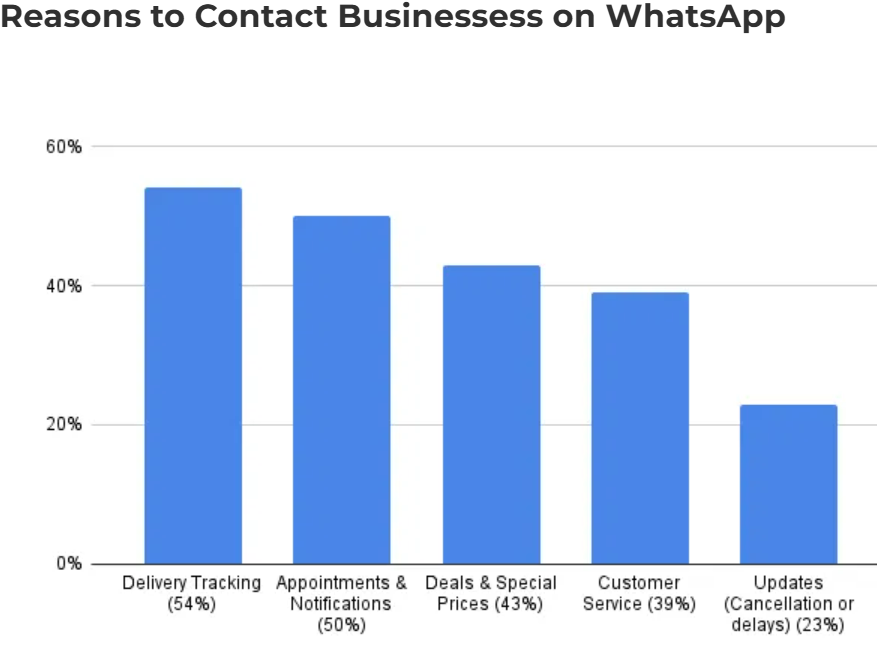
What makes WhatsApp click-to-chat links such a powerful marketing tool? In a nutshell, they meet your customers where they already are (on their phones, using chat apps) and make it extremely easy to start a conversation. Here are some of the key benefits and reasons to incorporate WhatsApp into your marketing strategy:
In short, WhatsApp click-to-chat links can supercharge your marketing by opening a direct, immediate, and personal communication channel with customers. You remove the delay between interest and interaction, which often means higher conversion. You’ll build rapport through conversational selling and support. And you’ll likely stand out from competitors who are slower to respond or stuck in older channels. Next, let’s see how you can create these magic links for your own business.
Good news: creating a WhatsApp click-to-chat link is incredibly simple. You don’t need to be a tech expert or install special software. WhatsApp provides a straightforward link format you can use, and the WhatsApp Business app even has a built-in tool to generate your link. We’ll cover two easy methods below. In just minutes, you’ll have a working WhatsApp link that you can share with customers.
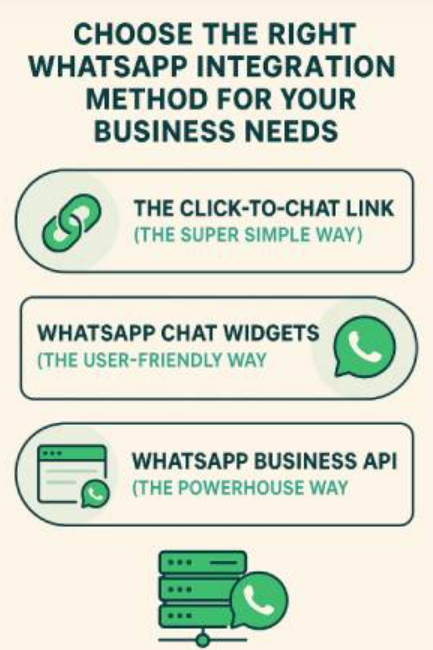
The basic way to create your WhatsApp chat link is by using a specific URL formula. Here’s the formula and how it works:
Use the official wa.me link format: Start with https://wa.me/ and then add your phone number (in international format) directly after it, with no special characters. This means:
Double-check that you haven’t included any symbols like “+” or “–”; the link won’t work if there are characters other than digits.
For instance, if your business WhatsApp number is +91 9876543210 (India), your click-to-chat URL would be: https://wa.me/919876543210
As soon as someone clicks that link, it will open a chat with the WhatsApp account associated with +91 9876543210. It’s that easy. You can test it by clicking the link yourself (it should open a chat with your number, which, if it’s your own WhatsApp, means you’ll see your own profile or a self-chat).
Adding a pre-filled message (optional): You also have the option to include a default text message in the link. This pre-populated message will appear in the chat input box automatically when the user clicks your link, which can prompt them to hit send or edit the message as needed. It’s great for nudging customers to provide specific info or just break the ice with a hello. For example, you might want the message to say "Hello! I'm interested in your services."
To add a pre-filled message, use the format: https://wa.me/YourPhoneNumber?text=Your%20Custom%20Message
Everything after ?text= in the URL will become the message in the chat box. Important: the message text must be URL-encoded, which mainly means replacing spaces with %20 (and certain special characters with code). In practice, you can write your message and then replace each space with %20. For example:
So the full WhatsApp link with that message and a sample number would be: https://wa.me/919876543210?text=Hello%2C%20I%E2%80%99d%20like%20to%20know%20more%20about%20your%20services
When a user clicks this link, their WhatsApp will open a chat to +91 9876543210 with the message "Hello, I’d like to know more about your services" already typed out, ready to send. You can customize this text to anything – e.g., "Hi, I want to book an appointment" or "I have a question about [Product Name]". Prefilled messages are helpful if you want to guide the user to provide certain info (like an order number or their name) or simply make it easier for them to initiate the chat.
Pro Tip: Keep your pre-filled message short and friendly. It should feel like a natural first message from a customer, not a marketing script. For example, "Hi! I'm interested in learning more about your products." is welcoming and easy for a user to send.
That’s it for the manual method – copy your wa.me link (with or without pre-text) and you’re ready to use it anywhere.
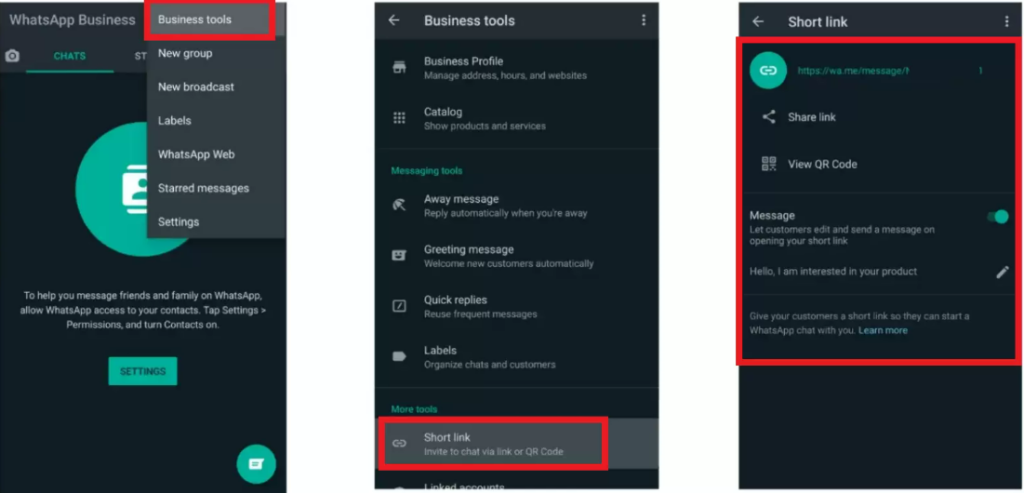
If you use the WhatsApp Business app (the free app for small businesses, available on Android/iOS), it has a built-in feature to create your click-to-chat link without any manual formatting. This can be a bit more user-friendly if you’re not comfortable editing URLs, and it also gives you a QR code version of your link.
To get your WhatsApp link from the Business app:
Using the WhatsApp Business app’s short link feature ensures your link is formatted correctly, and you get the handy QR code to use in offline marketing. The link from the app might look slightly different (it may use an API reference or your business ID internally), but it works exactly the same way as the standard wa.me link.
Note: You don’t have to use WhatsApp Business app to have a click-to-chat link – any WhatsApp number can use the wa.me link format from Method 1. The app’s feature is just a convenience. That said, if you are a business, it’s worth using the WhatsApp Business app for additional tools like business profile, greeting messages, quick replies, and stats. The short link it provides is just a bonus.
The two methods above are the most direct ways provided by WhatsApp/Meta. There are also third-party tools that can help if you prefer an even simpler route:
Now that your WhatsApp link is ready, the next step is to deploy it in your marketing channels so customers can start clicking and chatting. Let’s look at where and how you can use your WhatsApp click-to-chat link to maximize its impact.
Creating a WhatsApp link is only step one – now you need to put that link where your customers will see it and click it. The versatility of click-to-chat links is that you can integrate them anywhere you interact with your audience. The goal is to make it as easy as possible for a prospect or customer to find that “Chat on WhatsApp” option at the moment they have a question or interest. According to marketing experts, you should incorporate WhatsApp chat links across multiple channels and touchpoints to engage customers on their terms. Here are some of the best places to use your WhatsApp click-to-chat link:
Examples of businesses promoting WhatsApp click-to-chat links on social media. Many brands add WhatsApp chat links in Instagram bios, Facebook posts or ads, and even Twitter posts to invite customers into a direct conversation.
In summary, deploy your WhatsApp link wherever customers interact with your brand, online and offline. The more visible and accessible it is, the more likely people will use it. Make sure to use a clear call-to-action around the link (like “Chat with us on WhatsApp”) so people know what will happen when they click. Now that your channels are set, let’s cover some best practices to ensure you handle all these incoming WhatsApp conversations effectively and get the best results.
While using WhatsApp for customer communication is powerful, it’s important to do it right. Here are some best practices and tips to help you succeed with WhatsApp marketing (and avoid common mistakes):
By following these best practices, you’ll create a positive experience for users who reach out via WhatsApp, which in turn boosts your brand reputation and conversion rates. You’ve removed the barrier to conversation; now make every conversation count by being responsive, friendly, and helpful.
Finally, let’s wrap up with a quick recap and a call to action for you (yes, you!) to start leveraging WhatsApp in your marketing, plus an FAQ to answer any lingering questions.
WhatsApp click-to-chat links offer a fresh, powerful way to connect with today’s customers who value convenience and instant communication. We’ve discussed how these simple links allow anyone to start chatting with your business in seconds – no forms, no waiting, just real conversation. You’ve seen that implementing WhatsApp in your marketing can lead to higher engagement, better leads, and even improved sales conversions, thanks to WhatsApp’s phenomenal open rates and personal touch.
Now it’s time to put this into action. Creating a WhatsApp link is easy and free, so the barrier to entry is practically zero. Think about your marketing and customer service setup today: where could a quick chat help answer questions or nudge a hesitant buyer? Whether you’re a small online store, a freelancer, a local service provider, or even a large enterprise, WhatsApp can likely enhance your customer interactions.
Don’t wait for competitors to beat you to it. Take a few minutes today to create your WhatsApp click-to-chat link (using the steps we covered) and add it to at least one place your customers will see. Maybe it’s your website’s contact page, or a social media bio, or the next email campaign you send out. Start small if you need to – you can always expand to more channels as you get comfortable. The key is to open that door for your audience.
Once the messages start coming, be ready to engage. Treat each WhatsApp chat as an opportunity to build a relationship with a potential customer. Provide value, solve problems, and make the chat experience enjoyable. You’ll be pleasantly surprised how these casual conversations can lead to loyal customers and new sales.
In a world where everyone is glued to their smartphones, marketing is no longer a one-way broadcast – it’s a dialogue. WhatsApp is the perfect medium for these dialogues. By embracing click-to-chat links, you’re saying to your customers, “We’re here, we’re reachable, and we care enough to talk with you directly.” That message, in itself, sets you apart.
So go ahead – create your WhatsApp link and make it live! Start engaging your customers on a platform they love. The sooner you do, the sooner you’ll reap the benefits of more conversations, more trust, and more conversions. Your customers are literally one click away from you. It’s time to say hello. ?
Ready to elevate your marketing? Implement a WhatsApp click-to-chat link now and watch the engagement roll in. Don’t miss out on the chance to chat with your future customers – they’re waiting to talk to you! -> Start using WhatsApp click-to-chat in your marketing today, and give your audience an easy, personal way to connect with your business.
A WhatsApp click-to-chat link is a special URL that, when clicked, opens a chat with a specific phone number on WhatsApp, without needing to save that number in contacts. Essentially, it’s a direct invite to message someone. For example, a link like https://wa.me/15551234567 will launch WhatsApp and start a chat with the number +1 555 123 4567. It works on both mobile (opens the WhatsApp app) and desktop (opens WhatsApp Web). The person clicking must have WhatsApp installed or use WhatsApp Web. Once opened, they can type and send messages as usual. It’s an official feature by WhatsApp that makes starting a conversation as easy as clicking a link.
Absolutely. WhatsApp has proven to be a highly effective channel for customer engagement and marketing. The statistics tell the story: WhatsApp messages can have an open rate around 98%, which blows typical email open rates (20% or so) out of the water. Moreover, customers tend to respond and take action more via chat – conversion rates from WhatsApp interactions have been reported in the range of 45–60% in some cases. Customers feel comfortable on WhatsApp because it’s familiar and convenient; they’re more likely to reach out with questions, which gives you a chance to personally guide them to a purchase or solution. Also, 87% of consumers (globally) say they want brands to offer messaging options alongside traditional channels – it’s clear people prefer the ease of texting a business versus making a phone call or waiting for an email. That said, success on WhatsApp depends on how you use it: respond quickly, be helpful (not spammy), and use it to have conversations, not just blast ads. Businesses large and small are using WhatsApp for everything from sales inquiries, customer support, to sending order updates. When done right, it can boost customer satisfaction, increase trust, and yes, drive more sales thanks to that personal touch.
In the fast-paced world of messaging, WhatsApp has emerged as a powerhouse for marketing with over 2 billion users worldwide. WhatsApp messages boast astonishing engagement, with roughly 80% read within 5 minutes, and open rates averaging around 98%, significantly outperforming email metrics. But with great reach comes great competition for attention. People's attention spans on chat are fleeting, and long, unformatted messages often go ignored. To captivate customers, savvy marketers are turning to WhatsApp's text formatting features to make their messages pop. Well-structured, visually distinctive texts are not only easier to read but can improve message recall by up to 30%.
In this guide, we’ll explore 10 powerful WhatsApp text formatting tricks that marketers can use to highlight key points, convey offers with clarity, and boost engagement. From bolding urgent announcements to using bullet points for clarity, these tips will help your messages stand out in a crowded chat inbox and drive action.
Are you ready to elevate your WhatsApp marketing game? Let’s dive in!
WhatsApp offers simple text formatting options – like bold, italic, strikethrough, and monospace – to help emphasize and organize your messages. In the above image, you can see how adding special characters (such as * for bold, _ for italic, ~ for strikethrough, and triple backticks for monospace) changes the appearance of text. Marketers can harness these styling tricks to ensure important details stand out, making messages more visually engaging and easier to digest.
When it comes to grabbing attention, bold text is your best friend. Bolding a word or line instantly draws the eye and signals “this is important”. In fact, studies show bold text is noticed more quickly than italics for highlighting information. Marketers can use this to their advantage by bolding critical details like offers, discounts, or deadlines. For example, instead of a plain announcement, you might write: “Get ready for our BIG 50% OFF SALE tomorrow!” – the bold phrase ensures the offer isn’t missed.
Bold formatting is perfect for emphasizing value propositions and CTAs in your WhatsApp marketing messages. Think product names, sale percentages, or calls-to-action (e.g., “Buy Now”). By highlighting a few critical words in bold, you make your message hard to ignore. As one WhatsApp marketing guide notes, when you highlight important words in bold, the message is less likely to be ignored – just be cautious not to bold everything, or it loses effect. In short, bold text is a simple trick that can instantly direct your customer’s focus to what you want them to see first.
While bold shouts, italics whispers – offering a softer emphasis for secondary details. Italic text is great for highlighting names, subtle remarks, or conversational tone elements without stealing the spotlight from the main message. Marketers can use italics to add a personal, human feel to messages, almost like adding a gentle aside or friendly note that complements the main text. For example: “Hi Jane, we have an exclusive offer just for you today.” Here, italicizing "exclusive offer" adds a subtle emphasis that feels personal and friendly.
Italics provide gentle emphasis – they’re noticeable but not as in-your-face as bold. This makes them perfect for highlighting secondary information: perhaps the name of the customer (personalization), a coupon code, or a short tagline. According to WhatsApp formatting tips, italics lend a creative, relaxed feel to your message, helping it feel fun and personal. Keep in mind that italics are more subtle – ideal for when you want to stress a point without dominating the message. In combination with bold (for the main point) and italics (for the supporting point), your messages will convey a clear hierarchy of information that resonates with readers.
Strikethrough text is a handy formatting trick that draws attention by crossing out text. It might seem counterintuitive – why cross out your own words? But for marketers, strikethroughs are gold when you want to show a change or a “before-and-after”. A classic example is indicating a price drop: $99 $79. By striking through the original price and placing the new price next to it, you visually highlight the discount – the contrast practically screams “sale!” to the reader. This technique immediately lets customers see what deal they’re getting.
According to marketing experts, the strikethrough effect is underutilized and often surprises readers, which can work in your favor. It’s perfect for highlighting what’s been “removed” or changed in an offer. Customers see the comparison instantly. For example: “Your reward: ₹500 ₹1000 cashback!” shows an increased reward, doubling the impact. Or “Buy 1 Get 1 50% 100% FREE”, showing an offer improvement. Strikethroughs add a sense of urgency and correction, implying that things have changed (often for the better deal). Just be sure the context is clear – you don’t want to confuse users. When used wisely, strikethrough formatting can make your discounts and updates unmissable.
Monospace is a special font style where every character occupies the same width (like old typewriters or code editors). WhatsApp’s monospace text option is fantastic for making certain text segments stand out in a blocky, technical-looking font. Why would marketers care about a “code” font? Because it’s perfect for things like coupon codes, order numbers, or any text you want to separate from normal conversational text. For example: “Use code SAVE50 at checkout.” The code inside triple backticks will appear in a monospace block, immediately drawing attention to it as a unique element.
Monospace text immediately gives a techie, clipboard-friendly look. Users perceive monospace text as something to copy exactly (useful for codes or commands) or something that carries technical authority. As one guide notes, this formatting keeps text neat and easy to read, preventing any alignment issues. Marketers can leverage this by using monospace for parts of the message that should stand apart. For example, including Order ID: ```AB12345XYZ``` in a support or confirmation message ensures the customer easily identifies their order number. It’s all about creating contrast. In a sea of regular WhatsApp font, a monospace snippet looks different enough to catch the eye and convey importance. Just remember, monospace will not combine with other formatting (you can’t bold or italicize inside monospace – it will literally show the symbols), so use it solely for the specific text you want isolated. Done right, this trick adds a layer of professionalism and clarity to your WhatsApp communications.
Ever receive a WhatsApp message that was a giant block of text listing multiple points, and you just skimmed it or gave up? For marketers, clarity is king. Thankfully, in early 2024, WhatsApp introduced bulleted lists as a formatting feature. This is a game-changer for making messages with multiple points much more readable. Instead of writing a long sentence with commas or line breaks, you can now send a neat bulleted list right within a single message.
How to do it: Creating a bulleted list in WhatsApp is simple: start each new line with a hyphen (-) or an asterisk (*) followed by a space. For example, typing:
- Point One
- Point Two
- Point Three
Using bulleted lists improves readability dramatically. Research shows that lists break info into clear, bite-sized chunks, helping readers focus on each idea. Instead of sending a chunky paragraph of features or instructions, bullet points let your customers quickly absorb each benefit or step. This formatting trick also conveys a sense of professionalism and organization, which can boost your brand’s impression. As a pro tip, keep each bullet point brief (one or two lines). That way, your WhatsApp message looks clean and is easy to scroll, increasing the likelihood that the customer will read all your points. In a nutshell, when you have multiple points to make, use bullets – your audience will thank you for the clarity.
Similar to bulleted lists, numbered lists let you organize information sequentially. They are perfect for situations where order matters – think step-by-step instructions, countdowns, or ranked lists. For marketers, this is incredibly useful when you want to guide a customer through a process (like redeeming an offer or setting something up) or when presenting a list of reasons/features in order of importance. Numbered lists ensure the reader follows the intended sequence.
How to do it: To create a numbered list in WhatsApp, start a line with the number and a period (e.g., 1.) followed by a space. For example:
1. Step One
2. Step Two
3. Step Three
Numbered lists in WhatsApp are excellent for clarity and guidance. They add a sense of order and can make your message feel like a helpful checklist or set of instructions. This is great in marketing messages where you may be instructing the user, e.g., how to apply a discount or the steps to sign up for an event. Users are more likely to follow through when instructions are clear and broken down. In fact, using numbered steps can improve comprehension because it sets expectations on the length of the process and groups the actions logically. From a strategic standpoint, numbered lists also imply a logical rationale (for example, "5 Reasons to Try Our Product" suggests there’s a thoughtful order, perhaps from most to least important reason). So whenever your WhatsApp communication needs a sequence or a hierarchy, remember you can now use numbered formatting to present it cleanly.
Sometimes you want a line of text to stand apart as a quote or a highlighted note. Block quotes in WhatsApp let you indent a paragraph with a vertical line, indicating it's a quoted text or special highlight. For marketers, this is a brilliant way to showcase a customer testimonial, a review snippet, or even a slogan/tagline you want to emphasize. Visually, it breaks the flow of your message and draws attention due to the indent and unique styling.
How to do it: To create a block quote in WhatsApp, start a new line with > followed by a space. For example:
> This is a quoted text.
Block quotes make messages stand out and seem special. They naturally draw the reader’s attention because they break the alignment and look of the chat bubble. For marketers, this is an opportunity to inject social proof or important takeaways in a way that catches the eye. According to messaging tips, block quotes are great for highlighting key ideas or inspiring quotes, making them more memorable to the reader. The visual separation also helps in not overwhelming the reader with too much promotional text at once – it’s like a breath in the message where a different voice or important note comes through. So, if you have a golden testimonial quote or a phrase you really want your audience to remember, set it as a block quote. It adds variety to your message format and elevates the perceived importance of that text snippet.
Once you’re comfortable with basic formatting, you can get creative and combine styles for extra emphasis. WhatsApp allows certain formatting to be applied together on the same text – for example, bold + italic or bold + strikethrough. This means you can make a word both bold and italic at the same time, which could be useful for something you want to really stand out in context. Marketers might use a combination for an ultra-important keyword or phrase in a message that absolutely must catch attention – think of it as the text equivalent of bolding, underlining, and highlighting a phrase in print (though WhatsApp doesn’t have underline by default).
Combining formats should be used strategically and sparingly. It can make a word really stand out, but if you make too many things multi-formatted, the message can become chaotic. According to messaging best practices, mixing bold, italics, and strikethrough adds extra focus and makes messages more interesting; it's a way to visually differentiate multiple layers of importance. For example, in one sentence, you might have one keyword bold, another keyword italic, and maybe one in both to create a visual hierarchy of emphasis. This guides the reader on what to look at first, next, and last. For marketers, the ability to combine formats is an advanced trick: use it for the single most critical element in your message (like a deadline: Today Only, or a Final Warning on an expiring offer). It adds a bit of flair and ensures that even if someone is skimming, their eyes land on that doubly-highlighted phrase. Just remember the golden rule – if everything is special, nothing is special. So reserve combo-formatting for the can't-miss words.
Strictly speaking, emojis and symbols aren’t “text formatting” in the sense of bold or italic, but they are crucial text elements that can transform the tone and engagement level of your WhatsApp messages. For marketers, using emojis strategically can make messages more relatable and help important points pop. Think of emojis as colorful annotations to your formatted text: a well-placed ? fire emoji can emphasize a hot deal, a ✅ check mark can serve as a bullet point or signify completion, and a ? rocket can hype up a new launch. Emojis break the monotony of plain text and can draw the eye to specific parts of your message. In a way, they function like visual bolding for certain concepts, and they make your message feel more friendly and modern.
Emojis also serve a functional role: since WhatsApp doesn’t support colored text or custom fonts (beyond monospace), emojis bring color and personality into the text. A red ❤️ heart or a green ✅ check can convey meaning at a glance. Especially on mobile, where users are used to emoji-rich communication with friends, a message from a business that includes a relevant emoji can feel more natural and engaging. It shows that your brand “speaks the language” of chat. Just ensure the emojis make sense and add clarity (or emotional value) to the message. For instance, saying "We have an exclusive deal for you ?" sets a celebratory tone, implying something good. Whereas "Important update ❗" with the exclamation emoji stresses urgency.
In summary, sprinkle emojis thoughtfully to accentuate your formatted text. They can act as visual signposts that highlight offers, segment information, or simply add warmth. A/B testing different emojis is also wise – see which ones resonate with your audience. Done right, emojis and symbols will make your WhatsApp marketing messages feel more human and attention-grabbing, leading to higher engagement.
Last but certainly not least: the way you break up your text in a WhatsApp message is a formatting trick in itself. Even with all the bold or italics in the world, a message that’s a wall of text can intimidate or bore readers. WhatsApp is inherently a quick-chat platform – people expect short, digestible messages. For marketers, this means you should format your message with line breaks, spacing, and brevity in mind. In fact, one marketing study suggests that WhatsApp messages should ideally take no more than 8–10 seconds to read. If your message looks like a lengthy email, chances are the user will skim or skip it.
Use short paragraphs: Break your message into 1-2 sentence paragraphs or even single-line sentences where appropriate. On WhatsApp, pressing “Enter” will send the message by default on mobile, but you can insert a new line by using Shift + Enter (on WhatsApp Web/Desktop) or toggling off the "Enter is send" option on mobile to add line breaks. Use this to create natural pauses. For example, instead of:
"Hi John, our big end-of-season sale is now live. We’re offering 50% off on all items in our catalog for the next 48 hours. Shop now and save big on your favorite products! Visit our website to grab the deals before they’re gone."
which is a long paragraph, you could send:
Hi John! Our **Big End-of-Season Sale** is now live.
Enjoy *50% OFF* on all items for the next 48 hours.
Shop now and save on your favorites – don’t miss out!
[Visit our site](https://example.com) to grab the deals before they’re gone.
Remember the wise words from marketing gurus: even with a 99% open rate on WhatsApp, your job isn’t done until the customer reads and acts on your message. Formatting and brevity help ensure that once opened, your message gets read fully and understood. One technique is to use whitespace effectively – a blank line (extra line break) can signal a new thought and give breathing room, much like in an email or blog post. This prevents the message from feeling like a text blob. Also, maintain a casual, conversational tone (as if you’re chatting with a friend) – this keeps the user comfortable and more likely to read through.
In summary, less is more on WhatsApp. By writing crisp messages and using line breaks to structure them, you respect your audience’s time and capture their interest. As a result, your key points – enhanced by all the formatting tricks above – will shine through without overwhelming the reader. A short, well-formatted WhatsApp message can deliver the punch of a much longer message because it’s direct and user-friendly. This leads to higher retention of information and better response rates.
Actionable Tip: Next time you draft a WhatsApp campaign message, read it aloud to yourself. Does it sound like something you’d quickly tell someone in person? If not, try trimming and breaking it into chat-sized chunks. Your customers will find it much more appealing to read a concise, nicely formatted message – and a message that’s read is a message that can convert!
WhatsApp’s text formatting features might seem simple, but as we’ve seen, they are powerful tools for marketers. By using bold text for key offers, italics for nuance, strikethroughs for discounts, monospace for codes, and the newly added lists and quotes for structure, you can transform a basic message into a compelling marketing piece. These formatting tricks help your message cut through the noise, making important information unmissable and improving overall readability. Remember, people respond to messages that are clear, engaging, and relevant. A well-formatted message not only grabs attention but also builds trust, showing that you care about the details and professionalism of your communication.
Now it's your turn to put these tips into practice. Imagine the impact of a WhatsApp broadcast where the first line of each message hooks the reader, the core details stand out in bold or bullets, and the tone feels friendly and approachable. It could mean the difference between a message that gets instant replies and clicks and one that gets lost in the chat history. Don’t let your WhatsApp marketing fall flat due to plain, boring text. Apply these formatting tricks in your next campaign and watch the engagement improve – higher read-through rates, more clicks on your links, and better customer feedback.
Ready to elevate your WhatsApp marketing game? Try out at least 2–3 of these formatting tricks this week in your customer communications. For example, send your next promotional offer with a bold headline and a few bullet points, or text a VIP customer with their name in italics and a personalized emoji. See how they respond! You’ll likely notice a boost in both customer interest and response quality. And if you found these tips useful, feel free to share this guide with your team or fellow marketers. Let’s raise the bar for WhatsApp marketing messages across the board. Happy WhatsApp marketing!
WhatsApp uses simple markup characters to format text. For bold, add * before and after the word (e.g., *hello* → hello). For italics, use _ underscores (e.g. _hello_ → hello). For strikethrough, use ~ tildes (e.g. ~hello~ → hello). To get the monospace font, wrap text in three backticks ( hello ). Additionally, as of 2024, you can create bulleted lists by starting lines with - or * , and numbered lists with 1. , 2. , etc. You can also add > at the start of a line to make a block quote. These formatting options are available on all updated versions of WhatsApp. (On mobile, you can also long-press the text you’ve typed and use the BIU or More menu to apply bold, italic, etc., without manually typing the symbols.)
Yes! As of a February 2024 update, WhatsApp allows users to format bulleted and numbered lists natively. To add a bullet point, start a new line with a hyphen or asterisk followed by a space (e.g., "- Item 1"). To create a numbered list, start lines with "1. ", "2. ", etc., followed by a space. The app will display them as indented lists with actual bullet symbols or numbers. This is very useful for sharing multiple points or steps in an organized way. If you don’t see this formatting, make sure your WhatsApp is updated to the latest version (the feature is available across Android, iOS, and Web). Prior to this feature, people often manually used emoji like "•" or "-" to indicate bullets, but now WhatsApp will do the formatting for you, making lists cleaner and more uniform.
Yes, all of WhatsApp’s formatting features are designed to be visible across platforms. Whether your recipient is on Android, iPhone (iOS), or WhatsApp Web/Desktop, they will see the bold, italic, strikethrough, lists, and other formatting just as you intended. The formatting is part of the message itself (not an added overlay), so it renders consistently. However, both you and the recipient need to be using relatively up-to-date versions of WhatsApp that support these features. The bold/italic/strikethrough/monospace have been around for a while (since ~2016), so virtually all users can see those. The list and quote features rolled out in 2024, but as long as the app is updated, those will show correctly, too. If someone is on a very old WhatsApp version that doesn’t support lists, they might just see the raw text (e.g., hyphens instead of bullets). But given WhatsApp’s auto-updates and the ubiquity of these features now, it’s rare to encounter a user who can’t see them. In summary, you can confidently use text formatting, knowing that your audience will see the styled text as intended, regardless of device. It’s always a good idea, though, to test your formatted message on your own phone or with a colleague to ensure it looks right (especially if using any unusual characters or third-party fonts). Once you see it works, you can hit send to your customers with peace of mind!
In the fast-paced world of digital communication, WhatsApp remains a cornerstone for businesses, boasting over 2 billion active users worldwide. For small and medium-sized businesses, the WhatsApp Business App has been a go-to tool for direct, personal customer interactions. However, scaling operations often required switching to the WhatsApp Business API, which meant abandoning the app or using a new number—a significant hurdle. In early 2025, Meta introduced a groundbreaking solution: WhatsApp Coexistence. This feature allows businesses to connect their existing WhatsApp Business App to the WhatsApp Cloud API using the same phone number, blending the simplicity of the app with the API’s advanced capabilities.
This comprehensive guide explores WhatsApp Coexistence, its benefits, setup process, practical applications, limitations, and answers to common questions. Whether you’re a small business owner or a growing enterprise, this feature could transform how you engage with customers.
WhatsApp Coexistence, also referred to as “Coex” or “Embedded Signup,” is a feature that enables businesses to use the same phone number for both the WhatsApp Business App and the WhatsApp Business API. Previously, businesses had to delete their Business App account or obtain a new number to use the API, risking the loss of chat history and customer connections. Now, Coexistence allows seamless integration, syncing messages between the app and API for a unified experience.
This update, rolled out in beta in early 2025, is a game-changer for businesses looking to scale without sacrificing their established WhatsApp presence. Messages sent via the API appear in the app, and vice versa, ensuring continuity across platforms.
The Coexistence feature offers several advantages for businesses aiming to enhance their WhatsApp strategy:
These benefits make Coexistence a versatile solution for businesses of all sizes, from local retailers to global enterprises.
Setting up WhatsApp Coexistence is straightforward, but it requires meeting specific criteria. Here’s a step-by-step guide based on the latest information:
Eligibility:

Your business must be actively using the WhatsApp Business App, and eligibility is based on account tenure and messaging quality. The feature is currently available in countries like India, Mexico, Brazil, Indonesia, the United States, Hong Kong, and Singapore, but not in regions like Australia, Japan, or the European Economic Area.
You must have a verified Meta Business Account to access the WhatsApp Cloud API.
WhatsApp Coexistence opens up a world of possibilities for businesses. Here are some real-world scenarios illustrating its impact:
A small clothing boutique uses the WhatsApp Business App to answer customer inquiries about sizes and styles. By integrating the API, they automate order confirmations and shipping updates via their Shopify store, while still handling personal queries through the app. This dual approach enhances efficiency without losing the personal touch.
A local clinic uses the app to communicate directly with patients. With Coexistence, they integrate the API to send automated appointment reminders and use chatbots to triage common questions, freeing up staff for more complex tasks.
A travel agency uses the app for booking inquiries. By connecting to the API, they send automated itinerary updates and promotional offers to thousands of customers, while agents handle personalized requests via the app. Analytics from the API help track engagement metrics.
These examples highlight how Coexistence enables businesses to maintain personal connections while scaling operations with automation and analytics.
While WhatsApp Coexistence is a powerful tool, there are some limitations to consider:
Geo Restrictions: As of June 2025, WhatsApp Coexistence—the ability to use both the WhatsApp Business App and the WhatsApp Business API simultaneously on the same phone number—is officially supported in the following countries:
This feature allows businesses in these countries to integrate their WhatsApp Business App with the Cloud API, enabling both manual and automated messaging using the same phone number.
However, WhatsApp Coexistence is not supported in the following countries and regions:
Businesses with phone numbers registered in these countries cannot currently enable WhatsApp Coexistence.
Pricing: The Business App is free, but API messages are charged based on a conversation-based model, varying by message type (marketing, utility, authentication, service) and user location.
Technical Requirements: Businesses may need assistance from WhatsApp Business Solution Providers for API integration.
Companion Devices: Up to four companion devices can be linked to the app, but unsupported devices may not sync with the API.
Account Maintenance: The Business App must be opened every 13 days to remain active.
Businesses should weigh these factors against their operational needs to determine if Coexistence is the right fit.
WhatsApp Coexistence is a transformative feature that empowers businesses to combine the simplicity of the WhatsApp Business App with the scalability of the WhatsApp Business API. By using the same phone number for both, businesses can maintain customer relationships while leveraging automation, multi-agent support, and analytics to drive growth. Whether you’re a retailer, healthcare provider, or travel agency, this feature offers a flexible and cost-effective way to enhance customer engagement.
Ready to revolutionize your WhatsApp strategy? Contact a WhatsApp Business Solution Provider like SendWo and Grow your business with sales on WhatsApp.
Adding WhatsApp Pay into your WhatsApp Catalogue in SendWo allows you to collect payments directly inside WhatsApp creating a seamless, in-app purchase experience for your customers. SendWo integrates official WhatsApp partner gateways like Razorpay and PayU for Indian merchants to power this functionality.
With just a few configurations, customers can browse your products, tap “Buy Now,” and complete payment — all within WhatsApp. This dramatically improves conversion rates by removing friction from the checkout process.
Before you begin:


? You can set up both Razorpay, PayU and UPI, but only one will be active for WhatsApp Payment at a time.

✅ Once enabled, every product with a "Buy Now" button will now display WhatsApp Pay functionality.
When a customer taps “Buy Now” on a catalog item:
Is WhatsApp Pay available outside India?
Currently, only Razorpay and PayU support WhatsApp Pay integration and are available for Indian merchants.
Can I offer both COD and WhatsApp Pay?
Yes. You can configure both options in your catalog settings and let the user choose.
Will customers leave WhatsApp to complete the payment?
No, payment happens inside WhatsApp’s in-app browser — smooth and native experience.
How do I know if a payment is successful?
SendWo logs payment status in the Orders panel and sends confirmation to the customer.
Connecting your WhatsApp Business account to your Facebook Page is a game-changer for customer engagement and marketing. It unlocks powerful tools for communication, allowing you to add a WhatsApp button on your page, receive messages directly through WhatsApp, and even run click-to-WhatsApp ads.
In today’s fast-paced digital world, people love the convenience of messaging – in fact, over half of consumers prefer to contact businesses via chat apps like WhatsApp. By integrating WhatsApp with Facebook, you bridge the gap between your social media presence and real-time conversations. The result? A smoother customer experience and higher conversion rates.
This guide will walk you through how to connect WhatsApp Business to Facebook Page step by step. We’ll cover why this integration is important, the exact steps to link your accounts, and tips to make the most of the connection. Sendwo – a free WhatsApp marketing platform built on the official WhatsApp API – makes the process easier and adds extra features for your business. Let’s dive in and get your WhatsApp Business account linked to your Facebook Page for better reach and engagement!
Connecting WhatsApp Business with your Facebook Page offers numerous advantages that can significantly boost your online presence and customer relationships. Here are some key benefits of WhatsApp Business integration with Facebook:
For example, imagine you run a boutique store. A potential customer browsing your Facebook Page loves a product but has a question about sizing. Thanks to your linked WhatsApp, they click the “Message on WhatsApp” button on your page and instantly chat with you on WhatsApp. You (or your chatbot) respond within seconds with the info they need, and they proceed to place an order. This real-world scenario shows how integrating WhatsApp with Facebook can turn an interested visitor into a satisfied customer in moments.
Before we dive into the setup steps, make sure you have the following ready for a smooth integration:
Note: If your WhatsApp Business number is an API-based account (such as those managed through Sendwo or another provider), ensure your Meta Business Manager is set up and your business is verified. While the linking process is similar, API numbers might require an approval step in Business Manager (covered below). If you’re using the WhatsApp Business mobile app, the process will simply involve a verification code sent to that app.
Alright, you have everything in place – now let’s get into the step-by-step process to set up WhatsApp Business on Facebook Page using Sendwo!
Follow these steps to link your WhatsApp Business account to your Facebook Page. This section will guide you through Facebook’s settings and the Sendwo platform to ensure a successful integration. Let’s get started with the Facebook Page configuration:
To begin, log in to your Facebook account and navigate to the Facebook Page you manage for your business. On your page, find the menu (usually on the left sidebar for the desktop New Page experience, or under the “Manage” menu on mobile). Scroll down and click on “Settings” (or “Settings & privacy > Settings” on some interfaces). This will open your page’s settings screen.

In your Page settings menu, look for the section labeled “Linked accounts” and click on it. (On some Facebook Page versions, the WhatsApp integration might be under a “WhatsApp” label directly, but in the latest layout it’s grouped under Linked Accounts along with Instagram.) Clicking Linked accounts will bring up options to connect Instagram or WhatsApp to your Facebook Page.

Under Linked Accounts, you should see a WhatsApp option. Click on “WhatsApp”. Facebook will prompt you to enter your WhatsApp Business phone number in the designated field. Make sure to enter your number with the correct country code (for example, +1 for USA, +44 for UK, +91 for India, etc.) – e.g., +1 234 567 8901. Double-check the number is correct and then click the “Send WhatsApp Code” button. Facebook will now send a verification code to that WhatsApp Business number.
Tip: If your WhatsApp Business number is on a phone, check the SMS or WhatsApp app for a 6-digit verification code. If it’s a WhatsApp API number managed through Sendwo or another provider, you might receive the code via SMS to the number’s phone or through your API interface. Make sure you have access to see the code.
After a few seconds, you should receive a 6-digit code. Enter the verification code into the Facebook prompt and submit it to verify your WhatsApp number ownership. Once the code is entered correctly, Facebook will proceed to link the account.

After entering the code, Facebook will process the linking. At this point, you’ll likely see a confirmation or status message on your Facebook Page settings screen. In many cases it will say something like “Connection request pending” (or a similar phrase). This indicates that Facebook has sent a connection request to your WhatsApp Business account’s management system.
If you see a pending status, don’t worry – this is normal, especially for WhatsApp Business API accounts. Essentially, your Facebook Page is now waiting for approval from the WhatsApp Business side (i.e., from your WhatsApp Business Manager or provider) to finalize the link. In the next steps, we’ll approve that request.

Now that Facebook has sent out a connection request, it’s time to hop over to Sendwo to ensure the WhatsApp side is ready to approve. Log in to your Sendwo dashboard in a new tab. In Sendwo, navigate to the WhatsApp integration section (for example, click on “Connect Account” under the WhatsApp menu if you haven’t connected your number to Sendwo yet).
If you already have your WhatsApp Business API number connected in Sendwo, you should see it listed among your accounts. Click on your connected WhatsApp number, then click the “Manage” button or option for that account. This will usually bring up details about your WhatsApp Business API account, including any pending connection requests or settings. Keep this Sendwo screen open as we proceed, since you may need to refresh after approval.

In order to approve the Facebook-WhatsApp link request, you’ll use Meta’s Business Manager (the admin center for WhatsApp Business API settings). Open a new browser tab and go to business.facebook.com (Meta Business Suite). Make sure you’re logged in with the same account that manages your WhatsApp Business API (this could be your business’s Facebook account that was used to set up WhatsApp API through Sendwo).
In Business Manager, navigate to “WhatsApp Manager” (you can find this in the menu under Business Tools or use the direct URL if you know it). Then click on “Phone Numbers” in the WhatsApp Manager. Here, you should see the phone number that you are trying to connect, along with its status. There will likely be an alert or notification indicating that a Facebook Page (your page name) wants to connect to this number.
Look for a notification bell icon or a banner in the Business Manager interface. Often, Meta will show a notification like “Your Facebook Page <PageName> has requested to connect to WhatsApp number <YourNumber>”. We’re going to address that next.
Within the WhatsApp Manager or Business Manager home, locate the notification about the connection request. It might appear as a bell icon with a red indicator or as a highlighted message in the Phone Numbers section. The notification will mention that your Facebook Page is requesting to connect to the WhatsApp Business account/number. For example, you might see a message like: “Sendwo has requested to connect to WhatsApp number +1 234-567-8901” (if Sendwo is initiating the connection on your behalf).
Click on that notification message. This will usually take you to the requests or business settings area where you can respond to the request. Essentially, by clicking the alert, you’re starting the approval process to grant your Facebook Page permission to use the WhatsApp number.
After clicking the notification, you should be directed to a Requests section in your Business Settings (or WhatsApp Manager) that specifically shows the pending request from your Facebook Page. Here, you will have the option to approve or deny the request.
To proceed, click on the “Approve” button (or link) next to the pending request for connecting your WhatsApp number with your Facebook Page. Facebook will ask for confirmation – confirm that you want to approve linking that WhatsApp Business account/number to your page. Once you approve, the request status will update to approved.
Upon approving the request, you should see a confirmation message indicating success. Facebook (or Meta Business Manager) might display a message along the lines of: “Request approved. Your WhatsApp Business number is now connected to your Facebook Page.” In some cases it might explicitly say something like “Request approved. Sendwo can now display WhatsApp +1 234-567-8901 on your page.” This confirms that the linking process is complete from the WhatsApp side.
At this point, your Facebook Page and WhatsApp Business account have permission to communicate. This means the WhatsApp button on your Facebook Page can go live and be used by visitors, and your WhatsApp account is authorized to be linked on that page.
Now it’s time to double-check everything is set up correctly. Return to your Facebook Page’s settings and go back to the Linked Accounts or WhatsApp section (where you entered the number earlier). You should now see that your WhatsApp Business number is marked as “Connected” (often with a green check or status indicator). The pending status should be gone.
Additionally, if you navigate to your Facebook Page’s front end, you might get a prompt to add a WhatsApp button if it isn’t already added. On your Page (as visitors see it), look for the “Add Button” option below your cover photo if you haven’t set it yet. Click Add Button and choose “Send WhatsApp Message” as the action. This will place the WhatsApp contact button prominently on your page. Save the changes. Now visitors to your page will see a button that lets them message your business on WhatsApp instantly!

✅ Final Outcome: Congratulations! Your WhatsApp Business account is now successfully connected to your Facebook Page. This integration opens up exciting possibilities for your business. You can now:
Linking your WhatsApp Business to Facebook is essential for maximizing customer engagement and streamlining your sales funnel. You’ve now bridged the gap between discovering your business on social media and having a direct conversation in chat.
Next, let’s address some common questions people have about this integration.
Connecting WhatsApp Business to your Facebook Page provides a more direct and convenient communication channel for your customers. By linking them, you can add a WhatsApp “Message” button on your page, allowing visitors to chat with you instantly on WhatsApp. This reduces barriers for customers to reach out – no need to fill forms or send emails, they can get in touch in one tap. Faster conversations often lead to higher customer engagement and conversion rates. Moreover, the integration enables you to run ads that click directly to WhatsApp, which can boost the effectiveness of your Facebook marketing campaigns. In short, it merges your social media presence with real-time messaging, creating a seamless experience that can increase trust, improve support, and drive more sales.
Yes – connecting your WhatsApp Business account to a Facebook Page is free. Facebook does not charge anything to link these services or to display a WhatsApp button on your page. All you need is a WhatsApp Business account (which is free to use, whether it’s the app or using a service like Sendwo’s free plan) and a Facebook Page. Keep in mind that while the linking is free, certain related activities might involve costs: for example, running click-to-WhatsApp ads will cost you ad budget as usual, or using the WhatsApp Business API (through Sendwo or another provider) may involve fees for message templates or high-volume messaging. However, the act of linking and the basic messaging through the WhatsApp Business app is completely free.
You do not strictly need the WhatsApp Business API to link to a Facebook Page – using the free WhatsApp Business mobile app is perfectly fine for most small businesses. Facebook’s linking process works with the WhatsApp Business app: you just enter the number and verify with the code, and your page is connected. If you’re a small business, this might be all you need, and you can manage chats on your phone or via the Facebook Inbox.
However, if you anticipate a large volume of messages or want advanced features (broadcast messaging, multi-agent support, chatbot automation, etc.), you might opt for the WhatsApp Business API. In that case, using a provider like Sendwo (which uses the official API) is beneficial. The linking steps are similar, but as we showed above, there’s an extra approval in Business Manager for API numbers. The API isn’t required to simply have the WhatsApp button on your Facebook page, but it unlocks more scalability. So, if you’re just starting out, the app is enough – you can always upgrade to an API solution like Sendwo when you need more power.
Integrating WhatsApp Business with your Facebook Page is a smart move to elevate your customer communication and marketing strategy. You’ve now made it effortless for Facebook visitors to reach you on WhatsApp, where conversations are more personal and immediate. This connection can lead to increased inquiries, better customer trust, and ultimately more sales for your business.
Now that you’re all set, be sure to make the most of this integration. Use Sendwo’s platform to manage your WhatsApp conversations efficiently – you can set up automated greeting messages, create quick-reply templates for frequently asked questions, or even design chatbot flows to handle common requests. Your Facebook Page and WhatsApp Business are working hand-in-hand, and with Sendwo, you have the tools to scale up that engagement without missing a beat.
Ready to take action? If you haven’t already, this is the perfect time to explore Sendwo. Sendwo offers a free account that gives you access to official WhatsApp API features and a suite of marketing tools. Try Sendwo today and see how easy it is to engage customers across Facebook and WhatsApp from one unified dashboard.
Ever wished your Instagram followers could message you on WhatsApp with a single tap? You're not alone. In today’s connected world, Instagram and WhatsApp are a powerhouse duo for communication. By connecting WhatsApp with Instagram, businesses can turn profile visitors into leads, influencers can engage followers more personally, and even casual users can make it easier for friends to reach them. Imagine a boutique owner who posts a new product on Instagram and, with one click on a WhatsApp link, interested customers can start a chat to buy it – no more lost sales or cumbersome DMs. Sounds great, right?
In this comprehensive guide, we'll walk through exactly how to add a WhatsApp link to Instagram. We'll cover everything from creating the link, adding it to your bio (for both personal and business accounts), using it in Stories via the link sticker (formerly swipe-up), and even handling multiple links with tools like Linktree. Whether you’re primarily on mobile (as most Instagram users are) or occasionally on desktop, we've got you covered with step-by-step instructions (with notes for desktop where applicable) and plenty of tips. Let's dive in and get your Instagram and WhatsApp talking to each other!
Before we get into the how, let's briefly talk about the why. Adding a WhatsApp link or button on Instagram can be a game-changer for a few reasons:
In short, adding WhatsApp to Instagram gives your profile visitors a convenient “Contact me on WhatsApp” option. Now, let's get into the practical steps to set this up for your own Instagram profile.
The first thing you need is the WhatsApp link itself. This is often called a “click-to-chat” WhatsApp link – basically a URL that, when clicked, opens a chat with your number on WhatsApp. There are a couple of ways to create this link:
Method 1: Manually Create a wa.me Link – The simplest way is to use WhatsApp’s official short link domain wa.me. It's a template you fill in with your phone number. Here’s how to do it:
https://wa.me/. Using our example, it becomes https://wa.me/12120000000. That URL is your WhatsApp link. When someone clicks it, it will launch WhatsApp (or WhatsApp Web) and open a chat with that exact number.
For reference, WhatsApp officially documents that using https://wa.me/ followed by your number is the correct format for a direct chat link. Make sure you include your country code and omit any special characters.
Optional: You can even add a default message that will appear in the chat box when someone clicks your link. To do this, you tack on a parameter ?text=YourMessage to the URL. For example: https://wa.me/12120000000?text=Hello%20I%20found%20you%20on%20Instagram. When a user taps that, it opens WhatsApp with the message “Hello I found you on Instagram” pre-filled, ready to send. This can be a nice touch for business – e.g., pre-fill a message like "Hi, I'm interested in your services." This step is optional but handy.
Method 2: Use WhatsApp Business App’s Short Link Feature (if you have WhatsApp Business) – If you’re using the WhatsApp Business app, it has a built-in tool to generate a short link for your number (and even include a default message). To use it:

wa.me/<yournumber> (and possibly a QR code). This is your WhatsApp direct link.
Either method gives you a URL that people can click to start a chat with you on WhatsApp. Keep this link handy (copy it to your clipboard or notes) because next, we'll add it to your Instagram profile.
Now that you have your WhatsApp link, let's put it on your Instagram profile where everyone can see it. There are two main ways to do this, depending on the type of Instagram account you have:
On a personal or creator profile, Instagram allows you one clickable link in your bio (by default). We will use that for your WhatsApp link. Here’s how to do it on mobile:
https://wa.me/<yournumber>). Make sure it’s correct. Tip: Double-check you included the country code and no extra characters.That’s it! Now visit your profile and you should see the link in your bio. It will typically show up just below your bio text. For example, it might display as wa.me/12120000000 in your profile. When someone taps that link, it will automatically open a chat with you on WhatsApp – magic! ? According to one quick guide, this method allows any user to add a clickable WhatsApp chat link to their bio in just a few steps.
Note for Desktop Users: You can also add the link via Instagram.com on a desktop browser. Click your profile > Edit Profile > paste the WhatsApp link into the Website field > submit. The effect is the same. On desktop, people clicking the link will be directed to WhatsApp Web or WhatsApp desktop app to chat with you.
Now anyone visiting your Instagram can quickly message you on WhatsApp by clicking that link in your bio. This works for all account types, but if you have a Professional (Business) account, there’s an even more prominent way to integrate WhatsApp – a direct button. Let's explore that next.
If you have an Instagram Business account (or you’re willing to switch to one, which is free), you can add an action button for WhatsApp. This button appears on your profile (usually next to the Follow or Message buttons) and says “WhatsApp”. It’s very eye-catching and saves users even the step of going to your bio link. When tapped, it immediately opens a WhatsApp chat with you.
However, note: This feature has a few requirements:
Here’s how to add the WhatsApp button on Instagram (steps are for mobile app):
According to a how-to guide, after following these steps, “you have added a WhatsApp button to your Instagram bio, and users can reach out to you in one click.” Indeed, now anyone visiting your profile can just tap that WhatsApp button, and it will open a chat with you in WhatsApp.
Visual guide: On your Instagram Business profile screen, you would now see something like a “Contact” or “WhatsApp” button near the top. If you only enabled WhatsApp as contact, it might show as a dedicated WhatsApp button with the WhatsApp logo. If you have multiple contact options (like Email and WhatsApp), Instagram might just show a generic “Contact” button – tapping it will show a menu with both Email and WhatsApp options. For best prominence, many prefer to have the standalone WhatsApp button. To get that, you might choose to include only WhatsApp as your contact method. (No worries, you can still have your website in the bio separately.)
Tip: If you don’t see the WhatsApp button appear immediately, double-check:
Now you have integrated WhatsApp into your Instagram bio, either as a clickable link or a direct button! Next, let's extend this to Instagram Stories, so you can drop a WhatsApp chat link directly into your story posts.
Instagram Stories are another powerful place to share your WhatsApp link. In the past, you needed 10,000 followers or a verified account to add a “Swipe Up” link in stories. But as of late 2021, Instagram introduced the Link Sticker for everyone, meaning any account can add a link in their story via a sticker. This is great news – now you can promote your WhatsApp contact link in your stories regardless of follower count.
We’ll show you how to add a WhatsApp link to your story using the link sticker. It's quite straightforward:
wa.me link into the URL field. You’ll also see a preview of the link. You can even customize the sticker text (it might default to “Visit Link” – you can change it to something like “Chat on WhatsApp” for clarity).In a nutshell, by using the Link sticker, you can effectively recreate the old swipe-up experience (except now users tap the sticker). An example from a guide: “Tap the Sticker icon and select Link. Paste your WhatsApp link. Adjust the sticker placement and share your Story.” – and just like that, viewers can reach your WhatsApp.
Visual guide: A screenshot here would show an Instagram Story in edit mode with a Link sticker being placed. You'd see the sticker with maybe “Chat on WhatsApp” text on the story image, and perhaps other story elements. When posted, a viewer sees that sticker and knows it's clickable.
Note: If you still see mentions of "swipe up", that’s the old method which has been deprecated. Now it’s all about the link sticker. The good news is everyone can use it now, not just big accounts.
Bonus – Save to Highlights: Instagram Stories vanish after 24 hours, but if this WhatsApp link story is important, consider saving it to an Instagram Highlight (those circles on your profile). To do this, after posting the story, open it and tap the Highlight button (heart icon that says “Highlight”) and create a highlight (e.g., name it "Contact" or "Chat with us"). This way, even new visitors to your profile can see that story and tap the WhatsApp link. It basically pins the story on your profile. Many businesses do this with a “Contact Us” highlight. According to one tutorial, saving the WhatsApp-link story to Highlights ensures users can find it anytime on your profile.
Now you've covered feed and stories. Next, let's address how to handle multiple links, because you might be thinking: "What if I want to keep my website link and have WhatsApp in bio?" There are solutions for that too.
Instagram traditionally allowed only one link in bio, which is why tools like Linktree became popular – to have one link that leads to a page of multiple links. However, as of a recent update, Instagram now allows users to add up to five links in their bio natively. This update is a huge improvement, though it has some quirks (only the first link is fully visible on the profile, others are hidden behind an "and X others" label). Let's discuss both approaches:
If you have the latest Instagram app, you can add multiple links directly through the app without needing a third-party tool. Here’s how (on mobile):
For example, you could have your online store as the first link and your WhatsApp chat link as the second. On your profile, it will show the first link title and then “and 1 other” which users can tap to see the WhatsApp link. Instagram’s new multiple links feature, rolled out in 2023, lets you include up to five links in your bio – a big step up from the single link before. This is great because now you might not need a separate link service if you’re okay with how Instagram displays them.
Note: If you add a Facebook link in addition to others, Instagram will by default display the Facebook link icon separately, plus one other link, etc. Just be aware of how it shows up and test how your profile looks to visitors.
Despite Instagram allowing multiple links now, many people still prefer using a single link that leads to a curated landing page (for branding or more control over presentation). Tools like Linktree, Taplink, Later's Linkin.bio, Shorby, and many others provide this service. Essentially, you put their link in your bio, and that link opens a simple webpage with all your links (WhatsApp, website, other socials, etc.) laid out nicely.
If you need more customization or analytics, these tools can be helpful. Here’s how you can use Linktree (as an example) to include a WhatsApp link among others:
wa.me link as the URL. You can also add other links like your website, portfolio, YouTube channel – whatever you want to share.Now, when users visit your Instagram, they click one link and get the menu of all your important links. This way you don't have to choose one single link for your bio. As one article suggests, these “link in bio” tools give you a page where you can place links to messaging apps and social networks all together. So you can include WhatsApp alongside other contact methods.
There are many alternatives to Linktree:
If using such a tool, the visual would be something like: your bio link opens a simple page listing, say, “? WhatsApp Us”, “? Visit Our Website”, “? Email Us”, etc., each of which is clickable.
Mobile vs Desktop: Setting up Linktree or similar is often easier on a desktop browser (just for typing convenience), but can be done on mobile too. And when users click the link on mobile Instagram, it will open the links in their browser or respective apps as needed. On desktop Instagram, the link opens in a new tab.
Between Instagram’s native multi-link and third-party tools, choose what suits you. If you just need a WhatsApp link and one more, the native method is quick and keeps people on Instagram. If you want a branded page or numerous links, a third-party link-in-bio tool might be better.
Now that we've covered all the technical steps, let's wrap up with a quick recap and some motivation to get you to actually do it!
By now, you should have a clear roadmap to add a WhatsApp link to your Instagram – whether as a simple bio link, a shiny WhatsApp button on a business profile, or a swipe-up style link in your Story. We’ve also looked at how to handle multiple links so WhatsApp doesn’t bump off your other important links. The process might have seemed a bit lengthy, but each step is quite straightforward and only takes a minute or two.
Why wait? The benefits of linking WhatsApp to Instagram are too good to pass up. You can boost engagement by making it effortless for followers to reach you, increase conversions (turn those curious profile visitors into customers or engaged community members), and simplify your communication channels. It’s a win-win for you and your audience – they get quick access, and you get a direct line to them.
So here's your call to action: Go to your Instagram profile right now and set up your WhatsApp link! Whether you paste the wa.me link in your bio or add the WhatsApp button via your business profile settings, it only takes a moment to implement. If you're feeling extra motivated, share a Story with the link and save it as a highlight, so everyone knows they can find you on WhatsApp.
In a world where instant messaging is king, bridging Instagram with WhatsApp can elevate your social presence and responsiveness. Give it a try – you might be pleasantly surprised by how many people start reaching out. Happy connecting, and enjoy the conversations! ?
Yes – but only with an Instagram Business account. If you switch your profile to a Business account, you can link a WhatsApp Business number and get a WhatsApp button on your profile. Personal accounts cannot have this button, but they can still add a WhatsApp link in the bio. To add the button, make sure you have WhatsApp Business set up, then go to Edit Profile > Contact Options and add your number. Once verified, your profile will display a "WhatsApp" button that visitors can tap to chat with you on WhatsApp. (If you have other contact methods enabled, it might show under a general Contact menu.) If you’re not a business or prefer not to switch, the workaround is to simply put a WhatsApp link in your bio (not as a button, but as a regular link).
Adding WhatsApp to Instagram makes it super easy for your audience to contact you. For businesses, it means potential customers can ask questions or place orders in a private chat without jumping through hoops – this can increase sales and trust. For influencers or creators, it provides a more personal way to connect with followers or coordinate collaborations. More generally, WhatsApp is hugely popular (with over 2 billion users globally), so many people prefer it for communication. By offering a WhatsApp contact, you’re meeting people on a platform they likely already use daily. It can also declutter your Instagram DMs if you direct inquiries to WhatsApp. Plus, if you use WhatsApp Business, you can take advantage of features like quick replies, labels, and even WhatsApp’s shopping catalog to serve users coming from Instagram. In short, it’s about convenience, better engagement, and converting casual viewers into active conversations.
The easiest and “best” way for most is to use the official wa.me short link. Just format it as https://wa.me/YourPhoneNumber (with country code, no symbols). This link is simple, trusted, and works universally. If you have the WhatsApp Business app, you can also use its built-in Short Link feature – which essentially gives you a wa.me link and even lets you include a default message for users to send. Both methods result in a link that opens a chat with you. There are also third-party link generators and QR code creators, but fundamentally they use the same API. So, the “best” is just use wa.me yourself or through WhatsApp Business settings. It’s free and straightforward. Pro tip: test the link once by clicking it yourself, to ensure it opens your chat properly.
Absolutely, yes. Your WhatsApp chat link (the URL) can be reused anywhere – bio, stories, posts (though in posts/captions it wouldn’t be clickable, but you could still write it), or even on other platforms like Facebook, emails, YouTube descriptions, etc. On Instagram specifically, you might put the link in your bio and also share it via an Instagram Story using the Link sticker. It’s the same link, and it will always direct users to chat with the same WhatsApp number (yours). There’s no technical limitation to using it in multiple places. In fact, for maximum reach, you should use it in multiple places: bio for those who check profiles, stories for those who engage with your content there. Consistency is key – it’s the same convenient one-tap experience no matter where the user finds it.
If you added a WhatsApp action button on a Business profile but don’t see it, a few things could be happening. First, ensure Display Contact Info is enabled in your profile settings, otherwise contact buttons are hidden. Second, if you added multiple contact options (like phone and email along with WhatsApp), Instagram might consolidate them under a generic Contact button on your profile – you’d have to tap that to see WhatsApp. To have WhatsApp show as its own button, try having it as the sole contact method. Third, remember that only WhatsApp Business numbers can be used for the Instagram button – a number linked to a regular WhatsApp (non-business) won’t work. Lastly, if you put a link in your bio and it’s not clickable, make sure you placed it in the “Website” field of your profile, not just in the bio text. Only the Website field (and now the new multi-link feature) makes a clickable link. If all else fails, double-check you saved the settings, and consider updating your app – occasionally, a quick reinstall or update fixes profile button issues. Once properly set, the link or button should definitely show up to your viewers.
By following the steps and tips above, you should be well on your way to enhancing your Instagram profile with WhatsApp. Happy Insta-WhatsApp-ing! ??
Picture this: You’ve crafted a brilliant promotional message for your small business. Should you send it as an email newsletter or as a WhatsApp message? In today’s digital landscape, marketers have more channels than ever to reach customers. WhatsApp marketing and email marketing are two powerhouse channels, each with its own strengths. This topic matters because choosing the right medium can make the difference between your message being ignored or sparking engagement and sales. For small businesses and e-commerce brands with limited resources, maximizing impact is crucial.
To put things in perspective, billions of people use both email and WhatsApp daily. Yet, how they interact with marketing messages on each channel differs dramatically. For instance, WhatsApp messages enjoy eye-popping open rates as high as 98% – meaning almost everyone reads them – whereas marketing emails might only see around a 20% open rate on average. Such differences explain why there’s a buzzing debate on WhatsApp vs email marketing. In this detailed comparison, we’ll explore the features, benefits, and best uses of each channel. By the end, you’ll have a clear understanding of which channel (or combination of both) fits your business goals and how to leverage them effectively.
To summarize the differences between WhatsApp and email marketing, here’s a side-by-side comparison of key factors:
| Aspect | WhatsApp Marketing | Email Marketing |
| User Base Reach | ~2–2.5 billion users (monthly active on WhatsApp) – huge in many B2C markets. However, limited to those who use the app and have shared their number with you. | ~4+ billion users (almost everyone online has email). Universal reach across demographics, making it possible to contact most customers if you have their email. |
| Open Rate | Extremely high – around 90–98% of WhatsApp messages are opened, often within minutes. Virtually guaranteed eyes on message if delivered. | Moderate – averages 20–25% open rate for marketing emails. Many emails go unread due to cluttered inboxes and spam filtering. |
| Click/Interaction Rate | High – messages often see 10-20%+ click-through rates, and many users reply or engage in chat. One source notes ~15% CTR for WhatsApp vs ~2-5% for email. Engagement is quick and conversational. | Lower – typical email CTR is about 2-5%. Engagement usually means clicking a link; replies are less common. Users might read and not act immediately. |
| Content Format | Short, conversational messages. Can include text, emojis, images, short videos, documents, audio clips. Best for concise updates and dialogues. Not suited for lengthy content in one go. | Rich content emails (HTML or plain text). Can be long-form or short. Embed images, GIFs, links, and detailed text. Suitable for longer narratives, multiple topics, or formal documents. |
| Personalization | Very personal tone – it’s a one-to-one chat. Easy to address the person by name and make them feel it’s a personal message. Automated personalization (using data to tailor content) requires WhatsApp Business API integration. | Highly personalizable via data – can merge names, offer specific product recommendations, segment by user behavior. However, still feels like a mass email if not done thoughtfully. |
| Immediacy & Response | Immediate notification on phone – grabs attention in real time. Response time is fast (often within minutes) and you can have a live back-and-forth conversation. Great for time-sensitive communication. | Email delivery is quick but user may check hours later. Response (if any) is slower; people treat email less urgently. Good for messages that can be read whenever. |
| Deliverability | No spam folder – if a user has opted in, your message lands in their WhatsApp inbox directly. Delivery is almost guaranteed, but users control blocking/muting if unhappy. Also, WhatsApp has strict rules; misuse can get your number banned. | Can be filtered – messages might end up in Spam or Promotions. Need to maintain good sender reputation and compliance (CAN-SPAM, GDPR) to ensure deliverability. Bounce rates need monitoring. |
| Cost | App usage is free for basic manual messaging. For scale, WhatsApp API has pay-per-message fees (varies by region and type of message), plus any platform service fees. Cost per contact can add up, but high engagement might justify it. | Generally low cost. Sending emails is cheap – many providers offer flat-rate monthly plans or free limited use. Whether you send 1 or 100 emails to a user, cost doesn’t significantly change. Yields one of the best ROI in marketing ( ~$40 return per $1 spent). |
| Automation | Basic auto-replies and greetings via WhatsApp Business app. Advanced automation (sequences, chatbots) possible through API and third-party platforms, allowing interactive flows. Still maturing as a marketing automation channel. | Advanced automation available: drip campaigns, behavior-triggered emails, complex segmentation, and scheduling are standard. Many tools to manage automated customer journeys via email. |
| Use Case Examples | Great for: Flash sale alerts, back-in-stock or price drop alerts, appointment reminders, two-way customer service (e.g., answering product questions), collecting quick feedback. E.g., a retail shop sends a WhatsApp blast about a one-day sale and gets a flood of orders within hours. | Great for: Newsletters, detailed announcements, educational content, official confirmations, re-engaging lapsed customers. E.g., an online blog sends a monthly email with 5 latest articles and sees sustained traffic as subscribers click through over several days. |
| Pros Summary | Pros: Unmatched open and read rates, real-time engagement, personal touch, rich media chat, instant feedback. Excellent for building a close customer relationship and driving immediate actions. | Pros: Massive reach, cost-effective at scale, ability to convey detailed information, highly automatable, provides written record, and accepted for formal communication. Excels at nurturing long-term interest. |
| Cons Summary | Cons: Requires phone number and opt-in (contact acquisition can be harder), not ideal for lengthy content, potential messaging costs, and one has to be careful not to over-message (intrusiveness). Also, popularity varies by region (less used in some countries for business). | Cons: Lower visibility due to inbox competition, risk of emails being ignored or filtered, no guarantee of immediate attention. Creating good emails can require design effort. Engagement is mostly one-way unless the subscriber makes an effort to reply or act. |

WhatsApp marketing is the practice of using WhatsApp to communicate promotional or informative messages directly to customers. It leverages the ubiquity of the WhatsApp messenger app – which boasts over 2 billion users worldwide– to engage audiences in a personal, real-time manner. WhatsApp offers WhatsApp Business apps and API tools that allow brands to send out updates, offer customer support, and even enable transactions through chat.
WhatsApp marketing shines in its immediacy and personal feel. It’s excellent for urgent alerts (flash sales, event reminders), interactive campaigns (quizzes, feedback requests), and customer support. Because messages feel like a personal chat, engagement tends to be high. Small businesses love that they can build closer relationships with customers – for example, a boutique might send a client a quick WhatsApp note when a new item in their size arrives, creating a VIP experience. Moreover, WhatsApp’s end-to-end encryption gives customers confidence in the privacy of their communications.
Any business that benefits from real-time engagement and has customers on mobile can leverage WhatsApp. B2C companies in retail, food & beverage, travel, and services are seeing great success with it. For instance, a cafe can send daily specials each morning, or an online store can send order confirmations and shipping updates via WhatsApp for a personal touch. If your target audience is in regions where WhatsApp is a primary communication channel (such as Europe, Asia, Latin America, Africa), WhatsApp marketing is almost a no-brainer. It’s an ideal channel when you want to ensure your message gets seen and when you’re ready to handle quick replies from customers.

Email marketing is a time-tested digital marketing strategy of sending emails to a list of subscribers or customers to promote products, share news, or nurture relationships. It has been around since the dawn of the internet, and despite many new platforms, email remains hugely influential. There are over 4 billion email users globally (more than half the world’s population), and email is deeply ingrained in both personal and business communication. This wide reach means email can connect you with virtually anyone who’s online.
Email marketing is known for being cost-effective and high-ROI. Studies have found an average ROI of around $36–$42 for every $1 spent on email marketing– one of the highest of any marketing channel. This is partly because sending emails (beyond the software subscription) costs virtually nothing, and a single campaign can reach thousands of subscribers at once. Email is also an owned channel – you have full control over your mailing list, unlike social media followers on a platform you don’t own. It’s great for building brand loyalty through regular newsletters, educating customers with how-to content, and driving repeat purchases with promotional offers. Importantly, email is ubiquitous in both B2C and B2B contexts: 81% of small businesses rely on email as their primary customer acquisition channel, and 87% of B2B marketers count email as one of their top distribution channels.
Virtually every business can find value in email marketing. If you’re an e-commerce brand, you’ll use email for product launch announcements, holiday promotions, and post-purchase follow-ups. If you’re a content creator or blogger, email is how you send your latest posts or newsletters to your subscribers. B2B companies use email to reach decision-makers with whitepapers, case studies, or event invites. Even local brick-and-mortar businesses benefit by emailing monthly updates or special coupons to keep customers coming back. Email is especially suited for detailed or formal communications – for example, a travel agency emailing a client their full itinerary or a software company onboarding a new user with a series of tutorial emails. While it may not have the lightning-fast engagement of chat apps, email’s strength lies in its broad reach, flexibility in content, and proven ability to drive conversions over the long term.
Now that we’ve introduced each channel, let’s compare WhatsApp and email marketing head-to-head across several crucial factors. We’ll examine how they differ in reach, engagement, conversion potential, cost, personalization capabilities, and ideal use cases.

When it comes to reach, both channels have massive user bases, but email slightly edges out WhatsApp in sheer numbers. There are an estimated 4.5 billion email users in 2024, compared to about 2–2.5 billion WhatsApp users. In other words, almost everyone with the internet has an email address, and about half of those people also use WhatsApp. So in theory, email can reach more people globally. However, reach is not just about the number of users – it’s about effectively getting your message in front of people. This is where open rates make a huge difference.
WhatsApp absolutely dominates in open rates. On average, WhatsApp messages have ~90–98% open rate, meaning the vast majority of recipients will see your message pop up and read it. Push notifications on phones and the habitual nature of checking chats contribute to this stellar rate. In fact, 80% of WhatsApp messages are read within 5 minutes of being received, indicating how immediate the visibility is. By contrast, email open rates average around 20% (give or take depending on the industry). A well-crafted email campaign might do better than 20%, and a lukewarm one might do worse, but overall only about one in five marketing emails gets opened. The rest sit unread in crowded inboxes or are filtered into “Promotions” or spam folders.
Deliverability plays a role here. With email, even reaching the inbox is a challenge – spam filters and promotions tabs can catch your message before the user ever sees it. Email marketers must follow best practices (authenticating their domain, avoiding spam trigger words, etc.) to improve deliverability. Even then, users receive so many emails daily that your message competes with dozens of others. WhatsApp has an advantage that there’s no equivalent of a spam folder on messaging apps. If a customer has opted in to receive your WhatsApp messages, they will get them in their chat list every time. The onus is then on the customer to mute or block if they no longer want to hear from a business, which is more deliberate than simply ignoring an email. This lack of filtering (while it means you must be respectful and not spam users) ensures your WhatsApp outreach is delivered directly.
Email can reach practically anyone, but getting noticed is harder on email. WhatsApp may have a smaller audience overall, but if your audience is on WhatsApp, they’re almost guaranteed to see your message. High open rates on WhatsApp mean higher chances for your content to be seen by each individual you contact. For marketers, this is gold – it’s like having a nearly direct line to your customer’s attention. However, you also have to have the person’s phone number and consent to message them on WhatsApp, which may limit how many people you can contact (building that list can be a hurdle). Email, on the other hand, is easier to collect sign-ups for (people readily give emails for discounts or content) but harder to ensure they actually read your messages.
High open rates are great, but what happens after the message is opened? Engagement refers to how users interact with your message – do they read it thoroughly, click links, reply, or take some action? Both WhatsApp and email offer engagement opportunities, but the nature of that engagement differs.
On WhatsApp, engagement is often interactive and immediate. Because it’s a chat interface, customers often feel comfortable replying to a business message just as they would to a friend. This can lead to higher response rates – for example, a customer might reply with a question about a product, effectively turning a broadcast into a one-on-one conversation. This kind of interaction is fantastic for building relationships. A simple broadcast message (“Hello [Name], we’re having a 24-hour flash sale on our site!”) could prompt the user to reply “Great, do you have this item in stock in red?” – an opportunity for your sales or support team to engage and convert in real time. In email, such back-and-forth is rarer; customers don’t usually hit “Reply” on a marketing email (and many marketing emails come from no-reply addresses anyway).
Click-through rates (CTR) are one measurable aspect of engagement – how many people clicked a link or call-to-action in the message. Here, too, WhatsApp tends to outperform email. Industry data shows WhatsApp messages can achieve click-through rates around 15% (or even higher in some cases), whereas email click-through rates often hover in the 2% to 5% range. This makes sense given the open rate gap; more people reading the message leads to more people clicking. But it’s not just about volume – the conversational tone of WhatsApp can drive engagement. A WhatsApp message feels like a personal suggestion, so when it includes a link (“check out this item just for you”), users are inclined to click out of curiosity or interest. Email, even personalized, can feel more like a formal advertisement, so users often skim or ignore it unless it’s very compelling.
Another aspect is time spent and depth of engagement. On WhatsApp, messages are short and to the point. Users engage quickly and either act or move on. With email, if someone does open your email, they might spend more time if it’s, say, a newsletter with valuable content or multiple product highlights. Email allows more storytelling within a single message. For example, an email could contain a customer success story or a mini blog post that a subscriber finds engaging and spends several minutes reading. WhatsApp isn’t ideal for lengthy content – no one wants to read a wall of text in a chat. So, engagement on WhatsApp is about quick actions (replying, clicking, giving feedback with emojis, etc.), while engagement on email can be about consuming content at a more leisurely pace.
User behavior differences: It’s worth noting how users treat these channels. Many people treat emails like tasks – something to check and clear, perhaps at set times (morning, work hours). In contrast, messaging apps are treated more casually and frequently. People might ignore marketing emails until later, but will read a WhatsApp message instantly due to FOMO (fear of missing out) or simply habit. However, an engaged email subscriber might actually anticipate and look forward to your emails (think of a loyal customer who loves your monthly newsletter). That kind of deep engagement is possible on email when you consistently provide value. On WhatsApp, the engagement is more in-the-moment. If the user doesn’t act fairly soon, the chat moves down as new chats come in, and it might be forgotten; whereas an email sitting in the inbox can act as a reminder until they decide to archive or delete it.
In summary, WhatsApp tends to generate faster and more interactive engagement, making it powerful for quick campaigns and two-way communication. Email tends to facilitate more considered engagement – great for delivering richer content or driving traffic to longer-form content (like blogs or videos) on your website. Depending on your goals (immediate action vs. in-depth content consumption), one channel might serve you better than the other in terms of engagement.
At the end of the day, marketers care about conversion – whether it’s making a sale, getting a sign-up, or achieving any desired action from the campaign. Both WhatsApp and email can drive conversions, but their effectiveness can vary by scenario. Let’s talk numbers first: WhatsApp campaigns often see significantly higher conversion rates than email. Some studies and case reports have found WhatsApp conversion rates in the range of 45-60% for campaigns (especially when measuring actions like responses or clicks leading to sales). Even if that figure is on the high end, it’s clear that many businesses have seen double-digit conversion percentages from WhatsApp. Meanwhile, email conversion rates (e.g., the percentage of email recipients who end up making a purchase) often land in the low single digits, commonly 2-5%.
Why might WhatsApp convert better? A big factor is the personal, urgent nature of the channel. If a user gets a WhatsApp message saying “Only 3 hours left on our 50% OFF deal – tap to grab your discount now!”, they are likely to take immediate notice. If they are interested, they click and possibly purchase on the spot. It feels almost like a friend tipping you off on a deal, creating a sense of urgency and trust. In contrast, an email with the same message might sit unopened until the evening, at which point the sale is over – opportunity missed. Timing and attention are everything for conversions, and WhatsApp wins on those fronts.
Additionally, because WhatsApp often leads to conversations, it can boost conversion by overcoming hesitations. For example, if a customer is interested in a product from your WhatsApp promotion but has a question, they can ask right in the chat and get an immediate answer, then proceed to buy. With email, if they have questions, they might not go through the effort of sending an inquiry email (or they do, and wait days for a response). The ability to resolve customer queries in real-time via WhatsApp can drastically shorten the sales cycle.
That said, email is no slouch in conversions, especially for certain types of actions. For instance, for driving website traffic that eventually converts, email is very powerful. If you have an online store, a well-designed promotional email can showcase multiple products with links, and while the immediate click-to-purchase might be low, you could generate a lot of site visits that result in sales over the next few days. Email is also effective for nurturing leads to conversion. A prospect might not convert on the first email, but over a series of emails educating them about your service, they might finally sign up. These longer-term conversions are where email’s strength in delivering content pays off.
It’s also worth noting conversion quality. WhatsApp conversions might often be smaller impulse purchases or quick actions, while email conversions could be higher-value transactions after careful consideration. For example, a B2B software company is unlikely to close a $10,000 annual subscription from a single WhatsApp message – email and perhaps a phone call would be involved in nurturing that. Meanwhile, a boutique might sell dozens of $20 items in an hour via a WhatsApp blast. Both are valuable conversions, but the approaches differ.
In summary, if your goal is to get an instant action or sale, WhatsApp often has the edge due to its immediacy and high attention. If your goal is to guide the customer through a considered buying journey, email is a reliable workhorse. Ideally, you might use WhatsApp to capture quick wins and use email to build a longer-term relationship that leads to repeat conversions. Many marketers are intrigued by reports like one stating WhatsApp had 40% higher conversion rates in a campaign compared to email – it shows the potential if used well. The key is to match the channel to the nature of your offer and the level of urgency or interaction needed to convert the customer.
Budget is a big concern for small businesses and marketers alike, so how do WhatsApp and email stack up in terms of cost and ROI?
Email marketing is often praised as one of the most cost-effective marketing channels. The reason is simple: sending emails costs very little. Many email service providers have free tiers for small lists, and even paid plans typically charge modest amounts per number of subscribers or emails sent. Whether you send 100 or 10,000 emails, the cost per email is fractional. Meanwhile, the returns can be substantial (remember that stat: roughly $40 return per $1 spent on average). So for pure ROI, email is hard to beat. Once you’ve set up your email program, you can continually reach your audience with new offers at virtually no incremental cost, aside from creating the content. This scalability makes email friendly to tight marketing budgets.
WhatsApp marketing, on the other hand, can be a bit trickier in cost. Using WhatsApp manually (through the free app) is free in terms of not having message fees, but it’s not scalable beyond a small number of customers and violates WhatsApp’s terms if used for large broadcasts without the official channels. The proper way to do large-scale WhatsApp campaigns is via the WhatsApp Business API (or approved business solution providers). These usually charge per message or per conversation. For example, WhatsApp might charge a few cents for each template message sent, with different rates by region, or a fixed cost for a 24-hour session of messages with a user. Additionally, you might pay a platform provider for access to send and manage messages. These costs mean that reaching 10,000 users on WhatsApp might have a direct per-message fee, whereas reaching 10,000 users by email costs almost nothing beyond your monthly software fee.
However, cost-effectiveness isn’t just about raw cost – it’s about return on investment (ROI). If WhatsApp yields significantly higher conversion rates, the revenue it generates might justify the per-message cost. For instance, if it costs you $50 to send a campaign to 1,000 WhatsApp subscribers, but that campaign brings in $500 in sales, that’s a great ROI (10x return). An email campaign to 10,000 people might cost $10 (or effectively $0 if under a free allowance) and bring in $300 in sales – that’s also excellent ROI, though the scenario will differ by business. The point is, both can be cost-effective; email is usually cheaper to execute, while WhatsApp can be more expensive per contact but potentially more impactful per message.
We should also consider indirect costs and efforts. Email marketing often requires more design and content creation work – you might hire a designer for a nice template or spend time crafting a long newsletter. WhatsApp messages are short and often text-based (maybe with a quick image), so they require less production effort. In a sense, WhatsApp is less resource-intensive in creativity but more limited in what you can include. Depending on your team’s capabilities, one might be more “costly” in terms of time than the other. The AiSensy team notes that WhatsApp marketing generally requires less effort and resources than email (no lengthy design, no worrying about different email client renderings, etc.).
Long-term value: Email addresses, once you have them, are yours to keep and use (as long as the person doesn’t unsubscribe). Phone numbers for WhatsApp also are retained, but keep in mind WhatsApp users can opt-out or even change numbers. Building a large, engaged email list can be a long-term asset for a business at very low maintenance cost. A WhatsApp list is extremely valuable too, but you might incur ongoing costs to send messages regularly. Also, WhatsApp currently doesn’t allow ads or free promotional blasts to users you haven’t interacted with, whereas with email you could at least send to your whole list whenever (again, provided they opted in at some point).
In conclusion, email is generally more cost-effective in terms of raw cost and ROI for broad outreach, especially when budget is constrained. WhatsApp can be very cost-effective for targeted, high-impact campaigns, where the higher engagement leads to enough revenue to justify the spend. Many businesses will find the best strategy is to use email for regular communications and WhatsApp for high-value or urgent communications, optimizing spend on each channel. If you have to choose one purely due to budget, email is the safer, low-cost bet – but you might be leaving money on the table by not leveraging WhatsApp’s high engagement for specific opportunities.
Both WhatsApp and email can be personalized and automated to some degree, but email has a head start here due to its maturity as a marketing channel.
Email marketing automation is very advanced. There are countless platforms (Mailchimp, SendinBlue, Klaviyo, etc.) that allow you to create sophisticated automation workflows. You can set triggers like “when user joins list, wait 1 day and send welcome email, then if they click link A, send follow-up B,” and so forth. You can segment users by behavior (opened last campaign vs not, clicked a link about product X, etc.) and tailor future messages accordingly. Personalization can go beyond just “Dear John” – you can dynamically insert product recommendations based on past purchases, or alter content blocks based on a user’s preferences. This level of granular targeting is a big reason email remains effective: recipients get content that feels relevant to them, which improves engagement and conversion.
WhatsApp automation is evolving and typically involves using the WhatsApp Business API with chatbots or integration into a CRM. With the standard WhatsApp Business app, you do get some basic automation features like quick replies, away messages, and labels to organize chats, but it’s not meant for complex campaign automation. Through the API and third-party tools, however, businesses can achieve things like: automatically sending a WhatsApp message when an order is placed (integrated with an e-commerce system), or setting up a chatbot that asks questions and gives answers, guiding a user through a funnel. For example, a travel agency bot on WhatsApp could ask the user’s destination and budget and then provide offers – that’s an automated flow. You can also broadcast template messages to segments of your WhatsApp audience if you have the data to segment them (like VIP customers get a different message than new subscribers).
Personalization on WhatsApp is usually very direct and text-based – using the person’s name, referencing their recent activity, etc. You might say, “Hi John, we saw you browsed our shoe collection. We’re here to help if you have any questions!” if John gave permission for WhatsApp messages and browsed your site. This level of personalization requires integration between your systems and WhatsApp API. It’s doable with the right tools, but not as plug-and-play as email marketing software. On the flip side, every WhatsApp message inherently feels personal because it’s in a one-to-one chat. Even a generic blast (“Don’t miss our sale!”) feels more personal on WhatsApp than the same text in an email, simply because of the medium.
Automation differences: Email is great for one-to-many scheduled automation (like a drip series to thousands of people). WhatsApp is great for interactive automation (like a chatbot responding to one user’s inputs at a time). If your marketing can benefit from interactive Q&A or guided experiences, WhatsApp’s automation (via bots) is a game-changer. If your need is to nurture leads over weeks with educational content, email automation is the tried-and-true method.
Another angle is analytics and optimization. Email marketing platforms provide robust analytics: open rates, click rates per link, heatmaps for where people scrolled or clicked, A/B testing subject lines, etc. This data lets you continuously optimize your automated sequences and campaigns. WhatsApp’s analytics are currently more limited (especially if using just the app). With the API, you do get delivery and read rates, and you can track clicks through tagged URLs. But you don’t yet have the same depth of A/B testing tools or visual journey builders that email platforms have. That said, third-party WhatsApp marketing platforms are emerging that bring more of these capabilities to the channel.
In summary, email marketing excels in established automation and mass personalization capabilities – it’s a very mature ecosystem. WhatsApp marketing is catching up, especially with the use of chatbots and API integration, to provide personalized, automated interactions. For a small business with limited tech know-how, email is easier to start automating (using a simple tool like Mailchimp’s templates). WhatsApp might require partnering with a service provider or using a platform like Twilio, Wati, or others to set up advanced automation. But even using WhatsApp in a semi-manual way can feel very personal to the end user (“they personally messaged me!” – even if it was a broadcast). So both channels can deliver personalization; email does it at scale with data-driven content, while WhatsApp does it through direct conversational context.
Choosing between WhatsApp and email often comes down to what type of message you’re sending and what the context is. Here we’ll explore some ideal use cases for each channel, and cover best practices so you can get the most out of either approach.
Now, regardless of which channel you use, certain best practices will ensure you get the best results and maintain customer trust:
In essence, align the channel and approach to the message and audience. If you have a quick, exciting update and a receptive audience on WhatsApp, use it and keep it punchy. If you have a lot of info or a more formal communication, email will likely serve better. Many successful marketers actually combine both: for example, send an email for the detailed announcement and a WhatsApp message for a short teaser that directs people to check their email or provides a direct quick link. By playing to each channel’s strengths, you ensure your message not only reaches your audience, but also resonates with them.

If you’re wondering whether to invest in WhatsApp or email marketing, the honest (and slightly frustrating) answer is: it depends on your business type and goals. Both channels can deliver excellent results when aligned with the right strategy. Here are some recommendations to help you choose:
In summary: Choose WhatsApp if real-time engagement, high visibility, and conversational marketing are priorities – especially for B2C promotions, support, and communities. Choose email if you need broad reach, content depth, formal communication, or you’re in a B2B/office context – it’s the reliable workhorse for nurturing and converting over time. Most importantly, choose based on where your customers are more responsive. You might love WhatsApp, but if your particular customer base doesn’t use it often, email could be more effective (and vice versa). Don’t be afraid to experiment with both to see what yields better results. The beauty of digital marketing is you can measure almost everything; let the data from your trials guide your focus.
Q1. Is WhatsApp marketing more effective than email marketing?
It can be, especially for certain metrics like open rates and immediate engagement. WhatsApp marketing tends to be more effective at grabbing attention – with open rates around 90-98%, it far surpasses email’s typical ~20% open rate. Businesses often see higher click-through and conversion rates from WhatsApp messages as well. For example, a promotion sent on WhatsApp might get a 15% click rate versus the same promotion via email getting 3-4%. However, “more effective” depends on the goal. If you need to convey detailed information or reach a very broad audience, email might be more effective for that purpose. Many marketers find WhatsApp and email effective in different ways: WhatsApp is great for quick wins and engagement, while email is great for depth and consistency. The best strategy could be using both in tandem for maximum overall effectiveness.
Q2. What is the open rate of WhatsApp vs email?
WhatsApp’s open rate is extraordinarily high – about 98% on average. Essentially, nearly everyone you message on WhatsApp will open and read it (thanks to immediate push notifications and the personal nature of chat apps). Email open rates, in contrast, average around 15-25% depending on the industry. This means perhaps only one in five people on your email list might open any given marketing email. The huge gap in open rates is one of the main reasons businesses are excited about WhatsApp marketing. It’s worth noting that open rates for both can vary – a super-engaging brand email to a loyal fan base might hit 50% open rate, and a poorly targeted WhatsApp blast could be ignored by many. But generally, WhatsApp holds the crown for open rate.
Q3. Can WhatsApp marketing replace email marketing?
For most businesses, WhatsApp is better seen as a complement rather than a full replacement for email. While WhatsApp excels at immediate, conversational outreach, email serves different functions that are hard to completely replace. For instance, people still expect to receive things like order confirmations, monthly statements, or newsletter content via email. Also, not everyone is comfortable getting marketing on WhatsApp – some may consider it too intrusive or they simply might not use WhatsApp frequently. Surveys show that a majority of consumers (over 80%) do prefer email for receiving brand communications in general, although they appreciate texts/WhatsApp for urgent alerts. This suggests that email holds a trusted place that shouldn’t be discarded. That said, some small businesses have successfully run marketing mostly through messaging apps and social media, skipping email. It really depends on your audience. The safest approach is to integrate WhatsApp into your strategy while keeping email as a foundation. Use WhatsApp to enhance or amplify certain messages rather than replacing all your emails.
Q4. Is email marketing still effective in 2025 (or today)?
Absolutely – email marketing is alive and well in 2025 and continues to be one of the highest ROI channels. The digital marketing community widely acknowledges email’s effectiveness: 82% of marketers worldwide still use email marketing, and many consider it indispensable. While it’s true that email open rates have declined compared to a decade ago (inboxes are more crowded and filters are stricter), it’s still a primary way companies nurture leads and communicate with customers. In fact, for B2B marketing and longer-term customer engagement, email is often the top channel. The key is to do it right – focus on providing value, not just promotions, and personalize communications. Email shines when you build a relationship with the reader. Also, from a cost perspective, email’s stellar ROI (estimates of ~$40 return per $1 spent) means it’s worth the effort. So yes, email marketing is still very effective when done with a strategy that respects the audience’s time and interests.
Q5. Which is cheaper, WhatsApp or email marketing?
In general, email marketing is cheaper. Sending emails has very low cost – you might pay a monthly fee for an email service provider, but sending an extra email to 1,000 or 10,000 people doesn’t change your cost much. WhatsApp marketing, especially through the official Business API, often incurs a small fee per message or per conversation. Those costs can add up if you’re messaging large volumes frequently. So purely on a cost-per-contact basis, email is nearly free while WhatsApp has a cost. However, consider the value: if WhatsApp’s higher engagement yields more sales, it can pay for itself. From an ROI standpoint, email is known to be extremely cost-effective (hence that 36:1 or 40:1 ROI statistic). WhatsApp’s ROI is less documented but can also be high due to strong conversion potential – it’s just that you’re paying for that privilege of direct reach. For a small business just starting, building an email list is a low-cost way to start marketing. As you grow, adding WhatsApp could bring incremental benefits at an incremental cost.
Q6. What are the main advantages of WhatsApp marketing over email?
The main advantages of WhatsApp marketing are:
In summary, WhatsApp’s advantage is engagement efficiency – it cuts through much of the noise that surrounds email. However, it does require that the customer is comfortable connecting via WhatsApp and has given consent.
Q7. Should I use both WhatsApp and email marketing together?
In many cases, yes, using both together can yield the best results. They serve complementary purposes. Email is great for broad communications and detailed content, while WhatsApp is great for instant touchpoints and conversations. When used together, they can reinforce your message across channels. For instance, you might announce a new product line via email (with all the beautiful images and details), and then send a WhatsApp message to your subscribers who opted in, saying “We just launched new products – check your email for the full details or tap here to see now!” This kind of cross-channel approach increases the likelihood that customers see your message and act on it. In practice, companies that combine channels often see improved overall engagement and sales – one brand reported a 20% boost in customer lifetime value by combining email and WhatsApp outreach. Of course, using both means more work to manage two channels, so ensure you have the bandwidth to execute both well. If one channel is performing much better for you, you might focus more there. But at least initially, testing both will let you reach customers in different ways and figure out the ideal mix. In today’s omnichannel marketing world, meeting customers on multiple preferred platforms (while maintaining a consistent message) is a winning strategy.
Choosing between WhatsApp marketing and email marketing isn’t about declaring one winner for all situations – it’s about finding what works best for your audience and marketing goals. As we’ve seen, WhatsApp offers unparalleled immediacy and engagement, while email offers unparalleled reach and depth. Smart businesses are increasingly leveraging the strengths of both to outshine competitors.
If you’re a small business or marketer reading this, the next step is to take action on these insights. Here are a few parting recommendations:
In conclusion, WhatsApp and email marketing are both powerful tools in your arsenal. By understanding their differences and leveraging them wisely, you can outshine competitors and build stronger connections with your customers. Don’t be afraid to experiment – you might discover that an integrated WhatsApp-email campaign brings out the best of both worlds for your business.
Now it’s your turn: Put these insights into practice. If you’ve been relying only on email, try incorporating WhatsApp for your next promotion (and vice versa). Observe the results. Your future marketing success might just be a message away – whether it’s sent to an inbox or a chat screen. Here’s to higher open rates, better engagement, and booming conversions for your business! Good luck, and happy marketing!
Say goodbye to manually responding to every Instagram message!
AI chatbots have revolutionized how businesses interact with their audience. With Sendwo's Instagram AI chatbot, you can now offer instant, personalized customer experiences – all without any coding knowledge.
This article will guide you on creating a free Instagram AI chatbot in 2025. We'll show you how to maximize its effectiveness and build stronger customer connections.
Sendwo empowers you to create a chatbot on Instagram for free. Let's dive in!

To begin, connect your Instagram account by going to the 'Connect Account' section within Sendwo. Select the 'Login with Facebook' option. Since Instagram is linked to Facebook, you'll need a Facebook page associated with your Instagram Business Account. Once this is established, connecting your Instagram to Sendwo is straightforward.

To create a bot go to the Instagram Bot Manager section and select an account from the left side. From the Bot Reply section click on Create. It will take you to the instagram drag and drop flow builder.
Double click on the Start Bot Flow and provide some keywords that will trigger the bot. Next, provide a suitable title for the bot.

Customize your bot's behavior:
Integrate with other tools:
Save your settings: Click "Save" to apply your changes.
Compose your next message:

To use this template:

Click the 'Add' button to create two additional buttons. This will give us a total of three buttons. Now, let's customize each button according to its intended function.

Define a button with a specific name.
Click 'Save' to finalize these button actions.

Now click on the first button and take a Carousel. Open the carousel and save to activate it.

This section features three individual carousels, each accompanied by a dedicated button.
To rearrange the order of the carousels:
Once you are satisfied with the arrangement:
Let’s go to instagram and see how the bot is working.


To activate the bot, type the trigger word 'start'. You'll see a response. Click 'Pricing Plans' to learn more.
As you can see pricing plans are displayed in a carousel template provided by the Instagram chatbot. Swipe left to explore them.
Instagram's global popularity makes it a prime platform for marketing, promotion, and sales. Sendwo empowers businesses to maximize their Instagram presence. Simply sign up for a free trial account and create your Instagram chatbot today.
Sendwo's Instagram chatbot automates responses to customer inquiries, boosting engagement and speeding up response times.
The ai chatbot can handle FAQs, product inquiries, order tracking, and general customer support questions.
Yes, the AI chatbot can send automated promotional and sales messages to engage your audience and drive sales.